Synonyms of funner are essential for anyone wanting to speak and write clear, natural, and correct English today. You might hear people say a game was “funner” during a casual chat, but using it in an essay or email can feel clunky.
Learning stronger vocabulary helps you express excitement without relying on grammatically debated non-standard words. When you swap weak phrasing for descriptive adjectives, your ideas become much more engaging and precise.
Words like “funner” pop up because “fun” is so common in daily life. However, students, bloggers, content writers, and everyday speakers benefit immensely from expanding their word choices.
Using these dynamic options will sharpen your communication instantly. Let us explore the best alternatives to elevate your everyday conversations and writing skills.
What Does “Funner” Really Mean?
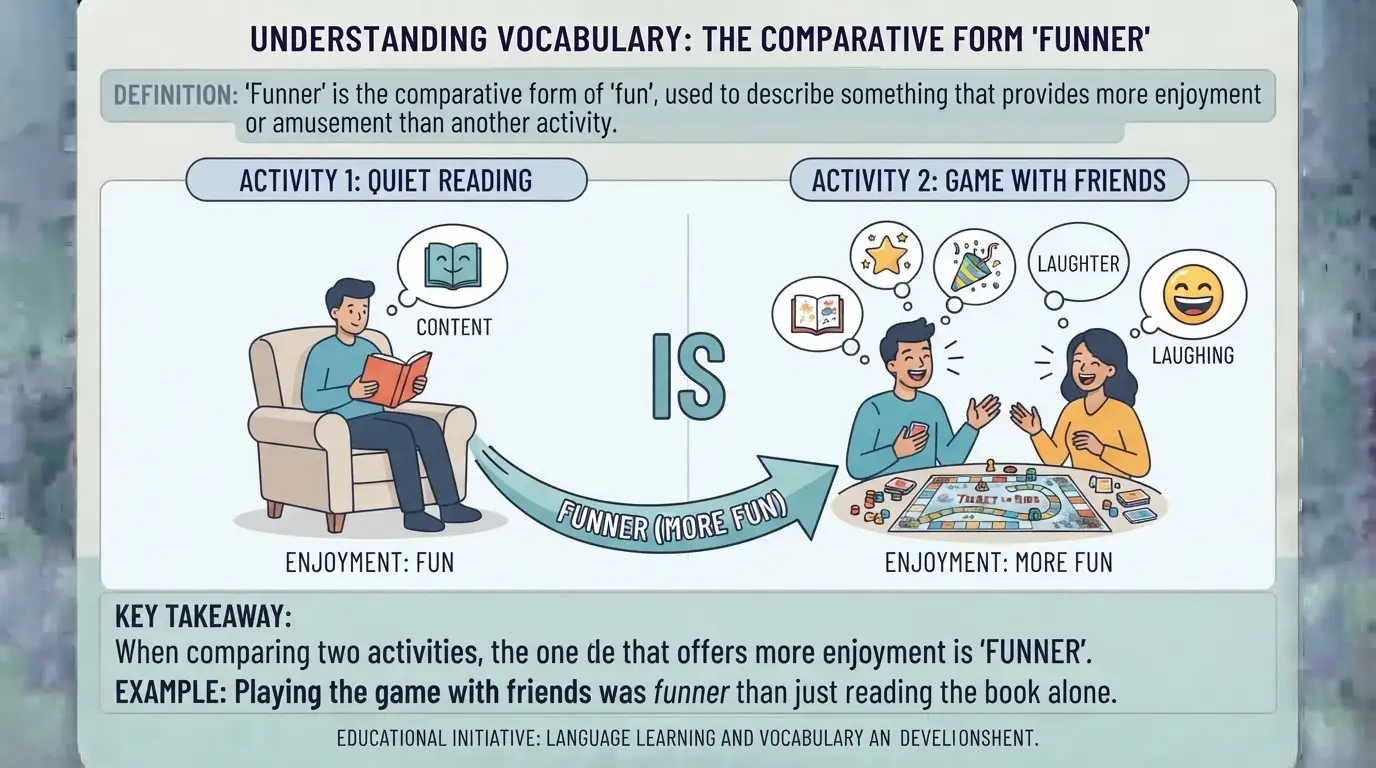
In simple English, “funner” is used as the comparative form of “fun,” meaning something provides more enjoyment or entertainment than something else. Native speakers understand it instantly, but many consider it informal or non-standard because “fun” traditionally acts as a noun rather than a standard adjective. You usually hear it in spontaneous spoken conversations or casual text messages among friends.
- Part of Speech: Adjective (Informal / Non-standard comparative)
- Definition: Providing a greater degree of amusement, enjoyment, or lighthearted pleasure.
Connotative Meaning
(Connotation is the emotional feeling or cultural association attached to a word beyond its literal definition.)
- Positive tone: Expresses genuine joy, enthusiasm, and lighthearted pleasure.
- Negative tone: Can signal a lack of grammatical awareness if used in professional settings.
- Neutral tone: Expresses a simple comparative preference in casual daily speech.
Etymology
The base word “fun” originated in late 17th-century English as a verb meaning “to cheat or trick.” Over time, its meaning shifted toward lighthearted trickery, and eventually to general amusement in Modern English.
- Old English (450–1100): No direct record; roots connected to Germanic words for foolishness.
- Middle English (1100–1500): Related to fonne, meaning “to befool” or a foolish person.
- Modern English (1500–Present): Evolved into a noun for enjoyment, and informally into an adjective with comparative forms like “funner.”
Syllables & Structure
- Syllables: fun-ner
- Root: fun
- Prefix: None
- Suffix: -er (comparative suffix)
Synonyms List
1. More Fun (Adj)
- Meaning: Possessing a greater amount of enjoyment or entertainment.
- Tone/Register: Standard, Neutral, Daily
- Example 1: This board game is much more fun than the last one we played.
- Example 2: Working together made the project feel more fun.
2. More Enjoyable (Adj)
- Meaning: Giving a higher degree of satisfaction or pleasure.
- Tone/Register: General, Polite, Conversational
- Example 1: The warm weather made our outdoor walk more enjoyable.
- Example 2: I found the second movie far more enjoyable than the original.
3. More Entertaining (Adj)
- Meaning: Providing greater amusement or interest to an audience.
- Tone/Register: General, Descriptive, Writing
- Example 1: The magician gave a more entertaining show this evening.
- Example 2: Her story was much more entertaining when she acted it out.
4. More Amusing (Adj)
- Meaning: Causing more laughter or light enjoyment.
- Tone/Register: Light, Conversational, Writing
- Example 1: His witty commentary made the match more amusing to watch.
- Example 2: The cartoon was surprisingly more amusing for adults than kids.
5. More Thrilling (Adj)
- Meaning: Causing a stronger feeling of sudden excitement or pleasure.
- Tone/Register: Energetic, Descriptive
- Example 1: Riding the roller coaster was far more thrilling than the Ferris wheel.
- Example 2: The suspense novel became more thrilling near the final chapters.
6. More Delightful (Adj)
- Meaning: Giving great charm, pleasure, or happiness.
- Tone/Register: Polite, Expressive, Formal
- Example 1: The afternoon tea was much more delightful than we anticipated.
- Example 2: Her cheerful personality made the gathering more delightful.
7. More Engaging (Adj)
- Meaning: Holding attention more pleasantly and interestingly.
- Tone/Register: Academic, Professional, Writing
- Example 1: Interactive lessons are usually more engaging for students.
- Example 2: The speaker gave a much more engaging talk today.
8. More Exciting (Adj)
- Meaning: Producing stronger feelings of enthusiasm or eagerness.
- Tone/Register: Informal, Daily, Enthusiastic
- Example 1: Planning a vacation is often more exciting than staying home.
- Example 2: The basketball game grew more exciting in the final minutes.
9. More Pleasant (Adj)
- Meaning: Giving a mild, agreeable, or comfortable sense of enjoyment.
- Tone/Register: Moderate, Neutral, Polite
- Example 1: A cool breeze made our afternoon picnic more pleasant.
- Example 2: The new office space offers a much more pleasant atmosphere.
10. More Lively (Adj)
- Meaning: Full of energy, movement, or active excitement.
- Tone/Register: Energetic, Social, Casual
- Example 1: Live music made the dinner party much more lively.
- Example 2: The city street becomes more lively after sunset.
11. More Action-Packed (Adj)
- Meaning: Filled with a higher amount of dynamic events or activity.
- Tone/Register: Casual, Media, Storytelling
- Example 1: The sequel was noticeably more action-packed than the first film.
- Example 2: Our weekend trip turned out to be more action-packed than planned.
12. More Stimulating (Adj)
- Meaning: Encouraging greater mental or physical activity and interest.
- Tone/Register: Academic, Professional
- Example 1: Solving complex puzzles is far more stimulating than watching television.
- Example 2: We had a much more stimulating discussion during group study.
13. More Captivating (Adj)
- Meaning: Holding strong interest and charm irresistibly.
- Tone/Register: Literary, Descriptive
- Example 1: The performance was more captivating because of the beautiful set design.
- Example 2: Her storytelling style was vastly more captivating than the textbook.
14. More Diverting (Adj)
- Meaning: Serving to distract the mind pleasantly or amusingly.
- Tone/Register: Formal, Literary
- Example 1: The comedy show provided a more diverting escape from a busy week.
- Example 2: Reading light fiction proved to be a more diverting activity.
15. More Exhilarating (Adj)
- Meaning: Making someone feel exceptionally happy, excited, and energetic.
- Tone/Register: Strong, Expressive, Enthusiastic
- Example 1: Skydiving was far more exhilarating than any other sport I tried.
- Example 2: The fast mountain drive offered a more exhilarating experience.
16. More Refreshing (Adj)
- Meaning: Providing a pleasing feeling of newness, energy, or relief.
- Tone/Register: General, Casual
- Example 1: The interactive workshop was much more refreshing than sitting through lectures.
- Example 2: Playing games outdoors felt more refreshing after a long study session.
17. More Invigorating (Adj)
- Meaning: Giving vitality, energy, and fresh enthusiasm.
- Tone/Register: Descriptive, Energetic
- Example 1: Morning group exercises are far more invigorating than working out alone.
- Example 2: The brisk hike offered a more invigorating way to start the weekend.
18. More Electrifying (Adj)
- Meaning: Generating intense, thrilling, and sudden excitement.
- Tone/Register: Dramatic, High-energy
- Example 1: The live stadium concert had a much more electrifying atmosphere than the broadcast.
- Example 2: The final round of the competition was more electrifying than ever.
19. More Gripping (Adj)
- Meaning: Holding total attention through intense interest or suspense.
- Tone/Register: Descriptive, Literary
- Example 1: The plot of the second novel was significantly more gripping.
- Example 2: Video games with deep storylines feel more gripping over time.
20. More Absorbing (Adj)
- Meaning: Fully engrossing someone’s attention and time pleasantly.
- Tone/Register: Academic, Moderate
- Example 1: Painting turned out to be a far more absorbing hobby than expected.
- Example 2: Studying history becomes more absorbing when you visit historical sites.
21. More Enchanting (Adj)
- Meaning: Delightfully charming and captivating, almost as if under a spell.
- Tone/Register: Poetic, Descriptive
- Example 1: The evening light made the garden walk feel more enchanting.
- Example 2: Watching the festival lights was much more enchanting in person.
22. More Fascinating (Adj)
- Meaning: Extremely interesting and capable of holding attention deeply.
- Tone/Register: Informative, Conversational
- Example 1: Learning through hands-on experiments is more fascinating than memorizing facts.
- Example 2: The museum guide made the ancient history exhibit more fascinating.
23. More Joyous (Adj)
- Meaning: Expressing or causing great happiness and gladness.
- Tone/Register: Expressive, Formal
- Example 1: Family reunions are often more joyous when celebrated together outdoors.
- Example 2: The holiday event felt much more joyous this year.
24. More Cheerful (Adj)
- Meaning: Full of bright, positive energy and optimism.
- Tone/Register: Light, Everyday
- Example 1: Bright decorations made the community center feel more cheerful.
- Example 2: Singing together creates a much more cheerful atmosphere.
25. More Playful (Adj)
- Meaning: Full of lighthearted fun, humor, and willingness to play.
- Tone/Register: Casual, Friendly
- Example 1: The new puppy has a much more playful attitude.
- Example 2: Adding team challenges made the training session more playful.
26. More Festive (Adj)
- Meaning: Suitable for a celebration, full of merry and lively energy.
- Tone/Register: Seasonal, Social
- Example 1: The street market looked far more festive with all the lights up.
- Example 2: Wearing costumes made the gathering feel more festive.
27. More Heartwarming (Adj)
- Meaning: Eliciting rewarding feelings of happiness and emotional comfort.
- Tone/Register: Emotional, Warm
- Example 1: The team victory video was much more heartwarming to watch together.
- Example 2: Hearing success stories made the event far more heartwarming.
28. More Satisfying (Adj)
- Meaning: Giving a sense of fulfillment or completion.
- Tone/Register: Practical, General
- Example 1: Completing a hard project is often more satisfying than an easy task.
- Example 2: Cooking a meal from scratch feels much more satisfying.
29. More Thrill-packed (Adj)
- Meaning: Filled with continuous excitement and sudden bursts of fun.
- Tone/Register: Informal, Casual
- Example 1: The amusement park was far more thrill-packed than we imagined.
- Example 2: Their summer vacation itinerary looked more thrill-packed this year.
30. More Inspiring (Adj)
- Meaning: Encouraging creative thought, enthusiasm, or positive action.
- Tone/Register: Motivational, Professional
- Example 1: The guest speaker delivered a much more inspiring message.
- Example 2: Collaborating with creative minds is far more inspiring.
31. More Intoxicating (Adj)
- Meaning: Causing intense excitement, joy, or overwhelming delight.
- Tone/Register: Dramatic, Descriptive
- Example 1: The rapid pace of the dance performance was more intoxicating to watch.
- Example 2: The thrill of winning proved to be more intoxicating than expected.
32. More Mind-Blowing (Adj)
- Meaning: Highly surprising, impressive, or surprisingly fun.
- Tone/Register: Very informal, Casual
- Example 1: The special effects in the movie were much more mind-blowing.
- Example 2: Seeing the science experiment in real life was far more mind-blowing.
33. More Breathtaking (Adj)
- Meaning: Astonishingly exciting, beautiful, or dramatic.
- Tone/Register: Descriptive, Expressive
- Example 1: The view from the top of the mountain was far more breathtaking.
- Example 2: The acrobatics performance became more breathtaking near the end.
34. More Merry (Adj)
- Meaning: Full of high-spirited happiness and jovial activity.
- Tone/Register: Traditional, Friendly
- Example 1: The campfire songs made the night much more merry.
- Example 2: The holiday feast felt far more merry with old friends present.
35. More Gladdening (Adj)
- Meaning: Bringing a soft, bright sense of happiness or satisfaction.
- Tone/Register: Literary, Formal
- Example 1: Seeing the positive results was a more gladdening experience for the team.
- Example 2: The kind support was much more gladdening than words could express.
36. More Vivacious (Adj)
- Meaning: Attractively lively and animated in spirit.
- Tone/Register: Descriptive, Sophisticated
- Example 1: Her presentation was far more vivacious than the previous speaker’s.
- Example 2: The theater troupe delivered a much more vivacious performance.
37. More Dynamic (Adj)
- Meaning: Full of continuous change, activity, and high energy.
- Tone/Register: Professional, Energetic
- Example 1: The group discussions felt much more dynamic today.
- Example 2: Interactive software provides a more dynamic learning method.
38. More Spirited (Adj)
- Meaning: Characterized by vibrant energy, enthusiasm, and courage.
- Tone/Register: General, Positive
- Example 1: The debate turned out to be much more spirited than expected.
- Example 2: The kids engaged in a more spirited game of tag outside.
39. More Jubilant (Adj)
- Meaning: Feeling or expressing great triumph, happiness, or celebration.
- Tone/Register: Formal, Expressive
- Example 1: The crowd was far more jubilant after the championship win.
- Example 2: The graduation ceremony felt more jubilant as certificates were handed out.
40. More High-Spirited (Adj)
- Meaning: Unbeatable in energy, optimism, and cheerful activity.
- Tone/Register: Casual, Descriptive
- Example 1: The youth festival was far more high-spirited this year.
- Example 2: Playing games outdoors makes children much more high-spirited.
41. More Roaring (Adj)
- Meaning: Highly successful, vibrant, and loudly exciting.
- Tone/Register: Informal, Figurative
- Example 1: The bonfire gathering turned into a much more roaring success.
- Example 2: The crowd gave a far more roaring cheer during the finale.
42. More Bouncy (Adj)
- Meaning: Energetic, cheerful, and full of lively physical energy.
- Tone/Register: Casual, Informal
- Example 1: The music track felt much more bouncy and fun to dance to.
- Example 2: The morning warm-up made everyone feel more bouncy.
43. More Zesty (Adj)
- Meaning: Full of pleasant flavor, enthusiasm, and lively spirit.
- Tone/Register: Informal, Creative
- Example 1: The host brought a much more zesty approach to the show.
- Example 2: Adding team chants made the event feel more zesty.
44. More Whimsical (Adj)
- Meaning: Playfully quaint, imaginative, or amusingly unexpected.
- Tone/Register: Creative, Literary
- Example 1: The art exhibition was far more whimsical than standard displays.
- Example 2: Her short story had a much more whimsical tone.
45. More Crackling (Adj)
- Meaning: Marked by intense, fast-moving energy or excitement.
- Tone/Register: Expressive, Descriptive
- Example 1: There was a much more crackling atmosphere in the room before the event.
- Example 2: The dialogue between the actors was far more crackling.
46. More Uplifting (Adj)
- Meaning: Inspiring happiness, hope, or spiritual fulfillment.
- Tone/Register: Positive, Inspirational
- Example 1: Listening to upbeat music is often more uplifting than quiet background noise.
- Example 2: The movie had a much more uplifting ending than expected.
47. More Sunny (Adj)
- Meaning: Bright, cheerful, and filled with optimism.
- Tone/Register: Casual, Friendly
- Example 1: Her new attitude gave the team a much sunnier environment.
- Example 2: Spending time outdoors leads to a far sunnier mood.
48. More Gratifying (Adj)
- Meaning: Giving pleasure or satisfaction through achieving a desire.
- Tone/Register: Formal, Professional
- Example 1: Seeing hard work pay off is always more gratifying.
- Example 2: Building a model by hand feels much more gratifying than buying one.
49. More Thrilling-To-Watch (Adj)
- Meaning: Offering an exceptionally exciting visual experience.
- Tone/Register: Casual, Media
- Example 1: The live ice skating event was far more thrilling-to-watch.
- Example 2: High-speed races are always more thrilling to watch in person.
50. More Sparking (Adj)
- Meaning: Full of small, brilliant flashes of wit, fun, or energy.
- Tone/Register: Descriptive, Literary
- Example 1: The conversation became much more sparkling as more people joined in.
- Example 2: Her jokes brought a far more sparkling feel to the dinner.
51. More Radiant (Adj)
- Meaning: Glowing brightly with joy, warmth, or happiness.
- Tone/Register: Expressive, Formal
- Example 1: Her smile was much more radiant during the celebration.
- Example 2: The garden party had a far more radiant vibe in the sunshine.
52. More Sparkling (Adj)
- Meaning: Vivacious, witty, and brightly entertaining.
- Tone/Register: Polite, Descriptive
- Example 1: The host gave a far more sparkling performance tonight.
- Example 2: The witty dialogue made the play much more sparkling.
53. More Happy-Go-Lucky (Adj)
- Meaning: Cheerful, carefree, and unconcerned about problems.
- Tone/Register: Informal, Casual
- Example 1: The trip became much more happy-go-lucky once we dropped the schedule.
- Example 2: He has a far more happy-go-lucky demeanor when traveling.
54. More Buoyant (Adj)
- Meaning: Able to stay cheerful and bounce back with high energy.
- Tone/Register: Descriptive, Polite
- Example 1: The team remained in a much more buoyant mood despite the delay.
- Example 2: The light music created a far more buoyant environment.
55. More Lighthearted (Adj)
- Meaning: Amusing and entertaining without any serious or heavy feeling.
- Tone/Register: General, Casual
- Example 1: The second game was much more lighthearted and easy to play.
- Example 2: We preferred a more lighthearted conversation over dinner.
56. More Carefree (Adj)
- Meaning: Free from anxiety or responsibility, allowing full enjoyment.
- Tone/Register: General, Warm
- Example 1: Summer break always feels much more carefree than school terms.
- Example 2: The weekend camping trip provided a far more carefree vibe.
57. More Mirthful (Adj)
- Meaning: Full of laughter, humor, and high-spirited amusement.
- Tone/Register: Literary, Formal
- Example 1: The comedian generated a far more mirthful reaction from the crowd.
- Example 2: The evening ended on a much more mirthful note.
58. More Jovial (Adj)
- Meaning: Friendly, cheerful, and full of a good-humored mood.
- Tone/Register: Polite, Social
- Example 1: The host was far more jovial once all the guests arrived.
- Example 2: The group shared a much more jovial atmosphere over lunch.
59. More Sunny-Natured (Adj)
- Meaning: Having a naturally cheerful and pleasant disposition.
- Tone/Register: Descriptive, Informal
- Example 1: The guide had a far more sunny-natured approach to leading tours.
- Example 2: Children tend to be much more sunny-natured when playing outside.
60. More Gleeful (Adj)
- Meaning: Full of high-spirited delight or joyful satisfaction.
- Tone/Register: Expressive, Casual
- Example 1: The kids gave a far more gleeful cheer when they saw the snow.
- Example 2: Opening presents is always a much more gleeful experience.
61. More Smiles-Inducing (Adj)
- Meaning: Naturally causing people to smile and feel happy.
- Tone/Register: Descriptive, Informal
- Example 1: The cartoon short was far more smiles-inducing for young kids.
- Example 2: Petting puppies is definitely a more smiles-inducing activity.
62. More Unwinding (Adj)
- Meaning: Helping people relax while enjoying their time.
- Tone/Register: General, Casual
- Example 1: Listening to soft music was much more unwinding after work.
- Example 2: Strolling in the park felt far more unwinding than staying indoors.
63. More Soul-Lifting (Adj)
- Meaning: Bringing profound emotional or spiritual joy.
- Tone/Register: Expressive, Literary
- Example 1: The choir performance was far more soul-lifting than expected.
- Example 2: Being out in nature can be a much more soul-lifting experience.
64. More Joy-Filled (Adj)
- Meaning: Completely packed with happiness and merry feelings.
- Tone/Register: Warm, Expressive
- Example 1: The birthday celebration was far more joy-filled this year.
- Example 2: Playing games together made the night much more joy-filled.
65. More Happening (Adj)
- Meaning: Trendy, lively, active, and filled with exciting things to do.
- Tone/Register: Informal, Modern
- Example 1: The downtown plaza is far more happening on Friday nights.
- Example 2: The new student lounge feels much more happening than the old one.
Synonyms for “Funner” by Tone
Choosing the right word depends heavily on your setting and emotional tone:
- Positive: More delightful, more thrilling, more exhilarating, more captivating
- Neutral: More fun, more enjoyable, more pleasant, more engaging
- Negative / Contrast: Less boring, less dull (used to imply fun by contrast)
- Playful / Informal: More action-packed, more lively, more exciting, more happening
Tone matters because using informal or non-standard words in professional settings can distract your listener. Matching tone to your context builds trust and clarity.
“Funner” vs. Close Alternatives
| Term | Precision / Tone | Best Context |
| More Fun | Standard, casual to moderate | Daily speech, informal writing, blogs |
| More Enjoyable | Polite, universally accepted | Emails, essays, professional chats |
| More Thrilling | High energy, intense excitement | Sports, adventure stories, entertainment |
- More Fun vs. More Enjoyable: Use “more fun” when discussing lighthearted activities with friends. Use “more enjoyable” in formal essays or professional reviews where standard grammar is strictly expected.
- More Enjoyable vs. More Thrilling: “More enjoyable” describes general satisfaction, whereas “more thrilling” focuses on heart-pounding, high-energy excitement.
How “Funner” Changes by Context
- Daily Conversation: Native speakers often drop strict grammar rules when talking casually. Saying “more fun” keeps your speech smooth without sounding overly stiff.
- Writing or Blogging: Readers appreciate varied vocabulary. Replacing basic phrases with descriptive choices like “more engaging” keeps your posts lively.
- Professional or Academic Tone: Always avoid non-standard forms in formal work. Words like “more enjoyable” or “more stimulating” fit academic standards perfectly.
- Creative or Informal Use: In fiction or dialogue, using informal speech can highlight a character’s casual personality accurately.
Common Mistakes & Native Usage
Learners often try to add “-er” to short words without checking if standard English supports them. While native speakers occasionally say “funner” in fast, casual talk, it is routinely marked incorrect on standardized tests and in formal writing.
Misuse Scenarios
- Double Comparatives: Saying “more funner” is incorrect because it uses two comparative markers at once.
- Formal Mismatch: Using “funner” in a job application or academic essay lowers the professional tone.
Register Notes
Standard English treats “fun” as a noun, which is why “more fun” is the preferred comparative phrase. In spoken English, informal terms pass easily, but written English requires standard forms. Expanding your vocabulary through reliable linguistic guides helps ensure your communication stays sharp across all contexts.
Real-Life Mini Scenarios
- Workplace: During a team recap, saying a workshop was “more engaging” sounds professional and highlights the value of the event clearly.
- Social Situations: When chatting with friends about weekend plans, describing a concert as “far more thrilling” paints a vivid picture of the atmosphere.
- Media / Pop Culture: Movie reviewers often describe a new release as “more action-packed” to set clear expectations for viewers.
- Writing or Storytelling: Authors choose words like “more captivating” to draw readers deep into a character’s journey.
Interactive Practice Quiz
Multiple-Choice Questions
- Which option is the most grammatically accepted standard alternative to “funner”?
- A) Funnest
- B) More fun
- C) Most funner
- D) Funnerer
- Which word best fits a formal business report discussing team activities?
- A) More action-packed
- B) More funner
- C) More enjoyable
- D) Funner
- Choose the best synonym to describe an intense, fast-paced roller coaster ride.
- A) More pleasant
- B) More thrilling
- C) More diverting
- D) More neutral
- What is the main issue with the phrase “more funner”?
- A) It is a double comparative
- B) It is too formal
- C) It has no meaning
- D) It is ancient English
- Which synonym carries an academic or intellectual tone?
- A) More stimulating
- B) More lively
- C) More action-packed
- D) More fun
- Fill in the blank: “The second half of the workshop was much _______ for the participants.”
- A) funner
- B) more engaging
- C) more funner
- D) funner
- Which tone best describes the word “exhilarating”?
- A) Mild and calm
- B) Negative and dull
- C) Highly energetic and positive
- D) Strictly formal and rigid
- Why do some people use “funner” in daily conversations?
- A) It is required by standard rules
- B) It follows standard comparative rules for single-syllable adjectives
- C) It is a formal term
- D) It was created yesterday
- Select the synonym that best describes a quiet, peaceful, and pleasant afternoon tea.
- A) More action-packed
- B) More delightful
- C) More exhilarating
- D) More thrilling
- Which word fits best when describing a distraction that lifts your mood during a long wait?
- A) More diverting
- B) More fun
- C) More severe
- D) More basic
Reflection Task
Write a short, two-sentence story about a memorable weekend event using at least one synonym from this guide instead of the word “funner.”
Answer Key:
1: B | 2: C | 3: B | 4: A | 5: A | 6: B | 7: C | 8: B | 9: B | 10: A
Frequently Asked Questions
1. Is “funner” a real word in English?
While “funner” appears in some modern dictionaries as informal or non-standard English, it is generally considered grammatically incorrect in formal writing and academic contexts. Most grammar guides recommend using “more fun” instead to ensure proper usage.
2. Why do people say “more fun” instead of “funner”?
Historically, “fun” functioned strictly as a noun rather than an adjective. Because nouns do not take “-er” suffixes, English speakers combined it with “more.” Today, “more fun” remains the standard comparative phrase across all styles of English.
3. Can I use “funner” in informal text messages?
Yes, in casual conversation, texting, or informal settings, people will easily understand you. However, switching to standard alternatives helps you maintain natural, polished communication habits that work well everywhere.
4. What is the absolute best synonym for “funner” in formal writing?
“More enjoyable” or “more engaging” are the best options for formal writing. They convey a clear sense of pleasure or interest while keeping your tone professional and grammatically precise.
5. What is the superlative form of “fun”?
The standard superlative form is “most fun.” While you might occasionally hear “funnest” in casual speech, “most fun” is the accepted standard choice for formal essays, exams, and professional writing.
Conclusion
Building a rich vocabulary allows you to communicate your feelings with genuine precision and grace. Choosing standard phrases brings natural confidence to your speaking habits and writing projects alike.
Exploring dynamic vocabulary choices expands how you interact with friends, teachers, and colleagues every single day. Taking time to learn these distinct expressions helps your voice stand out clearly in any situation.
Start incorporating these exciting alternatives into your daily conversations, emails, and essays today! You can also practice your new vocabulary skills by revisiting our complete list of synonyms of funner to master every subtle shade of meaning.

Mehtab Yasir is a passionate writer and English language enthusiast dedicated to making vocabulary learning simple, practical, and enjoyable. As an author at SynonymDesk.com, she creates helpful content covering synonyms, antonyms, word meanings, vocabulary, phrases, and everyday English usage. Her goal is to provide clear and easy-to-understand information that helps students, writers, professionals, and English learners choose the right words and communicate with greater confidence. Mehtab believes that a strong vocabulary can improve both writing and communication skills. She enjoys researching new words, exploring their meanings and uses, and turning complex language concepts into useful, reader-friendly content. Through her work, she strives to make SynonymDesk.com a reliable resource for anyone looking to improve their English vocabulary and language skills.