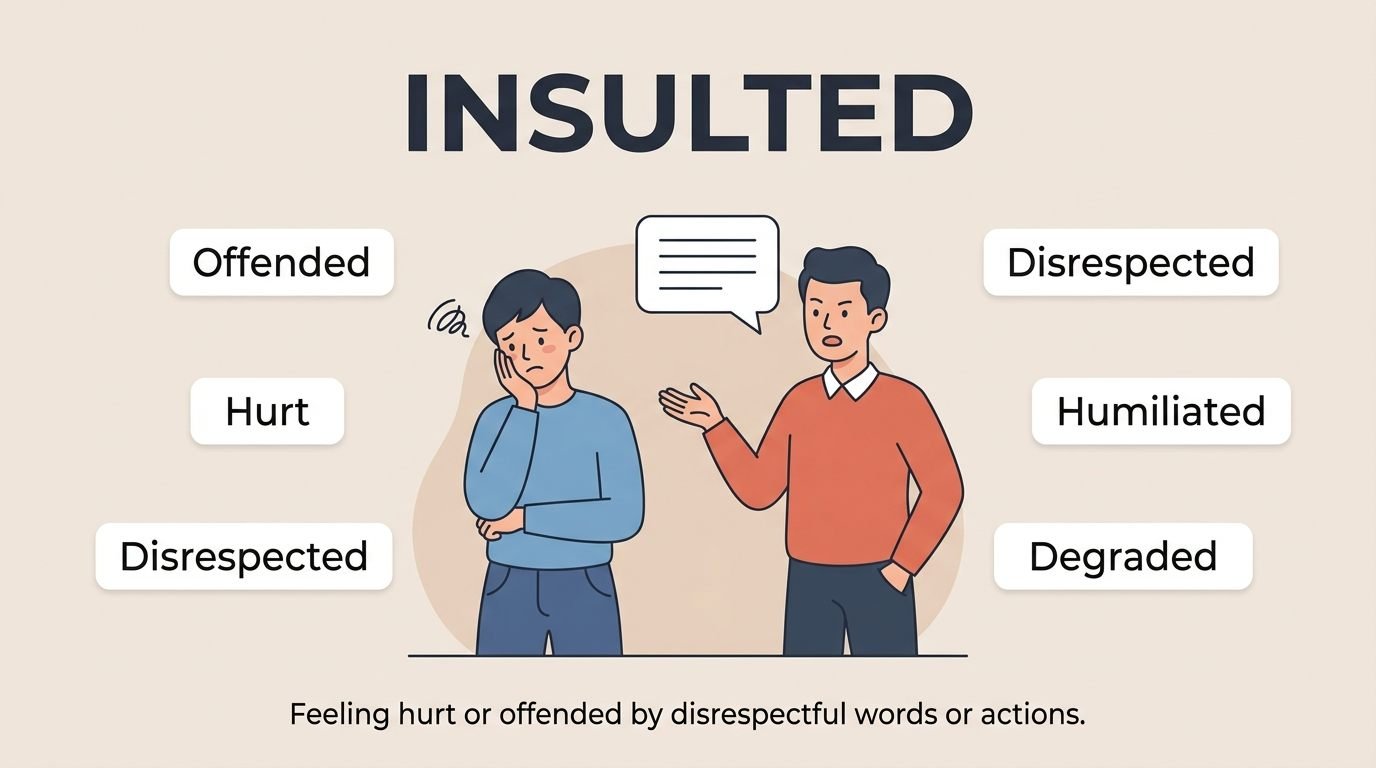
Synonyms of insulted help you share feelings when someone discredits your worth. Imagine pouring your heart into a presentation only to have a colleague dismiss it. You feel deeply hurt and offended in that exact moment.
Understanding these word options helps you express subtle emotional changes easily. Saying you feel offended is very different from feeling disrespected. Using precise words makes your personal writing far more engaging.
This common word appears frequently in daily conversations and blogs. Mastering these terms empowers students, bloggers, and writers immensely. Expanding your vocabulary allows you to communicate with total confidence.
What Does “Insulted” Really Mean?
The word describes the emotional reaction to being treated with disrespect. It means feeling offended, degraded, or belittled by someone’s words or actions.
When you feel this way, your pride or dignity takes a direct hit. Native English speakers use this term when their boundaries are crossed. It reflects a personal sense of hurt caused by public or private disrespect.
Part of speech: Adjective (participial adjective derived from the verb insult).
Simple Definition: Feeling hurt, disrespected, or offended because someone said or did something rude to you.
Connotative Meaning
Connotation is the emotional feeling or cultural idea that a word carries beyond its literal definition.
- Positive Tone: Rarely applied positively, but can show strong self-respect when standing up against unfair treatment.
- Negative Tone: Strongly negative; implies hurt pride, direct disrespect, emotional injury, and social humiliation.
- Neutral Tone: Used in analytical or psychological contexts to describe an emotional state without judgment.
Etymology and History
The word comes from the Latin verb insultare, which literally means “to leap upon” or “to scoff at.”
- Old English (450–1100): The word did not exist in Old English. Germanic terms like hiscian were used to convey scorn.
- Middle English (1100–1500): The term began entering English through Old French (insulter), meaning to attack verbally.
- Modern English (1500–Present): By the late 1600s, it shifted from physical attacks to mean offending someone’s dignity.
Pronunciation and Structure
- US Pronunciation: /ɪnˈsʌltɪd/
- UK Pronunciation: /ɪnˈsʌltɪd/
Syllables: in-sult-ed
Affixation Pattern:
- Root: sult (from Latin salire, meaning to leap)
- Prefix: in- (upon, against)
- Suffix: -ed (adjective-forming)
Synonyms List
1. Offended (Adj) — US: /əˈfɛndɪd/ | UK: /əˈfɛndɪd/
- Meaning: Feeling upset or annoyed due to a perceived lack of respect.
- Tone/Register: Neutral, General.
- Example 1: She felt offended when they ignored her opinion during the meeting.
- Example 2: Please do not be offended by his direct tone.
2. Disrespected (Adj) — US: /ˌdɪsrɪˈspɛktɪd/ | UK: /ˌdɪsrɪˈspɛktɪd/
- Meaning: Treated with a complete lack of courtesy or honor.
- Tone/Register: Informal, Everyday.
- Example 1: Marcus felt disrespected when his teammate talked over him.
- Example 2: She left the shop after feeling disrespected by the staff.
3. Slighted (Adj) — US: /ˈslaɪtɪd/ | UK: /ˈslaɪtɪd/
- Meaning: Feeling hurt because someone ignored or snubbed you.
- Tone/Register: Formal, Literary.
- Example 1: He felt slighted when he did not receive an invitation to the party.
- Example 2: Small rejections can make anyone feel slighted.
4. Affronted (Adj) — US: /əˈfrʌntɪd/ | UK: /əˈfrʌntɪd/
- Meaning: Openly outraged or offended by a direct verbal disrespect.
- Tone/Register: Formal, Academic.
- Example 1: The mayor was affronted by the harsh claims in the newspaper.
- Example 2: She looked affronted when someone questioned her honesty.
5. Snubbed (Adj) — US: /snʌbd/ | UK: /snʌbd/
- Meaning: Rejected or cold-shouldered by an acquaintance or friend.
- Tone/Register: Informal, Conversational.
- Example 1: Nina felt snubbed when her friend walked past without saying hello.
- Example 2: He felt snubbed after his proposal was dismissed without a review.
6. Belittled (Adj) — US: /bɪˈlɪtəld/ | UK: /bɪˈlɪtəld/
- Meaning: Made to feel unimportant, small, or incompetent by someone else.
- Tone/Register: Emotional, General.
- Example 1: The worker felt belittled after his boss mocked his idea.
- Example 2: No student should ever feel belittled in a classroom.
7. Demeaned (Adj) — US: /dɪˈmind/ | UK: /dɪˈmind/
- Meaning: Made to feel a loss of dignity or respect.
- Tone/Register: Formal, Professional.
- Example 1: She felt demeaned when asked to perform tasks outside her job role.
- Example 2: Public criticism can leave a person feeling thoroughly demeaned.
8. Humiliated (Adj) — US: /hjuːˈmɪlieɪtɪd/ | UK: /hjuːˈmɪlieɪtɪd/
- Meaning: Feeling deep shame or embarrassment caused by public foolishness.
- Tone/Register: Strong, Emotional.
- Example 1: He felt humiliated when he forgot his speech line on stage.
- Example 2: The team felt humiliated after losing by fifty points.
9. Disgraced (Adj) — US: /dɪsˈɡreɪst/ | UK: /dɪsˈɡreɪst/
- Meaning: Loss of reputation or respect as the result of a dishonorable action.
- Tone/Register: Formal, Serious.
- Example 1: The executive felt disgraced after the financial scandal became public.
- Example 2: He stood disgraced before his entire family.
10. Mortified (Adj) — US: /ˈmɔːrtɪfaɪd/ | UK: /ˈmɔːtɪfaɪd/
- Meaning: Feeling severe embarrassment mixed with wounded pride.
- Tone/Register: Expressive, Informal.
- Example 1: She was mortified when she spilled coffee on the interviewer.
- Example 2: He felt mortified after realizing his shirt was inside out.
11. Scorned (Adj) — US: /skɔːrnd/ | UK: /skɔːnd/
- Meaning: Feeling treated with open contempt or disdain.
- Tone/Register: Literary, Dramatic.
- Example 1: The artist felt scorned by critics who hated his work.
- Example 2: She felt scorned after her honest advice was laughed at.
12. Mocked (Adj) — US: /mɑːkt/ | UK: /mɒkt/
- Meaning: Ridiculed or mimicked in an unkind way.
- Tone/Register: General, Casual.
- Example 1: The boy felt mocked when classmates laughed at his haircut.
- Example 2: She felt mocked by the sarcastic comments online.
13. Derided (Adj) — US: /dɪˈraɪdɪd/ | UK: /dɪˈraɪdɪd/
- Meaning: Laughed at with contempt or ridicule.
- Tone/Register: Academic, Formal.
- Example 1: His scientific theory was derided before it was proven right.
- Example 2: The writer felt derided by harsh magazine reviews.
14. Ridiculed (Adj) — US: /ˈrɪdəkjuːld/ | UK: /ˈrɪdɪkjuːld/
- Meaning: Dismissed as foolish or absurd in a public manner.
- Tone/Register: General, Strong.
- Example 1: She felt ridiculed when her idea was called silly.
- Example 2: No one likes feeling ridiculed in front of peers.
15. Patronized (Adj) — US: /ˈpeɪtrənaɪzd/ | UK: /ˈpætrənaɪzd/
- Meaning: Treated with kindness that betrays a feeling of superiority.
- Tone/Register: Professional, Nuanced.
- Example 1: She felt patronized when he explained simple terms to her.
- Example 2: The customer felt patronized by the store manager.
16. Disdained (Adj) — US: /dɪsˈdeɪnd/ | UK: /dɪsˈdeɪnd/
- Meaning: Treated as unworthy of notice or respect.
- Tone/Register: Literary, Formal.
- Example 1: The junior staff felt disdained by the executive board.
- Example 2: He felt disdained when his gift was pushed aside.
17. Maligned (Adj) — US: /məˈlaɪnd/ | UK: /məˈlaɪnd/
- Meaning: Spoken about critically or unfairly.
- Tone/Register: Journalism, Formal.
- Example 1: The honest business owner felt maligned by false rumors.
- Example 2: She felt maligned by the harsh local news story.
18. Slandered (Adj) — US: /ˈslændərd/ | UK: /ˈslɑːndəd/
- Meaning: Damaged by false spoken statements from another person.
- Tone/Register: Legal, Formal.
- Example 1: He felt slandered when lies were spread about his work.
- Example 2: The politician felt slandered by her competitor’s speech.
19. Defamed (Adj) — US: /dɪˈfeɪmd/ | UK: /dɪˈfeɪmd/
- Meaning: Suffered damage to good reputation through false statements.
- Tone/Register: Legal, Formal.
- Example 1: The author felt defamed by the inaccurate biography.
- Example 2: She took legal action after feeling defamed online.
20. Vilified (Adj) — US: /ˈvɪlɪfaɪd/ | UK: /ˈvɪlɪfaɪd/
- Meaning: Spoken or written about in an abusively disparaging manner.
- Tone/Register: Media, Academic.
- Example 1: The coach felt vilified by the press after the loss.
- Example 2: He was vilified for making an honest mistake.
21. Aggrieved (Adj) — US: /əˈɡriːvd/ | UK: /əˈɡriːvd/
- Meaning: Feeling resentment at having been treated unfairly.
- Tone/Register: Formal, Legal.
- Example 1: The aggrieved party demanded a sincere apology.
- Example 2: She felt aggrieved by the sudden decision.
22. Resentful (Adj) — US: /rɪˈzɛntfəl/ | UK: /rɪˈzɛntfəl/
- Meaning: Expressing bitterness at having been treated unfairly.
- Tone/Register: General, Psychological.
- Example 1: He became resentful after being passed over for promotion.
- Example 2: Carrying a resentful attitude causes personal stress.
23. Miffed (Adj) — US: /mɪft/ | UK: /mɪft/
- Meaning: Mildly annoyed or offended by a minor action.
- Tone/Register: Informal, Casual.
- Example 1: Sarah was miffed when they started the meeting without her.
- Example 2: He looked miffed after receiving a short text response.
24. Piqued (Adj) — US: /piːkt/ | UK: /piːkt/
- Meaning: Irritated or wounded by a blow to one’s pride.
- Tone/Register: Literary, Formal.
- Example 1: His pride was piqued when his design was rejected.
- Example 2: She felt piqued by his careless comment.
25. Peeved (Adj) — US: /piːvd/ | UK: /piːvd/
- Meaning: Irritated or annoyed by small discourtesies.
- Tone/Register: Informal, Everyday.
- Example 1: He was peeved that no one thanked him for helping.
- Example 2: She felt peeved by the driver’s rude behavior.
26. Vexed (Adj) — US: /vɛkst/ | UK: /vɛkst/
- Meaning: Annoyed, frustrated, or worried by an unfair situation.
- Tone/Register: Literary, Old-fashioned.
- Example 1: The teacher was vexed by the students’ constant interruptions.
- Example 2: He felt vexed after dealing with rude customer service.
27. Nettled (Adj) — US: /ˈnɛtəld/ | UK: /ˈnɛtəld/
- Meaning: Irritated or provoked by a sharp comment.
- Tone/Register: Literary, Middle-register.
- Example 1: She was nettled by his constant nitpicking.
- Example 2: He looked nettled when his mistake was pointed out.
28. Irked (Adj) — US: /ɜːkt/ | UK: /ɜːkt/
- Meaning: Annoyed or irritated by repetitive disrespect.
- Tone/Register: Informal, Casual.
- Example 1: I was irked by his complete lack of punctuality.
- Example 2: She felt irked when her name was misspelled again.
29. Displeased (Adj) — US: /dɪsˈpliːzd/ | UK: /dɪsˈpliːzd/
- Meaning: Unhappy or dissatisfied with someone’s behavior.
- Tone/Register: Formal, Professional.
- Example 1: The manager was displeased with the poor results.
- Example 2: She gave a displeased look to the noisy crowd.
30. Indignant (Adj) — US: /ɪnˈdɪɡnənt/ | UK: /ɪnˈdɪɡnənt/
- Meaning: Feeling anger caused by what is seen as unfair treatment.
- Tone/Register: Expressive, Formal.
- Example 1: He was indignant when accused of cheating.
- Example 2: An indignant response followed the unfair decision.
31. Outraged (Adj) — US: /ˈaʊtreɪdʒd/ | UK: /ˈaʊtreɪdʒd/
- Meaning: Extremely angry and shocked by severe disrespect.
- Tone/Register: Strong, Dramatic.
- Example 1: Customers were outraged by the sudden price hike.
- Example 2: She was outraged when her work was stolen.
32. Incensed (Adj) — US: /ɪnˈsɛnst/ | UK: /ɪnˈsɛnst/
- Meaning: Very angry or enraged by an insult.
- Tone/Register: Formal, High-intensity.
- Example 1: The client was incensed by the rude service.
- Example 2: He became incensed after reading the lie.
33. Infuriated (Adj) — US: /ɪnˈfjʊərieɪtɪd/ | UK: /ɪnˈfjʊərieɪtɪd/
- Meaning: Made extremely angry and impatient.
- Tone/Register: Strong, Conversational.
- Example 1: She was infuriated by his dismissive attitude.
- Example 2: Bad news infuriated the waiting passengers.
34. Exasperated (Adj) — US: /ɪɡˈzæspəreɪtɪd/ | UK: /ɪɡˈzɑːspəreɪtɪd/
- Meaning: Intensely irritated and frustrated by bad behavior.
- Tone/Register: General, Expressive.
- Example 1: The father felt exasperated by his child’s tantrums.
- Example 2: She let out an exasperated sigh at the office.
35. Disgrunted (Adj) — US: /dɪsˈɡrʌntəld/ | UK: /dɪsˈɡrʌntəld/
- Meaning: Displeased and sulky due to poor treatment.
- Tone/Register: General, Media.
- Example 1: Disgruntled workers protested outside the factory.
- Example 2: He remained disgruntled after missing the bonus.
36. Disillusioned (Adj) — US: /ˌdɪsɪˈluːʒənd/ | UK: /ˌdɪsɪˈluːʒənd/
- Meaning: Disappointed because someone has lost respect for another.
- Tone/Register: Reflective, Academic.
- Example 1: She felt disillusioned after seeing her hero act rudely.
- Example 2: Voters became disillusioned with the local leaders.
37. Hurt (Adj) — US: /hɜːrt/ | UK: /hɜːt/
- Meaning: Suffering emotional pain from harsh words.
- Tone/Register: Simple, General.
- Example 1: She was deeply hurt by her friend’s betrayal.
- Example 2: Words can leave a person feeling hurt for days.
38. Wounded (Adj) — US: /ˈwuːndɪd/ | UK: /ˈwuːndɪd/
- Meaning: Emotionally injured in pride or feelings.
- Tone/Register: Expressive, Literary.
- Example 1: His wounded pride kept him from saying sorry.
- Example 2: She spoke with a wounded tone after the fight.
39. Stung (Adj) — US: /stʌŋ/ | UK: /stʌŋ/
- Meaning: Feeling sudden emotional pain from a harsh remark.
- Tone/Register: Informal, Figurative.
- Example 1: He was stung by the sharp criticism of his art.
- Example 2: Her harsh rejection left him feeling stung.
40. Cut (Adj) — US: /kʌt/ | UK: /kʌt/
- Meaning: Emotionally pierced by cruel actions or words.
- Tone/Register: Informal, Emotional.
- Example 1: She felt cut to the heart by his unkind words.
- Example 2: He was deeply cut by his brother’s silence.
41. Shamed (Adj) — US: /ʃeɪmd/ | UK: /ʃeɪmd/
- Meaning: Made to feel distressed due to dishonor.
- Tone/Register: Emotional, Serious.
- Example 1: The student felt shamed when scolded publicly.
- Example 2: She felt shamed by her bad choices.
42. Abashed (Adj) — US: /əˈbæʃt/ | UK: /əˈbæʃt/
- Meaning: Embarrassed or ashamed by a direct rebuke.
- Tone/Register: Literary, Formal.
- Example 1: He stood abashed after being caught lying.
- Example 2: She felt abashed by the sudden praise and attention.
43. Chagrined (Adj) — US: /ʃəˈɡrɪnd/ | UK: /ʃəˈɡrɪnd/
- Meaning: Distressed by humiliation or disappointment.
- Tone/Register: Literary, Formal.
- Example 1: He was chagrined to find his idea was copied.
- Example 2: She felt chagrined after making a basic error.
44. Discomfited (Adj) — US: /dɪsˈkʌmfɪtɪd/ | UK: /dɪsˈkʌmfɪtɪd/
- Meaning: Feeling uneasy, embarrassed, or awkward.
- Tone/Register: Formal, Literary.
- Example 1: The speaker was discomfited by hostile questions.
- Example 2: She felt discomfited under their cold stares.
45. Discomposed (Adj) — US: /ˌdɪskəmˈpoʊzd/ | UK: /ˌdɪskəmˈpəʊzd/
- Meaning: Disturbed in peace of mind or agitation.
- Tone/Register: Formal, high register.
- Example 1: The sudden rude remark left her discomposed.
- Example 2: He looked discomposed after the intense debate.
46. Rattled (Adj) — US: /ˈrætəld/ | UK: /ˈrætəld/
- Meaning: Made nervous, confused, or upset by an attack.
- Tone/Register: Informal, Conversational.
- Example 1: The hostile tone left the job applicant rattled.
- Example 2: She was rattled by the unexpected outburst.
47. Unsettled (Adj) — US: /ʌnˈsɛtəld/ | UK: /ʌnˈsɛtəld/
- Meaning: Lacking stability or feeling emotionally disturbed.
- Tone/Register: General, Neutral.
- Example 1: He felt unsettled by the cold reception at work.
- Example 2: Her rude behavior left everyone feeling unsettled.
48. Disquieted (Adj) — US: /dɪsˈkwaɪətɪd/ | UK: /dɪsˈkwaɪətɪd/
- Meaning: Feeling anxiety or worry caused by disrespect.
- Tone/Register: Literary, Formal.
- Example 1: The manager was disquieted by the rude complaints.
- Example 2: She felt disquieted after reading the angry letter.
49. Perturbed (Adj) — US: /pərˈtɜːrbd/ | UK: /pəˈtɜːbd/
- Meaning: Anxious or unsettled by rude actions.
- Tone/Register: Formal, Professional.
- Example 1: He was perturbed by his neighbor’s hostile words.
- Example 2: She seemed perturbed by the lack of respect shown.
50. Disconcerted (Adj) — US: /ˌdɪskənˈsɜːrtɪd/ | UK: /ˌdɪskənˈsɜːtɪd/
- Meaning: Unsettled or confused by unexpected disrespect.
- Tone/Register: Formal, Academic.
- Example 1: She felt disconcerted when her boss ignored her arrival.
- Example 2: He was disconcerted by the cold room response.
Synonyms for “Insulted” by Tone
Choosing the correct word tone prevents misunderstandings in writing and speech.
- Positive / Constructive Tone: Indignant, Resentful (When standing up for rights).
- Neutral Tone: Offended, Unsettled, Displeased, Discomposed.
- Negative Tone: Humiliated, Belittled, Vilified, Demeaned, Disgraced.
- Playful / Informal Tone: Miffed, Peeved, Irked, Rattled, Stung.
Understanding tone helps you select words that fit your exact emotional state.
Mini Comparison: Insulted vs. Offended vs. Belittled
| Feature | Insulted | Offended | Belittled |
| Core Focus | Attack on dignity or honor | Violation of moral/personal bounds | Making someone feel small/worthless |
| Intensity | High | Medium to High | Medium to High |
| Best Context | Direct rude remarks | General disrespect | Workplace or educational setups |
Use offended for boundary breaches, belittled for attacks on ability, and insulted for direct disrespect.
How “Insulted” Changes by Context
Daily Conversation
In everyday speech, people prefer simple terms like miffed, hurt, or offended.
“I felt really hurt when he didn’t thank me.”
Writing or Blogging
Bloggers use vivid terms like stung, snubbed, or patronized to engage readers.
“The client felt patronized by the robotic email reply.”
Professional or Academic Tone
Formal contexts require precise words like aggrieved, disconcerted, or demeaned.
“The employee felt aggrieved by the unfair evaluation process.”
Creative or Informal Use
Fiction writers use intense words like mortified, affronted, or vilified.
“She stood affronted by his sudden betrayal.”
Common Mistakes & Native Usage
- Mistake 1: Using belittled when you mean humiliated. Belittling lowers worth; humiliation causes public shame.
- Mistake 2: Using miffed in formal legal documents. Use aggrieved instead.
- Mistake 3: Overusing the word insulted for minor issues. Use irritable or miffed for small problems.
Native speakers adjust emotional terms based on social setting and hierarchy. For related vocabulary expansions, check out our comprehensive guide on [feeling words in English].
Real-Life Mini Scenarios
- Workplace: A junior worker feels belittled when their boss laughs at their report.
- Social Situations: A guest feels snubbed when the host skips them during introductions.
- Media / Pop Culture: An actor feels maligned by false rumors in tabloid headlines.
- Storytelling: A knight feels affronted when a rival challenges his honor publicly.
Practice Quiz
MCQs Part 1
- Which word is the closest synonym of insulted?
A) Praised
B) Offended
C) Helped
D) Welcomed - What does disrespected mean?
A) Treated without respect
B) Treated kindly
C) Praised highly
D) Helped someone - Which word means made someone feel ashamed or embarrassed?
A) Supported
B) Humiliated
C) Encouraged
D) Admired - Which synonym means made someone feel unimportant?
A) Belittled
B) Honored
C) Trusted
D) Welcomed - Which word means made fun of someone?
A) Mocked
B) Helped
C) Forgave
D) Protected - Which synonym means made someone look foolish?
A) Ridiculed
B) Respected
C) Comforted
D) Guided - What does taunted mean?
A) Praised someone
B) Teased or provoked someone
C) Helped someone
D) Forgave someone - Which word means deliberately ignored or treated coldly?
A) Snubbed
B) Welcomed
C) Supported
D) Admired - Which synonym means spoke negatively about someone?
A) Disparaged
B) Encouraged
C) Respected
D) Trusted - Which word means treated someone as less worthy?
A) Degraded
B) Praised
C) Promoted
D) Honored
MCQs Part 2
- Which word is closest in meaning to slighted?
A) Ignored or treated as less important
B) Praised greatly
C) Helped quickly
D) Welcomed warmly - Which synonym of insulted means showing strong disrespect?
A) Scorned
B) Admired
C) Appreciated
D) Supported - What does disdained mean?
A) Considered someone unworthy
B) Helped someone
C) Trusted someone
D) Welcomed someone - Which word best replaces insulted in this sentence?
“She felt insulted by his rude comment.”
A) Offended
B) Excited
C) Relaxed
D) Delighted - Which synonym means treated someone badly with offensive words?
A) Abused
B) Praised
C) Guided
D) Assisted - Which word describes making someone feel inferior?
A) Belittled
B) Honored
C) Encouraged
D) Celebrated - Which synonym best fits this sentence?
“The students mocked their classmate.”
A) Made fun of
B) Helped
C) Protected
D) Welcomed - Which word means to express disrespect toward someone?
A) Derided
B) Admired
C) Supported
D) Forgave - Which synonym of insulted is most appropriate for a formal context?
A) Disparaged
B) Teased
C) Mocked
D) Made fun of - Which word is NOT a synonym of insulted?
A) Offended
B) Humiliated
C) Disrespected
D) Appreciated
Answer Key
| No. | Answer | No. | Answer |
|---|---|---|---|
| 1 | B | 11 | A |
| 2 | A | 12 | A |
| 3 | B | 13 | A |
| 4 | A | 14 | A |
| 5 | A | 15 | A |
| 6 | A | 16 | A |
| 7 | B | 17 | A |
| 8 | A | 18 | A |
| 9 | A | 19 | A |
| 10 | A | 20 | D |
Frequently Asked Questions
1. What is the strongest synonym of insulted?
Words like humiliated, vilified, and incensed carry the strongest emotional intensity. They imply severe public shame, character attacks, or extreme anger resulting from deep disrespect.
2. Can I use “offended” and “insulted” interchangeably?
Yes, in most casual settings. However, feeling offended often relates to violated values or rules, while feeling insulted directly targets personal dignity, self-worth, or pride.
3. What is a formal synonym for insulted in business writing?
Terms like aggrieved, displeased, or discomposed work best in formal business emails and legal documents to maintain a professional tone while reporting unfair treatment.
4. Which synonym works best for feeling small at work?
The word belittled fits best when someone minimizes your contributions, efforts, or status at work, making you feel unimportant or incapable.
5. What is the difference between snubbed and slighted?
Snubbed implies an intentional social cold shoulder, while slighted can refer to indirect or accidental neglect of someone’s presence or achievements.
Conclusion
Learning various synonyms of insulted expands your emotional vocabulary and improves your writing style. Using precise words makes your blog posts, essays, and everyday conversations far more engaging.
Practicing these new terms helps you express subtle feelings with confidence. Try using words like slighted, patronized, or miffed in your daily journal entries today.
Continuing to build your language skills opens doors to clearer and more impactful communication. Keep exploring new vocabulary to elevate your English fluency!

Mehtab Yasir is a passionate writer and English language enthusiast dedicated to making vocabulary learning simple, practical, and enjoyable. As an author at SynonymDesk.com, she creates helpful content covering synonyms, antonyms, word meanings, vocabulary, phrases, and everyday English usage. Her goal is to provide clear and easy-to-understand information that helps students, writers, professionals, and English learners choose the right words and communicate with greater confidence. Mehtab believes that a strong vocabulary can improve both writing and communication skills. She enjoys researching new words, exploring their meanings and uses, and turning complex language concepts into useful, reader-friendly content. Through her work, she strives to make SynonymDesk.com a reliable resource for anyone looking to improve their English vocabulary and language skills.