Synonyms of seeding include sowing, planting, scattering, broadcasting, spreading, distributing, dispersing, implanting, and introducing. The best choice depends on context. In agriculture, sowing and planting are closest, while broadcasting means spreading seed widely. In figurative writing, words such as disseminating and instilling may be more appropriate.
Imagine a farmer walking across a field with a bag of seeds. Each seed is placed or scattered with the hope that something will grow. That simple action is seeding.
The word seeding is commonly used in farming, gardening, ecology, and even technology and sports. Its meaning changes slightly with context.
Learning synonyms of seeding helps students, bloggers, writers, and everyday English users choose more precise words. It also makes writing more natural and varied.
A student may write about sowing crops, while a blogger may describe spreading ideas. Understanding these differences makes vocabulary more flexible.
What Does “Seeding” Really Mean?
Seeding is the act of putting, scattering, or distributing seeds so that plants can grow. It can also describe the wider process of introducing or spreading something, especially when the thing introduced is expected to develop later.
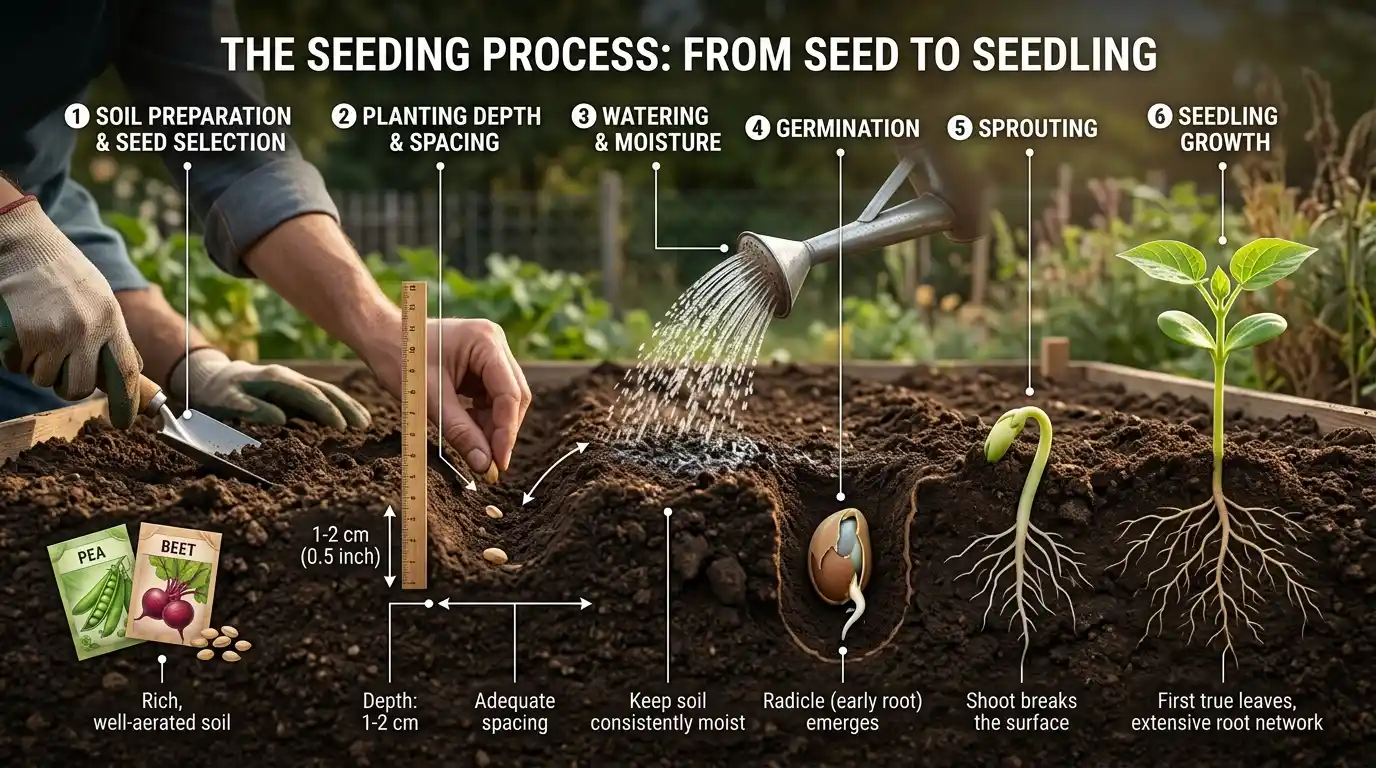
In agriculture, seeding usually means placing seeds in soil. A farmer may seed a field before the growing season.
The word can also be used in other contexts. For example, cloud seeding refers to introducing substances into clouds to encourage precipitation.
In sports, seeding means arranging competitors according to rankings or expected performance. In technology, it can describe adding initial data or content to a system.
Part of Speech
Seeding is primarily a noun and a gerund or present participle of the verb seed.
Simple definition: Seeding means putting or spreading seeds in a place so they can grow.
Connotative Meaning
Connotation (the feeling or association a word carries beyond its basic dictionary meaning) can change how seeding sounds.
Positive Tone
Seeding can suggest growth, renewal, preparation, fertility, and future success.
Negative Tone
In figurative contexts, seeding can sometimes suggest deliberately spreading something unwanted, such as rumors or misinformation.
Neutral Tone
In farming, gardening, science, and technical writing, seeding is usually neutral and factual.
Etymology of “Seeding”
The word seeding comes from seed, which has very old Germanic roots. Seed developed from Old English sēd and sæd, meaning something that could be sown or an individual grain. Its deeper history connects it with the Proto-Indo-European root sē-, meaning “to sow.”
Old English: 450–1100
Old English used forms such as sēd and sæd for seed. The related verb forms sædian and sedian expressed the idea of sowing or planting.
Middle English: 1100–1500
During Middle English, forms such as sēd continued. The verb seed developed further, including meanings connected with producing seed and sowing land.
Modern English: 1500–Present
Modern English expanded the word into agricultural, figurative, scientific, technological, and sporting contexts. The sporting use of seed emerged in tennis in the late nineteenth century, while the noun sense of sports seeding became established later.
Pronunciation
Seeding
- US: /ˈsiːdɪŋ/
- UK: /ˈsiːdɪŋ/
Syllables
seed-ing
Affixation Pattern of “Seeding”
Root
seed
Prefix
None.
Suffix
-ing, which forms a gerund or present participle.
The structure is:
seed + -ing = seeding
Synonyms List
The following 50 alternatives cover the main agricultural meaning of seeding as well as closely related contextual uses. They are not all interchangeable in every sentence. Native speakers choose among them according to purpose, method, and tone.
1. Sowing (verb/noun) — US: /ˈsoʊɪŋ/ | UK: /ˈsəʊɪŋ/
Meaning: Sowing means placing or scattering seeds in soil so plants can grow.
Tone/Register: Neutral, agricultural, standard.
Example: Farmers begin sowing wheat in early autumn.
Example: Sowing seeds at the right depth improves growth.
2. Planting (verb/noun) — US: /ˈplæntɪŋ/ | UK: /ˈplɑːntɪŋ/
Meaning: Planting means putting seeds, bulbs, or plants into the ground.
Tone/Register: Neutral, everyday.
Example: We are planting tomato seeds this weekend.
Example: Spring is a popular time for planting vegetables.
3. Broadcasting (verb/noun) — US: /ˈbrɔːdˌkæstɪŋ/ | UK: /ˈbrɔːdkɑːstɪŋ/
Meaning: Broadcasting seeds means scattering them widely over an area rather than placing them individually.
Tone/Register: Agricultural, technical.
Example: The farmer used broadcasting to cover the field quickly.
Example: Broadcasting works well for some grass crops.
4. Scattering (verb/noun) — US: /ˈskætərɪŋ/ | UK: /ˈskætərɪŋ/
Meaning: Scattering means spreading seeds loosely across an area.
Tone/Register: Neutral, descriptive.
Example: She was scattering wildflower seeds along the path.
Example: The wind helped with the scattering of seeds.
5. Spreading (verb/noun) — US: /ˈspredɪŋ/ | UK: /ˈspredɪŋ/
Meaning: Spreading means distributing seeds over a surface or area.
Tone/Register: Neutral, everyday.
Example: He spent the morning spreading grass seed.
Example: Even spreading can produce a more uniform lawn.
6. Distributing (verb/noun) — US: /dɪˈstrɪbjətɪŋ/ | UK: /dɪˈstrɪbjʊtɪŋ/
Meaning: Distributing means placing or giving seeds across different locations.
Tone/Register: Formal, technical.
Example: The machine distributes seeds evenly.
Example: Workers were distributing seeds to local growers.
7. Dispersing (verb/noun) — US: /dɪˈspɜːrsɪŋ/ | UK: /dɪˈspɜːsɪŋ/
Meaning: Dispersing means spreading seeds over a wider area.
Tone/Register: Scientific, academic.
Example: Birds help with dispersing seeds.
Example: Wind is an important factor in seed dispersal.
8. Disseminating (verb) — US: /dɪˈseməneɪtɪŋ/ | UK: /dɪˈsemɪneɪtɪŋ/
Meaning: Disseminating means spreading something widely and is often used figuratively.
Tone/Register: Formal, academic.
Example: The project focused on disseminating native plant seeds.
Example: The organization is disseminating information about sustainable farming.
9. Depositing (verb) — US: /dɪˈpɑːzɪtɪŋ/ | UK: /dɪˈpɒzɪtɪŋ/
Meaning: Depositing means placing seeds in a particular location.
Tone/Register: Scientific, technical.
Example: Birds were depositing seeds across the forest floor.
Example: The process involves depositing seeds at controlled depths.
10. Placing (verb) — US: /ˈpleɪsɪŋ/ | UK: /ˈpleɪsɪŋ/
Meaning: Placing means putting seeds carefully in a chosen position.
Tone/Register: Neutral.
Example: She was placing one seed in each hole.
Example: Careful placing can reduce wasted seed.
11. Inserting (verb) — US: /ɪnˈsɜːrtɪŋ/ | UK: /ɪnˈsɜːtɪŋ/
Meaning: Inserting means putting something into a space, including a seed into soil.
Tone/Register: Technical, neutral.
Example: The gardener is inserting seeds into prepared soil.
Example: The device inserts seeds at regular intervals.
12. Implanting (verb) — US: /ɪmˈplæntɪŋ/ | UK: /ɪmˈplɑːntɪŋ/
Meaning: Implanting means placing something firmly inside another material or location.
Tone/Register: Technical, formal.
Example: The researchers studied methods for implanting seeds.
Example: The technique involves implanting small seeds beneath the surface.
13. Embedding (verb) — US: /ɪmˈbedɪŋ/ | UK: /ɪmˈbedɪŋ/
Meaning: Embedding means placing something deeply or securely within another material.
Tone/Register: Technical, descriptive.
Example: The seeds were embedded in moist soil.
Example: Embedding seeds too deeply may affect germination.
14. Introducing (verb) — US: /ˌɪntrəˈduːsɪŋ/ | UK: /ˌɪntrəˈdjuːsɪŋ/
Meaning: Introducing means bringing seeds or plant material into a new place.
Tone/Register: Formal, scientific.
Example: Scientists are introducing native seeds to the restored habitat.
Example: The project involved introducing new plant species carefully.
15. Infusing (verb) — US: /ɪnˈfjuːzɪŋ/ | UK: /ɪnˈfjuːzɪŋ/
Meaning: Infusing is a figurative alternative for introducing an idea or quality into something.
Tone/Register: Figurative, literary.
Example: The writer is infusing the story with ideas of renewal.
Example: The project infused the community with fresh hope.
16. Instilling (verb) — US: /ɪnˈstɪlɪŋ/ | UK: /ɪnˈstɪlɪŋ/
Meaning: Instilling means gradually introducing an idea, feeling, or quality.
Tone/Register: Figurative, formal.
Example: The teacher is instilling curiosity in her students.
Example: The campaign aims to instill respect for nature.
17. Injecting (verb) — US: /ɪnˈdʒektɪŋ/ | UK: /ɪnˈdʒektɪŋ/
Meaning: Injecting means introducing something into a system or environment.
Tone/Register: Technical, figurative.
Example: The process involves injecting selected material into the soil.
Example: The program injected new energy into the restoration effort.
18. Propagating (verb) — US: /ˈprɑːpəɡeɪtɪŋ/ | UK: /ˈprɒpəɡeɪtɪŋ/
Meaning: Propagating means producing or multiplying plants through seeds or other methods.
Tone/Register: Botanical, academic.
Example: The nursery is propagating native plants from seed.
Example: Propagating local species can support biodiversity.
19. Cultivating (verb) — US: /ˈkʌltəveɪtɪŋ/ | UK: /ˈkʌltɪveɪtɪŋ/
Meaning: Cultivating means preparing and caring for land or plants so they can grow.
Tone/Register: Agricultural, formal.
Example: Farmers are cultivating several varieties of wheat.
Example: The family has been cultivating vegetables for years.
20. Germinating (verb) — US: /ˈdʒɜːrməneɪtɪŋ/ | UK: /ˈdʒɜːmɪneɪtɪŋ/
Meaning: Germinating means beginning to grow from a seed.
Tone/Register: Scientific, botanical.
Example: The seeds are germinating after several days.
Example: Warm soil can help seeds start germinating.
21. Resowing (verb/noun) — US: /ˌriːˈsoʊɪŋ/ | UK: /ˌriːˈsəʊɪŋ/
Meaning: Resowing means sowing seeds again after an earlier crop or planting attempt.
Tone/Register: Agricultural.
Example: The farmer is resowing the damaged section.
Example: Heavy rain made resowing necessary.
22. Reseeding (verb/noun) — US: /ˌriːˈsiːdɪŋ/ | UK: /ˌriːˈsiːdɪŋ/
Meaning: Reseeding means planting seed again to restore or renew vegetation.
Tone/Register: Agricultural, gardening.
Example: We are reseeding the bare patches in the lawn.
Example: Reseeding helped restore the damaged field.
23. Overseeding (verb/noun) — US: /ˌoʊvərˈsiːdɪŋ/ | UK: /ˌəʊvəˈsiːdɪŋ/
Meaning: Overseeding means sowing additional seed over existing vegetation.
Tone/Register: Gardening, agricultural.
Example: The gardener is overseeding the lawn in autumn.
Example: Overseeding can improve the density of grass.
24. Drilling (verb/noun) — US: /ˈdrɪlɪŋ/ | UK: /ˈdrɪlɪŋ/
Meaning: Drilling is an agricultural method of sowing seeds in rows at controlled depths.
Tone/Register: Agricultural, technical.
Example: The farmer chose drilling instead of broadcasting.
Example: Drilling gives the crop more organized rows.
25. Dibbling (verb/noun) — US: /ˈdɪbəlɪŋ/ | UK: /ˈdɪbəlɪŋ/
Meaning: Dibbling means making small holes and placing seeds individually in them.
Tone/Register: Gardening, specialized.
Example: Dibbling is useful when seeds need exact spacing.
Example: She used dibbling to plant the larger seeds.
26. Strewing (verb/noun) — US: /ˈstruːɪŋ/ | UK: /ˈstruːɪŋ/
Meaning: Strewing means scattering things loosely across an area.
Tone/Register: Literary, descriptive.
Example: The gardener was strewing wildflower seeds across the meadow.
Example: Seeds were strewn naturally by the wind.
27. Sprinkling (verb/noun) — US: /ˈsprɪŋklɪŋ/ | UK: /ˈsprɪŋklɪŋ/
Meaning: Sprinkling means scattering small amounts over a surface.
Tone/Register: Informal, descriptive.
Example: He sprinkled grass seed over the empty patch.
Example: A light sprinkling of seed covered the garden bed.
28. Scattering about (verb phrase) — US: /ˈskætərɪŋ əˈbaʊt/ | UK: /ˈskætərɪŋ əˈbaʊt/
Meaning: Scattering about means spreading seeds loosely in different directions.
Tone/Register: Informal, descriptive.
Example: The children enjoyed scattering seeds about the garden.
Example: Birds often scatter seeds about as they move.
29. Spreading around (verb phrase) — US: /ˈspredɪŋ əˈraʊnd/ | UK: /ˈspredɪŋ əˈraʊnd/
Meaning: Spreading around means distributing seed across several parts of an area.
Tone/Register: Informal, everyday.
Example: We spent the afternoon spreading seed around the yard.
Example: The volunteers were spreading native seeds around the park.
30. Sowing broadcast (noun phrase) — US: /ˈsoʊɪŋ ˈbrɔːdˌkæst/ | UK: /ˈsəʊɪŋ ˈbrɔːdkɑːst/
Meaning: Broadcast sowing is a method of spreading seeds over a broad surface.
Tone/Register: Agricultural, technical.
Example: Broadcast sowing is common for some grass species.
Example: The farmer selected broadcast sowing for the meadow.
31. Direct sowing (noun phrase) — US: /dəˈrekt ˈsoʊɪŋ/ | UK: /daɪˈrekt ˈsəʊɪŋ/
Meaning: Direct sowing means putting seeds directly where the plants will grow.
Tone/Register: Gardening, agricultural.
Example: Carrots are often grown through direct sowing.
Example: Direct sowing can avoid the need for transplanting.
32. Seed placement (noun phrase) — US: /siːd ˈpleɪsmənt/ | UK: /siːd ˈpleɪsmənt/
Meaning: Seed placement refers to positioning seeds at suitable locations and depths.
Tone/Register: Technical, agricultural.
Example: Accurate seed placement can improve crop establishment.
Example: The machine provides consistent seed placement.
33. Seed distribution (noun phrase) — US: /siːd ˌdɪstrəˈbjuːʃən/ | UK: /siːd ˌdɪstrɪˈbjuːʃən/
Meaning: Seed distribution means spreading or allocating seeds across an area.
Tone/Register: Formal, technical.
Example: Even seed distribution is important for healthy crops.
Example: The equipment improves seed distribution across the field.
34. Seed dispersal (noun phrase) — US: /siːd dɪˈspɜːrsəl/ | UK: /siːd dɪˈspɜːsəl/
Meaning: Seed dispersal describes the natural movement of seeds away from their parent plant.
Tone/Register: Scientific, ecological.
Example: Birds play an important role in seed dispersal.
Example: Wind is another natural method of seed dispersal.
35. Propagation (noun) — US: /ˌprɑːpəˈɡeɪʃən/ | UK: /ˌprɒpəˈɡeɪʃən/
Meaning: Propagation is the process of producing new plants from seeds or other plant material.
Tone/Register: Botanical, formal.
Example: Seed propagation is common in native plant restoration.
Example: The nursery specializes in plant propagation.
36. Plantation (noun) — US: /plænˈteɪʃən/ | UK: /plɑːnˈteɪʃən/
Meaning: Plantation refers to an area where crops or trees are deliberately established and grown.
Tone/Register: Agricultural, formal.
Example: The plantation contains thousands of young trees.
Example: Careful planning was needed before the plantation began.
37. Establishment (noun) — US: /ɪˈstæblɪʃmənt/ | UK: /ɪˈstæblɪʃmənt/
Meaning: Establishment refers to successfully getting a crop or plant population started and growing.
Tone/Register: Agricultural, technical.
Example: Good soil moisture supports crop establishment.
Example: Early establishment can improve the final harvest.
38. Initiation (noun) — US: /ɪˌnɪʃiˈeɪʃən/ | UK: /ɪˌnɪʃiˈeɪʃən/
Meaning: Initiation refers to the beginning of a process and can describe the start of a planting program.
Tone/Register: Formal, academic.
Example: The initiation of the planting program began in March.
Example: Soil preparation preceded crop initiation.
39. Introduction (noun) — US: /ˌɪntrəˈdʌkʃən/ | UK: /ˌɪntrəˈdʌkʃən/
Meaning: Introduction means bringing a new plant or seed into an environment.
Tone/Register: Formal, scientific.
Example: The introduction of native seeds improved plant diversity.
Example: Researchers monitored the introduction of new species.
40. Establishing (verb) — US: /ɪˈstæblɪʃɪŋ/ | UK: /ɪˈstæblɪʃɪŋ/
Meaning: Establishing means getting plants successfully started in a particular location.
Tone/Register: Agricultural, professional.
Example: The team is establishing a native grass meadow.
Example: Establishing healthy seedlings requires suitable soil conditions.
41. Growing (verb/noun) — US: /ˈɡroʊɪŋ/ | UK: /ˈɡrəʊɪŋ/
Meaning: Growing refers to developing plants after seeds have been established.
Tone/Register: Everyday, neutral.
Example: The children are growing herbs from seeds.
Example: Growing plants from seed can be rewarding.
42. Raising (verb/noun) — US: /ˈreɪzɪŋ/ | UK: /ˈreɪzɪŋ/
Meaning: Raising means caring for plants until they become established or mature.
Tone/Register: Everyday, agricultural.
Example: She is raising seedlings for the community garden.
Example: Raising plants from seed requires patience.
43. Replanting (verb/noun) — US: /ˌriːˈplæntɪŋ/ | UK: /ˌriːˈplɑːntɪŋ/
Meaning: Replanting means planting again after an earlier planting.
Tone/Register: Everyday, gardening.
Example: We are replanting the garden after the storm.
Example: Replanting filled the empty areas with new vegetation.
44. Sowing again (verb phrase) — US: /ˈsoʊɪŋ əˈɡen/ | UK: /ˈsəʊɪŋ əˈɡen/
Meaning: Sowing again means repeating the process of putting seeds into the soil.
Tone/Register: Neutral, agricultural.
Example: The farmer is sowing again after the crop failed.
Example: The dry patch needs sowing again.
45. Spreading seed (verb phrase) — US: /ˈspredɪŋ siːd/ | UK: /ˈspredɪŋ siːd/
Meaning: Spreading seed means distributing seeds over a particular area.
Tone/Register: Everyday, agricultural.
Example: Dad is spreading seed across the lawn.
Example: We finished spreading seed before the rain arrived.
46. Dispersal (noun) — US: /dɪˈspɜːrsəl/ | UK: /dɪˈspɜːsəl/
Meaning: Dispersal means the spreading or movement of seeds away from one place.
Tone/Register: Scientific, ecological.
Example: Animal movement can assist seed dispersal.
Example: Natural dispersal helps plants colonize new areas.
47. Dissemination (noun) — US: /dɪˌseməˈneɪʃən/ | UK: /dɪˌsemɪˈneɪʃən/
Meaning: Dissemination means spreading something widely and is often used figuratively.
Tone/Register: Academic, formal.
Example: The dissemination of seeds was monitored by researchers.
Example: The study examined natural seed dissemination.
48. Spreading abroad (verb phrase) — US: /ˈspredɪŋ əˈbrɔːd/ | UK: /ˈspredɪŋ əˈbrɔːd/
Meaning: Spreading abroad means distributing something widely across different places.
Tone/Register: Formal, literary.
Example: Wind helped with spreading seeds abroad.
Example: The species spread abroad through natural movement.
49. Seeding out (verb phrase) — US: /ˈsiːdɪŋ aʊt/ | UK: /ˈsiːdɪŋ aʊt/
Meaning: Seeding out can describe spreading seed outward into surrounding areas.
Tone/Register: Informal, contextual.
Example: The plants are seeding out into nearby ground.
Example: Native flowers began seeding out naturally.
50. Seeding the ground (verb phrase) — US: /ˈsiːdɪŋ ðə ɡraʊnd/ | UK: /ˈsiːdɪŋ ðə ɡraʊnd/
Meaning: Seeding the ground means putting seeds into prepared soil for future plant growth.
Tone/Register: Agricultural, descriptive.
Example: The farmers spent the morning seeding the ground.
Example: The ground was ready for seeding before the rain.
Synonyms of Seeding by Tone
Positive
Planting, cultivating, propagation, establishing, growing, raising, and introducing can sound positive when they suggest development, renewal, or future growth.
Neutral
Sowing, seeding, placing, distributing, spreading, depositing, planting, and dispersing are generally neutral and factual.
Negative
The word itself is not normally negative. However, figurative alternatives such as spreading, disseminating, or introducing can sound negative when the object is harmful information, rumors, or unwanted ideas.
Playful or Informal
Sprinkling, scattering about, spreading around, and seeding out can sound more conversational in casual contexts.
Tone matters because two words can describe a similar action but create different impressions. Sowing sounds agricultural, while disseminating sounds academic or formal.
“Seeding” vs Close Alternatives
Seeding vs Sowing
The Seeding is a broad term for putting seeds in a place. Sowing is the traditional agricultural term for scattering or placing seeds in soil.
Use sowing when discussing traditional farming methods. Use seeding when the process is being described more generally or technically.
Seeding vs Planting
Planting can involve seeds, seedlings, bulbs, or mature plants. Seeding specifically emphasizes seeds.
For example, “planting trees” may involve young trees, while “seeding a field” normally involves seeds.
Seeding vs Broadcasting
Broadcasting describes a particular method of seeding. It involves spreading seeds broadly rather than placing them in individual holes or rows.
Therefore, broadcasting is a type of seeding, not a perfect replacement for it.
How “Seeding” Changes by Context
Daily Conversation
In everyday English, planting and sowing are usually easier and more natural than technical terms.
Someone might say, “I’m planting flower seeds,” rather than “I’m conducting seed distribution.”
Writing or Blogging
Bloggers can use seeding, planting, sowing, spreading, and cultivating depending on the subject.
A gardening article may prefer sowing, while a general educational article may repeatedly use seeding as the central term.
Professional or Academic Tone
Academic writing often uses terms such as propagation, dispersal, dissemination, establishment, and distribution.
These words provide greater precision when the exact process matters.
Creative or Informal Use
Creative writing can use scattering, sprinkling, spreading, or sowing metaphorically.
For example, a writer might say that someone is “sowing hope” to describe the gradual creation of optimism.
Common Mistakes Learners Make
Mistake 1: Treating Every Synonym as Identical
Not every synonym can replace seeding. Broadcasting, for example, describes a specific method.
Mistake 2: Using “Planting” for Every Situation
Planting is broader than seeding. You can plant a tree, but you would not normally call placing a mature tree in the ground “seeding.”
Mistake 3: Confusing Seeding With Germination
Seeding is the act of putting seeds in a suitable place. Germination is what happens when the seed begins to grow.
Mistake 4: Using Technical Words in Casual Speech
Words such as dissemination and propagation may sound unnecessarily formal in a simple conversation about gardening.
Mistake 5: Ignoring Figurative Meaning
English speakers can use seed-related words metaphorically. “Sowing an idea” means introducing an idea that may develop later.
Register Notes
Sowing, planting, spreading, and scattering work well in everyday English.
Propagation, dispersal, dissemination, establishment, and distribution are more common in academic or professional writing.
For additional vocabulary practice, an internal article about related planting or gardening vocabulary can help readers compare these terms in context.
Real-Life Mini Scenarios
Workplace
A landscaping company may discuss seeding a public lawn. A formal report might call this seed distribution or establishment.
Social Situations
Someone might casually say, “We’re planting flower seeds this weekend.” This sounds more natural than using a technical term such as propagation.
Media and Pop Culture
A documentary may describe how birds assist in seed dispersal across forests. This wording fits scientific storytelling.
Writing and Storytelling
A novelist may write about sowing hope or planting an idea. Here, the words are metaphorical rather than agricultural.
Why Learning Synonyms of Seeding Matters
Vocabulary becomes stronger when you understand small differences between related words.
A student can use sowing in an agriculture essay, dispersal in an ecology report, and planting in everyday conversation.
Bloggers can avoid repeating seeding throughout an article. Writers can select words that better match their audience and subject.
The goal is not to replace every occurrence of one word. The goal is to know when another word communicates the idea more precisely.
Suggested external reference: Etymonline: Seed — origin and history — useful for checking the historical development and etymology of seed and related forms.
Interactive Practice Quiz
1. Which word is the closest everyday synonym for seeding a vegetable garden?
A. Planting
B. Writing
C. Reading
D. Speaking
2. Which term describes scattering seeds broadly across a field?
A. Broadcasting
B. Reading
C. Digging
D. Harvesting
3. Which word is most appropriate in an ecology report about seeds moved by birds?
A. Seed dispersal
B. Seed painting
C. The Seed writing
4. Which word means placing seeds into soil?
A. Sowing
B. Listening
C. Cutting
D. Washing
5. Which term is most technical?
A. Propagation
B. Planting
C. Growing
D. Spreading
6. What does germination describe?
A. The beginning of seed growth
B. The harvesting of crops
C. The removal of soil
D. The cutting of branches
7. Which word suggests caring for plants so they develop?
A. Cultivating
B. Removing
C. Forgetting
D. Breaking
8. Which term means putting seeds into a location carefully?
A. Depositing
B. Singing
C. Painting
D. Folding
9. Which word can be used figuratively for introducing an idea?
A. Instilling
B. Digging
C. Harvesting
D. Watering
10. Which term means planting again?
A. Replanting
B. Broadcasting
C. Harvesting
D. Cutting
Reflection Task
Write one sentence using sowing, planting, dispersing, cultivating, or propagating. Try to make your sentence about a real-life situation.
Answer Key
1-A | 2-A | 3-A | 4-A | 5-A | 6-A | 7-A | 8-A | 9-A | 10-A
FAQs
1. What is the best synonym for seeding in gardening?
The closest everyday synonym for seeding in gardening is usually planting or sowing. Sowing is especially accurate when you are putting seeds into soil, while planting is broader and can refer to seeds, seedlings, bulbs, or established plants. Choose the word that best matches the specific action.
2. What is the difference between seeding and sowing?
Seeding and sowing are very close, especially in agriculture. Sowing traditionally emphasizes scattering or placing seeds in soil, while seeding is a broader term for establishing a crop from seed. In ordinary farming contexts, the two words can often be used interchangeably without changing the basic meaning.
3. What is another word for seeding a lawn?
Common alternatives include sowing grass seed, planting grass seed, spreading seed, reseeding, and overseeding. The correct term depends on the situation. Reseeding means adding seed again, while overseeding usually means adding seed over existing grass to improve coverage or density.
4. What does seeding mean in agriculture?
In agriculture, seeding means putting seeds into prepared soil so a crop can become established and grow. Farmers may use different methods, including drilling and broadcasting. The method depends on the crop, soil conditions, equipment, weather, and desired spacing between plants.
5. Can seeding be used as a metaphor?
Yes. Seeding and related words can be used metaphorically to describe introducing something that may develop later. For example, an idea can be “seeded” in someone’s mind. Similar figurative expressions include sowing an idea, planting a thought, and instilling a belief.
6. What is the difference between seeding and germination?
Seeding is the process of putting seeds into an appropriate place. Germination happens later when a viable seed begins to grow. In simple terms, seeding starts the planting process, while germination describes the biological beginning of growth.
7. What are formal synonyms for seeding?
Formal or technical alternatives include propagation, distribution, dispersal, dissemination, establishment, and introduction, depending on the context. These words should not automatically replace seeding. Academic writing benefits from choosing the term that describes the exact process rather than simply selecting the most formal-looking word.
8. What are the most useful synonyms of seeding for students?
Students will usually benefit most from learning sowing, planting, spreading, scattering, distributing, dispersing, cultivating, propagating, and establishing. These words cover common agricultural, ecological, and figurative contexts. Learning their differences helps students write clearer essays and avoid repeating the same vocabulary.
Conclusion
Learning synonyms of seeding helps you describe planting, spreading, growth, and development with greater accuracy. Each alternative adds a slightly different shade of meaning.
Strong vocabulary is not about using difficult words. It is about choosing the right word for the right situation, whether you are speaking, writing, or blogging.
Students and content writers can use these alternatives to make essays, articles, and everyday communication more natural. Small vocabulary choices can make a big difference.
Keep practicing these words in emails, essays, stories, and daily conversations. Choose one synonym today and create your own sentence to make it part of your active vocabulary.

Mehtab Yasir is a passionate writer and English language enthusiast dedicated to making vocabulary learning simple, practical, and enjoyable. As an author at SynonymDesk.com, she creates helpful content covering synonyms, antonyms, word meanings, vocabulary, phrases, and everyday English usage. Her goal is to provide clear and easy-to-understand information that helps students, writers, professionals, and English learners choose the right words and communicate with greater confidence. Mehtab believes that a strong vocabulary can improve both writing and communication skills. She enjoys researching new words, exploring their meanings and uses, and turning complex language concepts into useful, reader-friendly content. Through her work, she strives to make SynonymDesk.com a reliable resource for anyone looking to improve their English vocabulary and language skills.