Synonyms of patronized can completely transform how you express condescension, support, or customer loyalty in your everyday English writing.
Imagine sitting in a meeting when a colleague speaks to you like a young child. You immediately feel belittled by their condescending tone.
This real-life situation shows how synonyms of patronized describe distinct social behaviors. Using the exact word improves your overall vocabulary quickly.
The focus keyword appears frequently in books, articles, and workplace discussions. Mastering synonyms of patronized helps students, bloggers, and writers immensely.
What Does Patronized Really Mean?
The word patronized carries two distinct primary meanings in modern English:
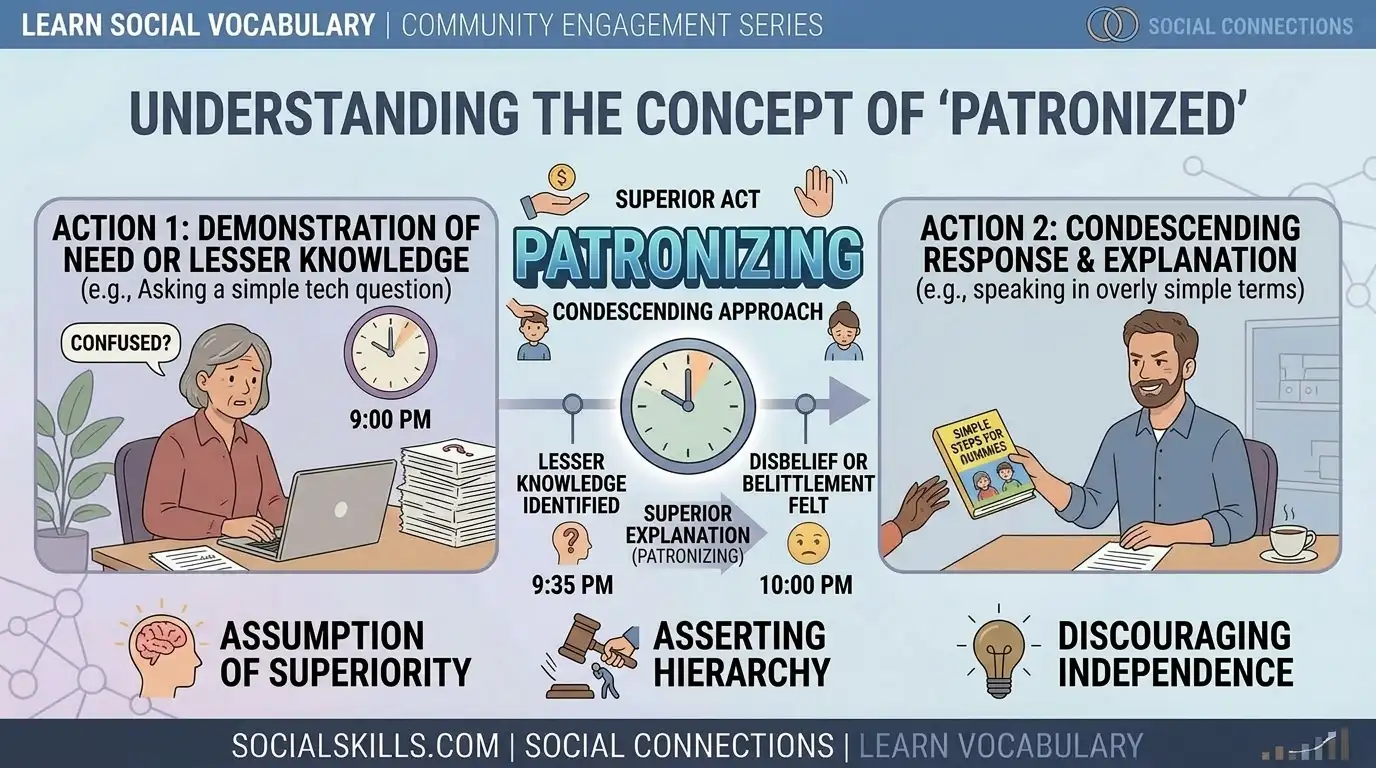
- To treat someone with apparent kindness that subtly reveals a feeling of superiority (Condescension).
- To give custom or financial support to a store, restaurant, or cause (Support/Business).
Native speakers immediately distinguish between these two uses based on context. In everyday conversation, the condescending sense is far more common.
- Part of Speech: Verb (past tense/past participle) or Adjective.
- Simple Definition: Treated condescendingly, or supported as a regular customer.
Connotative Meaning
Connotation is the implied emotional feeling or secondary meaning that a word carries beyond its explicit dictionary definition.
- Positive Tone: Used when describing ongoing customer support or financial backing (e.g., frequented, supported).
- Negative Tone: Used when describing talking down to someone or acting superior (e.g., belittled, snubbed).
- Neutral Tone: Used in formal or historical records regarding sponsorship or visitation.
Etymology and History
The word comes from the Old French patron, derived from the Latin patronus (defender, protector, or master), which originates from pater (father).
- Old English (450–1100): The term did not exist in Old English. Concepts of protection were expressed through native Germanic roots.
- Middle English (1100–1500): Entered the language via Anglo-Norman French as a noun meaning a guardian, saint, or sponsor.
- Modern English (1500–Present): Expanded in the 1600s to mean acting as a patron toward businesses. By the late 1700s, it acquired its negative sense of acting condescendingly superior.
Pronunciation and Structure
- US Pronunciation: /ˈpæ.trə.naɪzd/ or /ˈpeɪ.trə.naɪzd/
- UK Pronunciation: /ˈpæt.rə.naɪzd/
Syllables: pa-tron-ized
Affixation Pattern:
- Root: Patron (Sponsor / Master)
- Prefix: None
- Suffix: -ize (verb-forming suffix) + -ed (past tense marker)
Comprehensive List of Synonyms for Patronized
1. Belittled (Verb) — US: /bɪˈlɪt.əld/ | UK: /bɪˈlɪt.əld/
- Meaning: Made someone or something seem small, unimportant, or weak.
- Tone/Register: Informal to Neutral.
- Example 1:He felt belittled when his boss dismissed his proposal without reading it.
- Example 2:She never belittled her teammates, even when they made obvious mistakes.
2. Condescended (Verb) — US: /ˌkɑːn.dəˈsen.dɪd/ | UK: /ˌkɒn.dɪˈsen.dɪd/
- Meaning: Showed feelings of superiority while acting artificially polite.
- Tone/Register: Formal / Academic.
- Example 1:The professor condescended to his students during the post-lecture Q&A.
- Example 2:She hated being condescended to by shop assistants in high-end stores.
3. Devalued (Verb) — US: /ˌdiːˈvæl.juːd/ | UK: /ˌdiːˈvæl.juːd/
- Meaning: Reduced the perceived worth, importance, or dignity of someone.
- Tone/Register: Formal / Professional.
- Example 1:Her input was devalued during the strategic planning session.
- Example 2:Constant harsh feedback devalued his confidence over time.
4. Disparaged (Verb) — US: /dɪˈspær.ɪdʒd/ | UK: /dɪˈspær.ɪdʒd/
- Meaning: Spoke about someone or something in a slighting or disrespectful way.
- Tone/Register: Formal / Written.
- Example 1:The critic disparaged the director’s latest film effort.
- Example 2:He rarely disparaged rival companies in public statements.
5. Demeaned (Verb) — US: /dɪˈmiːnd/ | UK: /dɪˈmiːnd/
- Meaning: Caused a severe loss of dignity and the respect of others.
- Tone/Register: Formal / Serious.
- Example 1:She felt demeaned by the insulting terms of the contract.
- Example 2:Public reprimands demeaned the staff members needlessly.
6. Looked Down On (Phrasal Verb) — US: /lʊkt daʊn ɑːn/ | UK: /lʊkt daʊn ɒn/
- Meaning: Thought of someone as inferior or unworthy of respect.
- Tone/Register: Conversational / Everyday.
- Example 1:They looked down on anyone who didn’t attend university.
- Example 2:He never looked down on manual laborers in his community.
7. Talked Down To (Phrasal Verb) — US: /tɔːkt daʊn tuː/ | UK: /tɔːkt daʊn tuː/
- Meaning: Spoke to someone in a simple or patronizing tone, assuming low intelligence.
- Tone/Register: Conversational / Informal.
- Example 1:The manager talked down to the new interns.
- Example 2:I dislike doctors who talk down to their patients.
8. Humiliated (Verb) — US: /hjuːˈmɪl.i.eɪ.tɪd/ | UK: /hjuːˈmɪl.i.eɪ.tɪd/
- Meaning: Made someone feel deeply ashamed or foolish in front of others.
- Tone/Register: General / Strong.
- Example 1:The teacher humiliated the student for answering incorrectly.
- Example 2:He felt humiliated after forgetting his presentation lines.
9. Slighted (Verb) — US: /slaɪ.tɪd/ | UK: /slaɪ.tɪd/
- Meaning: Insulted someone by treating them with disrespect or neglect.
- Tone/Register: Formal / Literary.
- Example 1:She felt slighted when she wasn’t invited to the committee meeting.
- Example 2:He took offense, believing his contributions were intentionally slighted.
10. Diminished (Verb) — US: /dɪˈmɪn.ɪʃt/ | UK: /dɪˈmɪn.ɪʃt/
- Meaning: Made someone seem less impressive, valuable, or powerful.
- Tone/Register: Academic / Business.
- Example 1:The manager diminished her accomplishments during the annual evaluation.
- Example 2:Negative comments diminished his excitement for the creative project.
11. Scorned (Verb) — US: /skɔːrnd/ | UK: /skɔːnd/
- Meaning: Felt or expressed open contempt or disdain for someone.
- Tone/Register: Literary / Emotional.
- Example 1:The aristocratic family scorned the local merchants.
- Example 2:He scorned any advice offered by his peers.
12. Snubbed (Verb) — US: /snʌbd/ | UK: /snʌbd/
- Meaning: Ignored or rejected someone disdainfully or abruptly.
- Tone/Register: Informal / Social.
- Example 1:She snubbed her former classmate at the high school reunion.
- Example 2:The host snubbed several guests by ignoring their arrival.
13. Disdained (Verb) — US: /dɪsˈdeɪnd/ | UK: /dɪsˈdeɪnd/
- Meaning: Regarded someone or something as unworthy of consideration or respect.
- Tone/Register: Formal / Literary.
- Example 1:The veteran artist disdained modern digital art techniques.
- Example 2:She disdained those who cheated to gain success.
14. Insulted (Verb) — US: /ɪnˈsʌl.tɪd/ | UK: /ɪnˈsʌl.tɪd/
- Meaning: Said or did something offensive to someone deliberately.
- Tone/Register: General / Everyday.
- Example 1:He insulted her intelligence with his condescending remarks.
- Example 2:The rude waiter insulted several customers before getting fired.
15. Minimized (Verb) — US: /ˈmɪn.ə.maɪzd/ | UK: /ˈmɪn.ɪ.maɪzd/
- Meaning: Represented someone’s work or feelings as smaller or less important than they were.
- Tone/Register: Professional / Psychological.
- Example 1:The report minimized the actual effort required by the development team.
- Example 2:She felt her pain was minimized by the emergency doctor.
16. Mocked (Verb) — US: /mɑːkt/ | UK: /mɒkt/
- Meaning: Teased or ridiculed someone in a derisive manner.
- Tone/Register: Informal / General.
- Example 1:The older children mocked his thick foreign accent.
- Example 2:Critics mocked the politician’s awkward performance on live television.
17. Depreciated (Verb) — US: /dɪˈpriː.ʃi.eɪ.tɪd/ | UK: /dɪˈpriː.ʃi.eɪ.tɪd/
- Meaning: Disparaged or belittled something’s worth or reputation.
- Tone/Register: Formal / Academic.
- Example 1:He depreciated the value of traditional craftsmanship.
- Example 2:The article depreciated the author’s early literary works.
18. Derided (Verb) — US: /dɪˈraɪ.dɪd/ | UK: /dɪˈraɪ.dɪd/
- Meaning: Expressed contempt for someone; ridiculed openly.
- Tone/Register: Formal / Literary.
- Example 1:Opponents derided his proposal as impractical and expensive.
- Example 2:His early theories were derided by the scientific community.
19. Marginalized (Verb) — US: /ˈmɑːr.dʒɪ.nə.laɪzd/ | UK: /ˈmɑː.dʒɪ.nə.laɪzd/
- Meaning: Treated a person or group as insignificant or peripheral.
- Tone/Register: Academic / Social Sciences.
- Example 1:Minority voices were marginalized during the public policy debate.
- Example 2:The new management structure marginalized senior advisors.
20. Patronized (Support Context) (Verb) — US: /ˈpæ.trə.naɪzd/ | UK: /ˈpæt.rə.naɪzd/
- Meaning: Frequent as a customer or client of a business.
- Tone/Register: Neutral / Formal.
- Example 1:Local residents patronized the family-owned bookstore for decades.
- Example 2:She regularly patronized organic markets in her neighborhood.
21. Frequented (Verb) — US: /frɪˈkwen.tɪd/ | UK: /frɪˈkwen.tɪd/
- Meaning: Visited a place often as a regular customer or guest.
- Tone/Register: Formal / Descriptive.
- Example 1:Writers frequented the quiet café near the library campus.
- Example 2:He frequented the gym early in the morning before work.
22. Supported (Verb) — US: /səˈpɔːr.tɪd/ | UK: /səˈpɔː.tɪd/
- Meaning: Gave financial backing or custom to a business or cause.
- Tone/Register: Positive / General.
- Example 1:The community supported local farms by buying seasonal produce.
- Example 2:She actively supported independent artists through monthly subscriptions.
23. Financed (Verb) — US: /ˈfaɪ.nænst/ | UK: /faɪˈnænst/
- Meaning: Provided necessary capital or monetary backing for an enterprise.
- Tone/Register: Business / Formal.
- Example 1:A wealthy investor financed the young inventor’s prototype development.
- Example 2:The municipality financed the construction of the new community clinic.
24. Sponsored (Verb) — US: /ˈspɑːn.sərd/ | UK: /ˈspɒn.səd/
- Meaning: Pledged funds for an activity, event, or individual.
- Tone/Register: Business / Professional.
- Example 1:Major corporations sponsored the annual marathon event.
- Example 2:The charity sponsored education programs for rural children.
25. Subsidized (Verb) — US: /ˈsʌb.sə.daɪzd/ | UK: /ˈsʌb.sɪ.daɪzd/
- Meaning: Supported financially to keep prices low or accessible.
- Tone/Register: Economic / Formal.
- Example 1:The state government subsidized public transit fares for older citizens.
- Example 2:The foundation subsidized research grants for young scholars.
26. Promoted (Verb) — US: /prəˈmoʊ.tɪd/ | UK: /prəˈməʊ.tɪd/
- Meaning: Actively encouraged or furthered the progress of an enterprise.
- Tone/Register: Professional / Marketing.
- Example 1:She promoted local craft industries through her lifestyle blog.
- Example 2:The chamber of commerce promoted sustainable business practices.
27. Backed (Verb) — US: /bækt/ | UK: /bækt/
- Meaning: Provided material or moral support to an endeavor.
- Tone/Register: Conversational / Business.
- Example 1:Crowdfunding backers backed the creative video game concept.
- Example 2:Her family backed her decision to start a private law practice.
28. Encouraged (Verb) — US: /ɪnˈkɝː.ɪdʒd/ | UK: /ɪnˈkʌr.ɪdʒd/
- Meaning: Gave support, confidence, or hope to an individual or project.
- Tone/Register: Positive / General.
- Example 1:Mentors encouraged the students to pursue careers in technology.
- Example 2:The grant encouraged innovation among clean energy startups.
29. Championed (Verb) — US: /ˈtʃæm.pi.ənd/ | UK: /ˈtʃæm.pi.ənd/
- Meaning: Vigorously supported or defended a cause or individual.
- Tone/Register: Formal / Inspiring.
- Example 1:The senator championed educational reform throughout her political tenure.
- Example 2:He championed affordable housing initiatives within the city council.
30. Cultivated (Verb) — US: /ˈkʌl.tə.veɪ.tɪd/ | UK: /ˈkʌl.tɪ.veɪ.tɪd/
- Meaning: Fostered and supported the growth of relationships or businesses.
- Tone/Register: Formal / Professional.
- Example 1:The executive cultivated strong ties with international clients.
- Example 2:She cultivated a loyal base of online supporters for her art.
31. Smirked At (Verb) — US: /smɝːkt æt/ | UK: /smɝːkt æt/
- Meaning: Smiled in an irritatingly self-satisfied or condescending manner toward someone.
- Tone/Register: Informal / Visual.
- Example 1:The rival player smirked at his competitor’s initial mistake.
- Example 2:She smirked at the absurd claim made during the debate.
32. Dismissed (Verb) — US: /dɪˈsmɪst/ | UK: /dɪˈsmɪst/
- Meaning: Rejected someone or their ideas as unworthy of serious thought.
- Tone/Register: Professional / General.
- Example 1:The board dismissed his warnings about supply chain delays.
- Example 2:She felt dismissed whenever she tried to express her concerns.
33. High-Hatted (Verb) — US: /ˈhaɪ.hæt.ɪd/ | UK: /ˈhaɪ.hæt.ɪd/
- Meaning: Treated someone in a snobbish, arrogant, or condescending way.
- Tone/Register: Informal / Idiomatic.
- Example 1:He high-hatted his former neighbors after securing a high-paying job.
- Example 2:Don’t high-hat the staff members who helped you build this company.
34. Lorded Over (Phrasal Verb) — US: /lɔːrdɪd ˈoʊ.vɚ/ | UK: /lɔːdɪd ˈəʊ.və/
- Meaning: Acted in a domineering, arrogant way toward subordinates.
- Tone/Register: Informal / Descriptive.
- Example 1:The supervisor lorded over his team members all afternoon.
- Example 2:She disliked managers who lorded their authority over new workers.
35. Patronized (Condescending Sense) (Verb) — US: /ˈpæ.trə.naɪzd/ | UK: /ˈpæt.rə.naɪzd/
- Meaning: Treated someone with apparent kindness that betrayed a feeling of superiority.
- Tone/Register: General / Critical.
- Example 1:He patronized his assistant by praising her for simple tasks.
- Example 2:Please do not patronize me when I ask serious questions.
36. Humored (Verb) — US: /ˈhjuː.mɚd/ | UK: /ˈhjuː.məd/
- Meaning: Complied with someone’s wishes to keep them content, often patronizingly.
- Tone/Register: Conversational / Neutral.
- Example 1:She humored her grandfather by listening to the same old story again.
- Example 2:They humored his grand ideas without intending to invest.
37. Coddeled (Verb) — US: /ˈkɑː.dəld/ | UK: /ˈkɒd.əld/
- Meaning: Treated someone with excessive care or indulgence, implying weakness.
- Tone/Register: Informal / Critical.
- Example 1:Overprotective parents coddled the boy throughout his schooling.
- Example 2:The manager coddled senior employees while overburdening new hires.
38. Pampered (Verb) — US: /ˈpæm.pɚd/ | UK: /ˈpæm.pəd/
- Meaning: Indulged someone excessively, treating them as frail or elite.
- Tone/Register: General / Neutral.
- Example 1:The luxury hotel pampered its high-paying guests with lavish amenities.
- Example 2:She pampered her pet cat with special gourmet treats daily.
39. Babyed (Verb) — US: /ˈbeɪ.biːd/ | UK: /ˈbeɪ.biːd/
- Meaning: Treated an adult or teenager as if they were an infant or young child.
- Tone/Register: Informal / Conversational.
- Example 1:He hated being babyed by his older siblings whenever he was ill.
- Example 2:She babyed her adult son by managing all his finances.
40. Tolerated (Verb) — US: /ˈtɑː.lə.reɪ.tɪd/ | UK: /ˈtɒl.ə.reɪ.tɪd/
- Meaning: Allowed or endured someone’s presence without true acceptance or respect.
- Tone/Register: Neutral / Distant.
- Example 1:The senior team merely tolerated the enthusiastic consultant.
- Example 2:She felt tolerated rather than welcomed at the family gathering.
41. Slighted (Social Context) (Verb) — US: /slaɪ.tɪd/ | UK: /slaɪ.tɪd/
- Meaning: Manifested social indifference toward someone purposely.
- Tone/Register: Formal / Social.
- Example 1:The hostess slighted the political candidate during introductions.
- Example 2:He felt slighted when his name was omitted from the donor plaque.
42. Overlooked (Verb) — US: /ˌoʊ.vɚˈlʊkt/ | UK: /ˌəʊ.vəˈlʊkt/
- Meaning: Failed to notice or acknowledge someone’s presence or value.
- Tone/Register: General / Neutral.
- Example 1:Qualified internal applicants were overlooked during the recruitment drive.
- Example 2:Her efforts were completely overlooked by the project coordinator.
43. Underestimated (Verb) — US: /ˌʌn.dɚˈes.tə.meɪ.tɪd/ | UK: /ˌʌn.dərˈes.tɪ.meɪ.tɪd/
- Meaning: Estimated someone’s capabilities or value to be smaller than they were.
- Tone/Register: General / Professional.
- Example 1:The rival team underestimated her strategic intelligence on the field.
- Example 2:Never underestimate an opponent who works consistently in silence.
44. Discounted (Verb) — US: /dɪsˈkaʊn.tɪd/ | UK: /dɪsˈkaʊn.tɪd/
- Meaning: Regarded a person’s ideas or presence as worthless or irrelevant.
- Tone/Register: Business / Professional.
- Example 1:The board discounted her survey results due to sample size.
- Example 2:He felt discounted during the group brainstorming session.
45. Scorned (Social Context) (Verb) — US: /skɔːrnd/ | UK: /skɔːnd/
- Meaning: Treated someone with explicit rejection and moral superiority.
- Tone/Register: Serious / Literary.
- Example 1:High society scorned the newcomers who lacked aristocratic titles.
- Example 2:The committee scorned proposals that lacked thorough budget details.
46. Insulted (Implicit) (Verb) — US: /ɪnˈsʌl.tɪd/ | UK: /ɪnˈsʌl.tɪd/
- Meaning: Gave offense through condescending words or subtle slights.
- Tone/Register: Conversational / Direct.
- Example 1:His overly simple explanation insulted her extensive professional experience.
- Example 2:Offering such a low salary insulted the veteran developer’s skills.
47. Minimized (Personal Context) (Verb) — US: /ˈmɪn.ə.maɪzd/ | UK: /ˈmɪn.ɪ.maɪzd/
- Meaning: Downplayed someone’s personal achievements or contributions.
- Tone/Register: Psychological / Informal.
- Example 1:He minimized his colleague’s role in securing the major contract.
- Example 2:She felt her opinions were constantly minimized during family meetings.
48. Mocked (Subtle Context) (Verb) — US: /mɑːkt/ | UK: /mɒkt/
- Meaning: Implicitly made fun of someone under the guise of friendly banter.
- Tone/Register: Informal / Social.
- Example 1:They mocked his enthusiasm with subtle sarcasm.
- Example 2:The satirical play mocked politicians who patronized ordinary voters.
49. Cold-Shouldered (Verb) — US: /koʊldˈʃoʊl.dɚd/ | UK: /kəʊldˈʃəʊl.dəd/
- Meaning: Intentionally showed aloofness, unfriendliness, or social disregard toward someone.
- Tone/Register: Informal / Idiomatic.
- Example 1:The group cold-shouldered the newcomer after the argument.
- Example 2:She felt cold-shouldered by her colleagues during lunch.
50. Snubbed (Formal Context) (Verb) — US: /snʌbd/ | UK: /snʌbd/
- Meaning: Refused to recognize an acquaintance or social equal intentionally.
- Tone/Register: Social / Formal.
- Example 1:The diplomat snubbed the foreign delegation at the state dinner.
- Example 2:He felt snubbed when his handshake gesture was ignored completely.
Synonyms for Patronized by Tone
Selecting synonyms of patronized according to emotional tone ensures your writing conveys precise intent.
Positive Tone (Business / Sponsorship Context)
- Words: Supported, frequented, sponsored, championed, financed, subsidized.
- Why it matters: These terms reflect positive commercial backing, community investment, or helpful sponsorship without any condescension.
Neutral Tone (Descriptive / Formal Context)
- Words: Cultivated, promoted, tolerated, humored, backed.
- Why it matters: Neutral synonyms state facts or actions objectively without adding emotional bias.
Negative Tone (Condescending Context)
- Words: Belittled, demeaned, condescended, disparaged, snubbed, disdained.
- Why it matters: These words emphasize emotional harm, arrogant behavior, and social disrespect.
Playful or Informal Tone
- Words: Talked down to, looked down on, babyed, cold-shouldered, high-hatted.
- Why it matters: Conversational idioms work best in personal essays, fiction, and daily dialogue.
Patronized vs. Close Alternatives
| Word | Primary Shade of Meaning | Tone / Register | Best Context to Use |
| Patronized | Treating someone kindly on the surface while acting superior; OR supporting a business. | Versatile / Formal or Informal | Describing subtle superiority or customer loyalty. |
| Condescended | Acting superior openly while descending to an inferior’s level. | Formal / Academic | Highlighting clear arrogance in academic or professional settings. |
| Belittled | Actively minimizing someone’s worth, work, or confidence. | Direct / Critical | Describing direct attacks on someone’s abilities or achievements. |
How Patronized Changes by Context
Daily Conversation
In casual talk, native speakers rarely use formal vocabulary when describing social slights. Phrase variations like talked down to or looked down on replace patronized naturally in daily dialogue.
Writing or Blogging
Bloggers use words like belittled, diminished, or patronized to describe workplace conflict or interpersonal drama vividly. It adds strong emotional clarity for readers online.
Professional or Academic Tone
In academic or legal writing, use precise terms such as condescended, disparaged, or demarginalized. When discussing commercial support, choose frequented or subsidized.
Creative or Informal Use
Fiction writers often use expressive idioms like lorded over, high-hatted, or smirked at to highlight character flaws and subtle social dynamics clearly.
Common Mistakes & Native Usage Notes
Overusing “Patronized” for Direct Insults
Native speakers do not use patronized to describe aggressive, overt insults. Patronizing behavior is subtle; it disguises superiority as artificial politeness or excessive helpfulness.
Confusing Commercial vs. Behavioral Meaning
- Correct (Behavior): She felt patronized when he explained simple terms.
- Correct (Business): They patronized the local bakery every Saturday morning.
Mix-ups occur when writers apply condescending tones to business contexts. For broader insights on precise vocabulary usage, explore our guide on formal workplace communication patterns.
Real-Life Mini Scenarios
Workplace Scenario
An experienced female engineer asks a question during a software meeting. A junior male colleague explains basic programming concepts to her slowly. She feels patronized by his assumptions about her knowledge level.
Social Situation
At a dinner party, a guest speaks using exaggeratedly simple words to an international visitor. The visitor feels belittled because she speaks fluent English.
Media & Pop Culture
A television host praises a contestant in an overly sweet, childish voice after a simple performance. Critics note that the host condescended to the performer live on air.
Interactive Practice Quiz
Test your understanding of the subtle differences among these words.
Part One
1. Which word is closest in meaning to “patronized” when it means supported financially?
A) Sponsored
B) Ignored
C) Opposed
D) Rejected
2. “The artist was patronized by a wealthy family.” What does “patronized” mean here?
A) Supported
B) Insulted
C) Criticized
D) Avoided
3. Which is a synonym of “patronized” in the sense of supporting someone?
A) Backed
B) Attacked
C) Neglected
D) Discouraged
4. “The organization patronized several young artists.” This means it:
A) Supported them
B) Rejected them
C) Criticized them
D) Ignored them
5. Which word can replace “patronized” when referring to financial support?
A) Funded
B) Destroyed
C) Opposed
D) Prevented
6. Which word means “provided financial or other support”?
A) Sponsored
B) Insulted
C) Belittled
D) Dismissed
7. Which is NOT a synonym of “patronized” in the supportive sense?
A) Funded
B) Sponsored
C) Backed
D) Discouraged
8. “The museum was patronized by several wealthy donors.” What does this suggest?
A) The donors supported the museum
B) The donors closed the museum
C) The donors criticized the museum
D) The donors ignored the museum
9. Choose the best synonym for “patronized.”
A) Supported
B) Rejected
C) Attacked
D) Neglected
10. Which word is associated with giving financial assistance?
A) Financed
B) Belittled
C) Mocked
D) Insulted
Part Two
11. What does “patronized” mean when someone says, “She felt patronized during the conversation”?
A) She felt talked down to
B) She felt financially supported
C) She felt appreciated
D) She felt encouraged
12. Which word is closest in meaning to “patronized” when it means treated as inferior?
A) Condescended to
B) Supported
C) Sponsored
D) Funded
13. “He patronized his colleague by explaining a simple idea as if she knew nothing.” What does “patronized” mean here?
A) Talked down to
B) Supported financially
C) Encouraged
D) Praised
14. Which word can replace “patronized” in the sentence “She felt patronized by his comments”?
A) Belittled
B) Sponsored
C) Funded
D) Supported
15. Which synonym means treating someone as though they are less capable or intelligent?
A) Condescended to
B) Encouraged
C) Sponsored
D) Assisted
16. “The manager patronized the new employee.” Which meaning is most likely?
A) The manager talked down to the employee
B) The manager financially supported the employee
C) The manager promoted the employee
D) The manager thanked the employee
17. Which word is NOT a synonym of “patronized” in the condescending sense?
A) Belittled
B) Demeaned
C) Disrespected
D) Supported
18. “I don’t need you to patronize me.” What does the speaker most likely mean?
A) Don’t talk down to me
B) Don’t support my work
C) Don’t give me money
D) Don’t encourage me
Answer Key
- A
- A
- A
- A
- A
- A
- D
- A
- A
- A
- A
- A
- A
- A
- A
- A
- D
- A
Frequently Asked Questions
1. What are the most common synonyms of patronized in daily conversation?
In everyday conversation, native English speakers frequently use casual phrasal verbs like talked down to, looked down on, or babyed. These informal expressions clearly convey condescending treatment without sounding overly academic or formal in personal discussions.
2. Can patronized have a positive meaning in English?
Yes, patronized has a genuinely positive meaning when used in commercial or financial contexts. It means acting as a regular customer or supporting a business, charity, or arts organization through frequent visits or financial backing.
3. How does condescended differ from patronized?
While both terms describe acting superior, condescended specifically implies lowering oneself to an inferior’s level with obvious arrogance. Patronized often disguises this superiority under the appearance of kindness, fake help, or excessive friendliness.
4. What is the adjective form of patronized?
The adjective form is patronizing. You use it to describe actions, tones, or attitudes (e.g., “a patronizing smile” or “a patronizing tone of voice”). Patronized functions as the past tense verb or passive participle.
5. Why is selecting the right synonym of patronized important for SEO writing?
Using precise semantic variations prevents word repetition, improves readability scores, and helps search engines understand content context. Precise vocabulary matches user search intent across academic, conversational, and professional writing contexts effectively.\
Conclusion
Learning synonyms of patronized builds your vocabulary, enhances your confidence, and improves your everyday writing skills significantly.
Expanding your word choice allows you to express subtle thoughts with exact precision in personal essays and professional communications.
Try applying these new terms in your next email, essay, or conversation to make your English sound natural, polished, and expressive.
If you found this vocabulary guide helpful, check out our resource on synonyms of patronized to discover more word guides and elevate your command of English today!

Mehtab Yasir is a passionate writer and English language enthusiast dedicated to making vocabulary learning simple, practical, and enjoyable. As an author at SynonymDesk.com, she creates helpful content covering synonyms, antonyms, word meanings, vocabulary, phrases, and everyday English usage. Her goal is to provide clear and easy-to-understand information that helps students, writers, professionals, and English learners choose the right words and communicate with greater confidence. Mehtab believes that a strong vocabulary can improve both writing and communication skills. She enjoys researching new words, exploring their meanings and uses, and turning complex language concepts into useful, reader-friendly content. Through her work, she strives to make SynonymDesk.com a reliable resource for anyone looking to improve their English vocabulary and language skills.