Synonyms of leniency can completely transform your writing. Imagine a tired manager deciding not to write up a late worker. That soft choice changes everything.
A high school principal gives a warning instead of a suspension. This choice shows mercy in everyday life. Learning synonyms of leniency helps you describe these key moments.
Learning synonyms of leniency boosts your vocabulary power. It gives bloggers, students, and writers precision in communication. Daily users sound more natural and clear.
Using synonyms of leniency prevents repetitive language. It opens doors to expressive and smooth English. Let us explore how this concept works in practice.
What Does “Leniency” Really Mean?
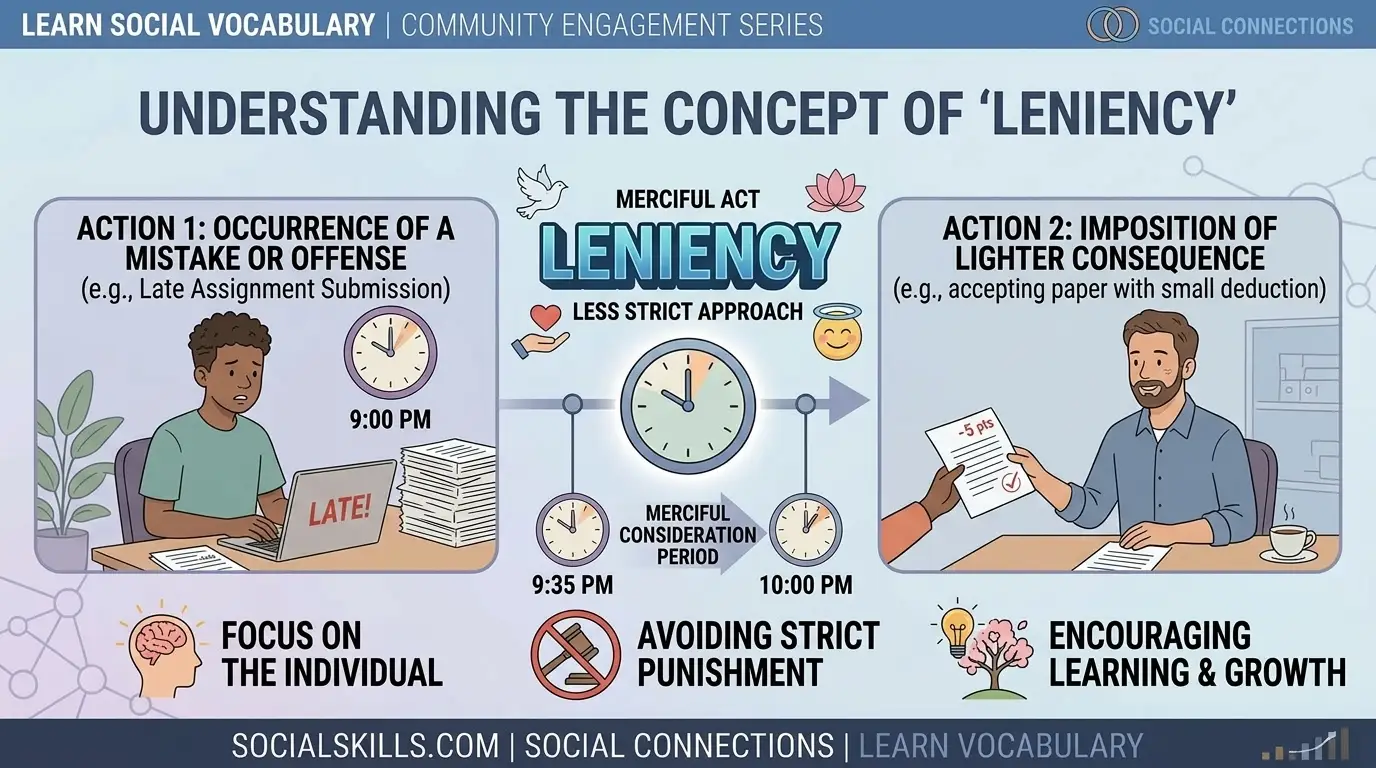
Leniency means showing mercy, tolerance, or mildness when enforcing rules or punishments. It involves choosing gentleness when you have the authority to act strictly. Native speakers view it as choosing compassion over harsh enforcement.
You often hear this term in courtrooms, schools, workplaces, and parenting discussions.
- Part of Speech: Noun (Uncountable)
- Simple Definition: The quality of being merciful or tolerant toward someone who broke a rule.
Connotative Meaning
(Connotation is the emotional feeling or cultural association a word carries beyond its literal definition.)
- Positive tone: Represents kindness, understanding, empathy, and warm forgiveness.
- Negative tone: Suggests weakness, lack of discipline, or failure to enforce justice.
- Neutral tone: Simply describes a reduced penalty or lighter administrative ruling.
Etymology
The word comes from the Latin word lenis, meaning soft, mild, or gentle. The Latin noun lenientia meant mildness or soothing action.
- Old English (450–1100): Not present in Old English; native speakers used terms like miltse (mercy).
- Middle English (1100–1500): Adopted through Anglo-Norman and Latin legal writing as lenient.
- Modern English (1500–Present): Shifted into common usage to describe mild administrative or judicial judgment.
Pronunciation (US & UK)
- US: /ˈliː.ni.ən.si/
- UK: /ˈliː.ni.ən.si/
Syllables & Structure
- Syllable Breakdown: le-ni-en-cy
- Root: Leni (Soft, mild)
- Prefix: None
- Suffix: -ency (Forms nouns of quality or state)
Complete List of Synonyms of Leniency
Below are 70 accurate synonyms of leniency, organized with distinct shades of meaning, register notes, and modern usage examples.
1. Mercy (Noun) — US: /ˈmɝː.si/ | UK: /ˈmɜː.si/
- Meaning: Compassion or forgiveness shown toward someone who can be punished.
- Tone/Register: Neutral, General, Formal
- Example 1: The judge showed mercy to the first-time offender.
- Example 2: We asked for mercy after making a huge mistake on the project.
2. Clemency (Noun) — US: /ˈklem.ən.si/ | UK: /ˈklem.ən.si/
- Meaning: Official mercy shown by a judge or leader to reduce punishment.
- Tone/Register: Formal, Legal, Academic
- Example 1: The governor granted clemency to the inmate last week.
- Example 2: His lawyer made a strong plea for clemency during the trial.
3. Lenity (Noun) — US: /ˈlen.ə.t̬i/ | UK: /ˈlen.ə.ti/
- Meaning: Gentle or merciful behavior toward someone who made a mistake.
- Tone/Register: Formal, Literary
- Example 1: The officer treated the young driver with unexpected lenity.
- Example 2: Her lenity helped calm down a tense classroom situation.
4. Indulgence (Noun) — US: /ɪnˈdʌl.dʒəns/ | UK: /ɪnˈdʌl.dʒəns/
- Meaning: Allowing someone extra freedom or forgiving minor rule breaks.
- Tone/Register: Informal, Personal
- Example 1: Parents sometimes show too much indulgence during summer break.
- Example 2: Thank you for your indulgence while we fix these technical issues.
5. Tolerance (Noun) — US: /ˈtɑː.lɚ.əns/ | UK: /ˈtɒl.ər.əns/
- Meaning: The willingness to accept behavior that you might disagree with.
- Tone/Register: Neutral, Academic, Professional
- Example 1: The company maintains high tolerance for minor formatting errors.
- Example 2: Teacher tolerance helps quiet students feel comfortable speaking up.
6. Compassion (Noun) — US: /kəmˈpæʃ.ən/ | UK: /kəmˈpæʃ.ən/
- Meaning: Sympathy and concern for the suffering or misfortunes of others.
- Tone/Register: Warm, Emotional, Universal
- Example 1: She handled the policy violation with deep compassion.
- Example 2: Compassion moved the team to extend the late submission deadline.
7. Forgiveness (Noun) — US: /fɚˈɡɪv.nəs/ | UK: /fəˈɡɪv.nəs/
- Meaning: The action of stopping feeling angry or resentful toward an offender.
- Tone/Register: General, Personal
- Example 1: The customer offered forgiveness after receiving a quick apology.
- Example 2: True forgiveness helped rebuild trust in the workplace.
8. Mildness (Noun) — US: /ˈmaɪld.nəs/ | UK: /ˈmaɪld.nəs/
- Meaning: The quality of being gentle, non-severe, or soft in temperament.
- Tone/Register: Neutral, Descriptive
- Example 1: The mildness of his tone surprised everyone in the room.
- Example 2: Her mildness made it easy for employees to report mistakes.
9. Gentleness (Noun) — US: /ˈdʒen.təl.nəs/ | UK: /ˈdʒen.təl.nəs/
- Meaning: The quality of being kind, tender, or mild in treatment.
- Tone/Register: Gentle, Warm, Personal
- Example 1: He responded to the complaint with great gentleness.
- Example 2: The mentor’s gentleness encouraged the new intern to keep trying.
10. Softness (Noun) — US: /ˈsɑːft.nəs/ | UK: /ˈsɒft.nəs/
- Meaning: Lack of strictness, toughness, or severity when dealing with issues.
- Tone/Register: Informal, Sometimes Critical
- Example 1: Critics mistook his patience for administrative softness.
- Example 2: A bit of softness worked better than harsh yelling.
11. Magnanimity (Noun) — US: /ˌmæɡ.nəˈnɪm.ə.t̬i/ | UK: /ˌmæɡ.nəˈnɪm.ə.ti/
- Meaning: High-minded generosity and forgiveness toward a rival or offender.
- Tone/Register: Very Formal, Elevating
- Example 1: The winning team showed magnanimity by praising their opponents.
- Example 2: Her magnanimity after the argument earned her widespread respect.
12. Charity (Noun) — US: /ˈtʃær.ə.t̬i/ | UK: /ˈtʃær.ə.ti/
- Meaning: Kindness and tolerance in judging others’ flaws or misdeeds.
- Tone/Register: Formal, Ethical
- Example 1: Try to view his strange decision with a bit of charity.
- Example 2: Her charity toward mistake-makers created a forgiving culture.
13. Grace (Noun) — US: /ɡreɪs/ | UK: /ɡreɪs/
- Meaning: Unmerited favor, goodwill, or mercy extended to someone.
- Tone/Register: Formal, Inspirational
- Example 1: The manager extended grace when the deadline was missed.
- Example 2: She accepted the late apology with remarkable grace.
14. Pity (Noun) — US: /ˈpɪt.i/ | UK: /ˈpɪt.i/
- Meaning: Feeling sorrow and compassion caused by the suffering of others.
- Tone/Register: Neutral, Personal
- Example 1: Out of pity, the landlord gave them an extra week for rent.
- Example 2: Pity influenced the officer to issue a warning instead of a ticket.
15. Humaneness (Noun) — US: /hjuːˈmeɪn.nəs/ | UK: /hjuːˈmeɪn.nəs/
- Meaning: Quality of showing compassion and consideration toward people or animals.
- Tone/Register: Formal, Ethical
- Example 1: The humaneness of the new policy was praised by all staff.
- Example 2: We must treat all prisoners with basic humaneness.
16. Moderation (Noun) — US: /ˌmɑː.dəˈreɪ.ʃən/ | UK: /ˌmɒd.ərˈeɪ.ʃən/
- Meaning: The avoidance of excess or extremes, especially in enforcement.
- Tone/Register: Balanced, Formal, Academic
- Example 1: The supervisor applied the strict regulations with moderation.
- Example 2: Moderation in punishment yields better long-term behavior.
17. Tenderness (Noun) — US: /ˈten.dɚ.nəs/ | UK: /ˈten.də.nəs/
- Meaning: Gentle care, sympathy, or softness toward someone vulnerable.
- Tone/Register: Warm, Emotional
- Example 1: The coach treated the injured player with real tenderness.
- Example 2: Her tenderness helped the upset child calm down quickly.
18. Forbearing (Noun) — US: /fɔːrˈber.ɪŋ/ | UK: /fɔːˈbeər.ɪŋ/
- Meaning: Patient self-control and restraint in the face of annoyance or offense.
- Tone/Register: Literary, Academic
- Example 1: His forbearing during the heated debate kept peace in the room.
- Example 2: Forbearance is essential when training new workers.
19. Restraint (Noun) — US: /rɪˈstreɪnt/ | UK: /rɪˈstreɪnt/
- Meaning: Holding back from applying full force, punishment, or anger.
- Tone/Register: Professional, Formal
- Example 1: Police showed commendable restraint during the noisy protest.
- Example 2: Restraint prevented a small misunderstanding from escalating.
20. Non-severity (Noun) — US: /nɑːn.səˈver.ə.t̬i/ | UK: /nɒn.sɪˈver.ə.ti/
- Meaning: The state of not being harsh, strict, or extreme.
- Tone/Register: Academic, Technical
- Example 1: The non-severity of the penalty surprised legal observers.
- Example 2: Non-severity in initial warnings encourages honest communication.
21. Laxity (Noun) — US: /ˈlæk.sə.t̬i/ | UK: /ˈlæk.sə.ti/
- Meaning: Lack of strictness or care; overly loose enforcement.
- Tone/Register: Critical, Negative
- Example 1: Safety inspection laxity led to a minor workplace accident.
- Example 2: The school board warned against total administrative laxity.
22. Slackness (Noun) — US: /ˈslæk.nəs/ | UK: /ˈslæk.nəs/
- Meaning: Loose enforcement of rules or standards due to carelessness.
- Tone/Register: Informal, Critical
- Example 1: Management noticed slackness in enforcing the dress code.
- Example 2: Slackness during shifts causes lower overall productivity.
23. Permissiveness (Noun) — US: /pɚˈmɪs.ɪv.nəs/ | UK: /pəˈmɪs.ɪv.nəs/
- Meaning: A high degree of freedom granted by authority figures.
- Tone/Register: Analytical, Educational
- Example 1: High permissiveness in modern parenting has pros and cons.
- Example 2: Excessive permissiveness can confuse students about boundaries.
24. Long-suffering (Noun) — US: /ˌlɑːŋˈsʌf.ɚ.ɪŋ/ | UK: /ˌlɒŋˈsʌf.ər.ɪŋ/
- Meaning: Bearing troubles or provocations with long patience.
- Tone/Register: Empathetic, Literary
- Example 1: The teacher’s long-suffering finally paid off when grades rose.
- Example 2: After months of long-suffering, she politely demanded changes.
25. Patience (Noun) — US: /ˈpeɪ.ʃəns/ | UK: /ˈpeɪ.ʃəns/
- Meaning: Capacity to accept delays, problems, or suffering without getting angry.
- Tone/Register: General, Everyday
- Example 1: Thank you for your patience while we review your application.
- Example 2: Teaching toddlers requires endless patience and warm energy.
26. Consideration (Noun) — US: /kənˌsɪd.əˈreɪ.ʃən/ | UK: /kənˌsɪd.ərˈeɪ.ʃən/
- Meaning: Thoughtful care for the feelings and situation of others.
- Tone/Register: Business, Professional
- Example 1: Out of consideration for her illness, we rescheduled the test.
- Example 2: Show consideration when giving feedback to junior writers.
27. Clemency-seeking (Noun) — US: /ˈklem.ən.si ˈsiː.kɪŋ/ | UK: /ˈklem.ən.si ˈsiː.kɪŋ/
- Meaning: The act or process of asking for official mercy or a lighter sentence.
- Tone/Register: Legal, Formal
- Example 1: The legal team initiated clemency-seeking procedures immediately.
- Example 2: Clemency-seeking efforts gained strong community support online.
28. Kindness (Noun) — US: /ˈkaɪnd.nəs/ | UK: /ˈkaɪnd.nəs/
- Meaning: The quality of being friendly, generous, and considerate.
- Tone/Register: Simple, General
- Example 1: A small act of kindness cheered up the stressed employee.
- Example 2: Her kindness turned an awkward mistake into a positive lesson.
29. Soft-heartedness (Noun) — US: /ˌsɑːftˈhɑːr.t̬ɪd.nəs/ | UK: /ˌsɒftˈhɑː.tɪd.nəs/
- Meaning: Being easily moved to sympathy, pity, or gentle action.
- Tone/Register: Warm, Informal
- Example 1: His soft-heartedness made it hard for him to fire anyone.
- Example 2: Grandma’s soft-heartedness meant extra desserts for everyone.
30. Mercy-giving (Noun) — US: /ˈmɝː.si ˈɡɪv.ɪŋ/ | UK: /ˈmɜː.si ˈɡɪv.ɪŋ/
- Meaning: The act of bestowing forgiveness or lighter punishment.
- Tone/Register: Descriptive, Literary
- Example 1: The leader was famous for his wise, mercy-giving character.
- Example 2: Mercy-giving brought relief to the stressed population.
31. Benevolence (Noun) — US: /bəˈnev.əl.əns/ | UK: /bəˈnev.əl.əns/
- Meaning: Desire to do good to others; goodwill and charitableness.
- Tone/Register: Formal, Elevated
- Example 1: The king ruled his lands with genuine benevolence.
- Example 2: Her corporate benevolence improved local community centers.
32. Goodness (Noun) — US: /ˈɡʊd.nəs/ | UK: /ˈɡʊd.nəs/
- Meaning: The quality of being morally good, gentle, or beneficial.
- Tone/Register: Simple, Direct
- Example 1: We were touched by the pure goodness of her actions.
- Example 2: Trust in the general goodness of your team members.
33. Understanding (Noun) — US: /ˌʌn.dɚˈstæn.dɪŋ/ | UK: /ˌʌn.dəˈstæn.dɪŋ/
- Meaning: Sympathetic awareness or tolerance toward others’ faults.
- Tone/Register: Conversational, Professional
- Example 1: We appreciate your understanding regarding the shipping delay.
- Example 2: A little understanding goes a long way in resolving disputes.
34. Sympathy (Noun) — US: /ˈsɪm.pə.θi/ | UK: /ˈsɪm.pə.θi/
- Meaning: Feelings of pity and sorrow for someone else’s misfortune.
- Tone/Register: Empathetic, General
- Example 1: The manager expressed sympathy for his personal situation.
- Example 2: Sympathy led the board to cancel the penalty fees.
35. Warmth (Noun) — US: /wɔːrmθ/ | UK: /wɔːmθ/
- Meaning: Enthusiasm, affection, or gentle kindness in behavior.
- Tone/Register: Informal, Personal
- Example 1: She greeted the new team members with genuine warmth.
- Example 2: His warmth made difficult feedback much easier to swallow.
36. Mild-heartedness (Noun) — US: /maɪld ˈhɑːr.t̬ɪd.nəs/ | UK: /maɪld ˈhɑː.tɪd.nəs/
- Meaning: Possessing a gentle disposition that avoids harshness.
- Tone/Register: Literary, Personal
- Example 1: Her mild-heartedness prevented unnecessary conflict at home.
- Example 2: The judge was known for his steady mild-heartedness.
37. Mildness of temper (Noun) — US: /ˈmaɪld.nəs əv ˈtem.pɚ/ | UK: /ˈmaɪld.nəs əv ˈtem.pə/
- Meaning: An even, gentle mood that does not anger or punish easily.
- Tone/Register: Descriptive, Formal
- Example 1: His mildness of temper kept the intense meeting peaceful.
- Example 2: She handled rude complaints with remarkable mildness of temper.
38. Broad-mindedness (Noun) — US: /ˌbrɑːdˈmaɪn.dɪd.nəs/ | UK: /ˌbrɔːdˈmaɪn.dɪd.nəs/
- Meaning: Willingness to accept viewpoints or behaviors different from one’s own.
- Tone/Register: Academic, Neutral
- Example 1: Cultural broad-mindedness is vital for global companies.
- Example 2: Her broad-mindedness allowed space for creative experimentation.
39. Open-handedness (Noun) — US: /ˌoʊ.pənˈhæn.dɪd.nəs/ | UK: /ˌəʊ.pənˈhæn.dɪd.nəs/
- Meaning: Generosity in giving or granting favors and second chances.
- Tone/Register: Formal, Literary
- Example 1: The CEO showed open-handedness with bonus distributions.
- Example 2: Open-handedness in giving chances made him a beloved mentor.
40. Soft-touch (Noun) — US: /ˈsɑːft.tʌtʃ/ | UK: /ˈsɒft.tʌtʃ/
- Meaning: An approach characterized by gentle handling rather than force.
- Tone/Register: Informal, Idiomatic
- Example 1: A soft-touch approach worked best with the timid intern.
- Example 2: He is a soft touch when his daughters ask for extra allowance.
41. Ease (Noun) — US: /iːz/ | UK: /iːz/
- Meaning: Freedom from severity, strictness, or pressure.
- Tone/Register: Neutral, Everyday
- Example 1: The ease of the new workplace rules relieved company stress.
- Example 2: She managed her team with relaxed ease and trust.
42. Easygoingness (Noun) — US: /ˌiː.ziˈɡoʊ.ɪŋ.nəs/ | UK: /ˌiː.ziˈɡəʊ.ɪŋ.nəs/
- Meaning: A relaxed and casual attitude toward rule enforcement.
- Tone/Register: Informal, Casual
- Example 1: His easygoingness made the long office shift enjoyable.
- Example 2: Be careful that easygoingness does not turn into poor discipline.
43. Flexibility (Noun) — US: /ˌflek.səˈbɪl.ə.t̬i/ | UK: /ˌflek.səˈbɪl.ə.ti/
- Meaning: Willingness to change or compromise rules according to situations.
- Tone/Register: Business, Modern Professional
- Example 1: Schedule flexibility improved employee satisfaction overall.
- Example 2: Showing flexibility with project deadlines built strong loyalty.
44. Compromise (Noun) — US: /ˈkɑːm.prə.maɪz/ | UK: /ˈkɒm.prə.maɪz/
- Meaning: An agreement reached by mutual concession and reduced demands.
- Tone/Register: Business, General
- Example 1: Both sides accepted a fair compromise to avoid court.
- Example 2: Compromise allows teams to move past stubborn roadblocks.
45. Accommodation (Noun) — US: /əˌkɑː.məˈdeɪ.ʃən/ | UK: /əˌkɒm.əˈdeɪ.ʃən/
- Meaning: Adjustment of rules or expectations to fit someone’s functional needs.
- Tone/Register: Business, Formal, Legal
- Example 1: The university granted an accommodation for extra exam time.
- Example 2: Reasonable accommodation helps workers manage health needs.
46. Allowance (Noun) — US: /əˈlaʊ.əns/ | UK: /əˈlaʊ.əns/
- Meaning: Making a concession for errors, circumstances, or lack of experience.
- Tone/Register: General, Practical
- Example 1: Make allowance for traffic delays when planning your trip.
- Example 2: The boss made an allowance for the newly hired assistant.
47. Concession (Noun) — US: /kənˈseʃ.ən/ | UK: /kənˈseʃ.ən/
- Meaning: Granting a right, privilege, or exemption from a normal standard.
- Tone/Register: Business, Legal
- Example 1: Management offered a tax concession to attract investors.
- Example 2: Making this small concession resolved a long-standing dispute.
48. Exception (Noun) — US: /ɪkˈsep.ʃən/ | UK: /ɪkˈsep.ʃən/
- Meaning: An instance where a rule or punishment does not apply.
- Tone/Register: General, Administrative
- Example 1: The teacher made an exception and accepted the late paper.
- Example 2: Exceptions should be rare to maintain policy fairness.
49. Exemption (Noun) — US: /ɪɡˈzemp.ʃən/ | UK: /ɪɡˈzemp.ʃən/
- Meaning: Official freedom from an obligation, rule, or penalty.
- Tone/Register: Formal, Administrative, Legal
- Example 1: Small businesses received an exemption from the new regulation.
- Example 2: He applied for a fee exemption due to financial hardship.
50. Immunity (Noun) — US: /ɪˈmjuː.nə.t̬i/ | UK: /ɪˈmjuː.nə.ti/
- Meaning: Official protection or exemption from penalty or legal action.
- Tone/Register: Legal, Formal
- Example 1: The witness was granted immunity in exchange for testimony.
- Example 2: Diplomatic immunity protects ambassadors from local prosecution.
51. Remission (Noun) — US: /rɪˈmɪʃ.ən/ | UK: /rɪˈmɪʃ.ən/
- Meaning: Cancellation or reduction of a debt, penalty, or prison term.
- Tone/Register: Legal, Official
- Example 1: The prisoner earned a remission of his sentence for good behavior.
- Example 2: Remission of interest fees helped struggling homeowners.
52. Absolution (Noun) — US: /ˌæb.səˈluː.ʃən/ | UK: /ˌæb.səˈluː.ʃən/
- Meaning: Formal release from guilt, obligation, or punishment.
- Tone/Register: Formal, Religious, Academic
- Example 1: The apology brought him emotional absolution after years.
- Example 2: Seeking absolution for past mistakes helps people move forward.
53. Discharge (Noun) — US: /dɪsˈtʃɑːrdʒ/ | UK: /dɪsˈtʃɑːdʒ/
- Meaning: Official release from a charge, debt, or legal penalty.
- Tone/Register: Legal, Official
- Example 1: The judge ordered a full discharge of all charges against her.
- Example 2: Bankruptcy discharge gives individuals a fresh financial start.
54. Amnesty (Noun) — US: /ˈæm.nə.sti/ | UK: /ˈæm.nə.sti/
- Meaning: An official pardon granted to a group of people for offenses.
- Tone/Register: Political, Formal, News
- Example 1: The government declared an amnesty for unregistered vehicles.
- Example 2: Tax amnesty programs encourage citizens to clear old debts.
55. Reprieve (Noun) — US: /rɪˈpriːv/ | UK: /rɪˈpriːv/
- Meaning: Temporary delay or cancellation of a punishment or unpleasant event.
- Tone/Register: Formal, Journalistic
- Example 1: Sunny weather gave construction workers a brief reprieve.
- Example 2: The governor granted a last-minute reprieve to stay the order.
56. Respite (Noun) — US: /ˈres.pɪt/ | UK: /ˈres.paɪt/
- Meaning: A short period of rest or relief from something difficult.
- Tone/Register: Literary, General
- Example 1: The weekend provided a welcome respite from intense study.
- Example 2: A brief respite helped doctors regain their energy.
57. Mitigation (Noun) — US: /ˌmɪt̬.əˈɡeɪ.ʃən/ | UK: /ˌmɪt.ɪˈɡeɪ.ʃən/
- Meaning: Action of reducing the severity, seriousness, or painfulness of something.
- Tone/Register: Legal, Corporate
- Example 1: His clean background was considered in mitigation of the offense.
- Example 2: Risk mitigation plans prevented serious project delays.
58. Softening (Noun) — US: /ˈsɑːf.n̩.ɪŋ/ | UK: /ˈsɒf.n̩.ɪŋ/
- Meaning: The process of becoming less severe, strict, or harsh.
- Tone/Register: Neutral, Descriptive
- Example 1: We noticed a softening in the company’s dress code policy.
- Example 2: Her softening stance on remote work pleased all employees.
59. Mild judgment (Noun) — US: /maɪld ˈdʒʌdʒ.mənt/ | UK: /maɪld ˈdʒʌdʒ.mənt/
- Meaning: Giving a gentle evaluation or lighter punishment.
- Tone/Register: General, Descriptive
- Example 1: The committee offered a mild judgment on the minor error.
- Example 2: Mild judgment keeps morale high while correcting mistakes.
60. Light-handedness (Noun) — US: /laɪt ˈhæn.dɪd.nəs/ | UK: /laɪt ˈhæn.dɪd.nəs/
- Meaning: Handling situations gently without heavy enforcement.
- Tone/Register: Business, Management
- Example 1: Management’s light-handedness allowed creativity to bloom.
- Example 2: Light-handedness in supervision builds employee self-trust.
61. Benignity (Noun) — US: /bɪˈnɪɡ.nə.t̬i/ | UK: /bɪˈnɪɡ.nə.ti/
- Meaning: Kindness or gentleness of disposition and manner.
- Tone/Register: Very Formal, Literary
- Example 1: The elder looked at the children with serene benignity.
- Example 2: Her benignity created a safe atmosphere for sharing ideas.
62. Easy treatment (Noun) — US: /ˈiː.zi ˈtriːt.mənt/ | UK: /ˈiː.zi ˈtriːt.mənt/
- Meaning: Handling an offender without severe pressure or punishment.
- Tone/Register: Everyday, Conversational
- Example 1: First-time offenders often receive lenient treatment in court.
- Example 2: Don’t expect easy treatment if you break safety rules twice.
63. Mild sentence (Noun) — US: /maɪld ˈsen.təns/ | UK: /maɪld ˈsen.təns/
- Meaning: A light legal penalty given for a crime or violation.
- Tone/Register: Legal, News
- Example 1: The lawyer argued successfully for a mild sentence.
- Example 2: The mild sentence included community service.
64. Light touch (Noun) — US: /laɪt tʌtʃ/ | UK: /laɪt tʌtʃ/
- Meaning: A subtle, gentle, and unforced way of controlling a situation.
- Tone/Register: Idiomatic, Professional
- Example 1: Leading creative teams requires a light touch.
- Example 2: Her light touch during negotiations prevented conflict.
65. Slack control (Noun) — US: /slæk kənˈtroʊl/ | UK: /slæk kənˈtrəʊl/
- Meaning: Unusually loose or careless management oversight.
- Tone/Register: Business, Critical
- Example 1: Slack control caused inventory records to become inaccurate.
- Example 2: The audit highlighted issues caused by slack control.
66. Loose enforcement (Noun) — US: /luːs enˈfɔːrs.mənt/ | UK: /luːs enˈfɔːs.mənt/
- Meaning: Failure to strictly apply rules or regulations.
- Tone/Register: News, Professional
- Example 1: Loose enforcement of parking rules led to blocked streets.
- Example 2: The city fixed problems caused by past loose enforcement.
67. Mild penalty (Noun) — US: /maɪld ˈpen.əl.ti/ | UK: /maɪld ˈpen.əl.ti/
- Meaning: A minor fine or gentle punishment for a minor infraction.
- Tone/Register: Administrative, Legal
- Example 1: Returning books late results in a very mild penalty.
- Example 2: The company paid a mild penalty for the paperwork delay.
68. Soft discipline (Noun) — US: /sɑːft ˈdɪs.ə.plɪn/ | UK: /sɒft ˈdɪs.ə.plɪn/
- Meaning: Corrective guidance focused on talking rather than harsh punishment.
- Tone/Register: Educational, Family
- Example 1: Soft discipline encourages children to express feelings safely.
- Example 2: The school adopted soft discipline methods this year.
69. Gentle oversight (Noun) — US: /ˈdʒen.təl ˈoʊ.vɚ.saɪt/ | UK: /ˈdʒen.təl ˈəʊ.və.saɪt/
- Meaning: Supervising people with trust and minimal pressure.
- Tone/Register: Corporate, Professional
- Example 1: Senior developers thrive under gentle oversight.
- Example 2: Gentle oversight helps new hires build confidence quickly.
70. Quiet tolerance (Noun) — US: /ˈkwaɪ.ət ˈtɑː.lɚ.əns/ | UK: /ˈkwaɪ.ət ˈtɒl.ər.əns/
- Meaning: Patiently accepting small issues without raising loud complaints.
- Tone/Register: Personal, Literary
- Example 1: She handled noisy neighbors with quiet tolerance.
- Example 2: Quiet tolerance kept peace in the shared apartment.
Synonyms for “Leniency” by Tone
Choosing the right synonym depends entirely on your context and emotional intention.
Positive Tone (Compassionate & Fair)
- Compassion, Mercy, Clemency, Grace, Magnanimity, Benevolence, Humaneness.
- Why it matters: Use these words when you want to praise someone for showing heart, emotional intelligence, or noble forgiveness.
Neutral Tone (Administrative & Descriptive)
- Moderation, Exemption, Allowance, Accommodation, Respite, Mitigation, Remission.
- Why it matters: Ideal for news reporting, business policy writing, academic papers, and official documentation where bias must be avoided.
Negative Tone (Careless & Overly Loose)
- Laxity, Slackness, Permissiveness, Loose enforcement, Slack control.
- Why it matters: Use these when gentle treatment causes problems, safety issues, or lack of discipline in an organization.
Playful / Informal Tone (Casual)
- Soft-touch, Light touch, Easygoingness.
- Why it matters: Perfect for personal blogs, informal emails, creative storytelling, and friendly daily conversations.
Mini Comparison: Leniency vs. Mercy vs. Clemency
1. Leniency
- Core Meaning: Reduced strictness in rules or punishment.
- Primary Tone: Administrative / General.
- Best Context: Schools, offices, parenting.
- Example: “The teacher showed leniency on the deadline.”
2. Mercy
- Core Meaning: Deep compassion toward someone in distress.
- Primary Tone: Emotional / Moral / Personal.
- Best Context: Personal relationships, general human acts.
- Example: “He begged for mercy after his mistake.”
3. Clemency
- Core Meaning: Official reduction of a legal sentence.
- Primary Tone: Formal / Legal / Governmental.
- Best Context: Courtrooms, presidential pardons.
- Example: “The governor granted clemency to the prisoner.”
Context-Based Usage Guide
Daily Conversation
In casual chats, native speakers rarely use heavy words like clemency or magnanimity. Instead, use natural phrases like giving a break, patience, flexibility, or understanding.
Writing & Blogging
Bloggers and content creators benefit from semantic variety. Rotating between leniency, compassion, tolerance, and allowance keeps readers engaged without feeling repetitive.
Professional & Academic Settings
In workplace emails or academic papers, precision is required. Use mitigation, accommodation, concession, or administrative moderation to sound professional and articulate.
Common Mistakes & Native Usage
Misuse Scenarios
- Confusing Leniency with Weakness: Leniency is a conscious choice to reduce punishment. Weakness implies an inability to enforce rules.
- Mixing Up Clemency and Leniency: Clemency is almost strictly legal or official. Using “clemency” for late homework sounds unnaturally dramatic.
Register Notes
- Spoken English: Prefers “easygoing,” “flexible,” or “giving a pass.”
- Written English: Prefers “leniency,” “tolerance,” “exemption,” or “mitigation.”
Real-Life Mini Scenarios
Workplace Scenario
A project manager notices an employee missed a project milestone due to sudden family illness. Instead of issuing a formal reprimand, the manager extends the deadline by three days.
- Word in action: The manager exercised leniency by adjusting the schedule.
Academic Scenario
A student submits a term paper two hours past midnight because of technical internet issues. The professor accepts the file without taking off points.
- Word in action: The professor showed understanding and accepted the paper.
Interactive Practice Quiz
Test your knowledge of synonyms of leniency with these real-life scenarios.
- Which word best fits an official reduction of a prison sentence by a governor?
- A) Soft-touch
- B) Clemency
- C) Laxity
- D) Easygoingness
- If a company ignores safety rules and causes an accident, what word describes this negatively?
- A) Compassion
- B) Magnanimity
- C) Laxity
- D) Grace
- Which term is most natural when a friend accepts your late arrival at lunch without getting upset?
- A) Amnesty
- B) Understanding
- C) Remission
- D) Exemption
- A teacher accepts homework one day late because a student was sick. This shows:
- A) Strictness
- B) Leniency
- C) Slackness
- D) Hostility
- What is the main difference between “Mercy” and “Clemency”?
- A) Mercy is legal; Clemency is informal
- B) Mercy is emotional/general; Clemency is formal/legal
- C) There is no difference
- D) Clemency means punishment
- Which synonym carries a purely positive, noble emotional tone?
- A) Permissiveness
- B) Slackness
- C) Magnanimity
- D) Loose enforcement
- If a country forgives all tax evaders who report their income this month, they grant an:
- A) Accommodation
- B) Amnesty
- C) Allowance
- D) Easy treatment
- Choose the best formal business alternative for “giving extra time for functional needs”:
- A) Soft-heartedness
- B) Soft touch
- C) Accommodation
- D) Slackness
- What word describes a gentle, non-forced management style?
- A) Light touch
- B) Immunity
- C) Remission
- D) Non-severity
- Which word fits best: “The referee showed _____ by not issuing a red card for the minor trip.”
- A) Absolution
- B) Forbearance
- C) Immunity
- D) Discharge
Application Task
Write 1 original sentence about a personal experience using one positive synonym of leniency (e.g., compassion, flexibility, grace).
Answer Key: 1: B | 2: C | 3: B | 4: B | 5: B | 6: C | 7: B | 8: C | 9: A | 10: B
FAQs
1. What is the most common synonym of leniency in legal contexts?
The most common legal synonym is clemency. Judges and government executives grant clemency to reduce sentences or pardon offenses. Other legal alternatives include mitigation, remission, and reprieve.
2. Can leniency have a negative meaning in business?
Yes. When leniency leads to poor discipline or safety issues, words like laxity or slackness are used. Negative leniency implies a failure to enforce standards.
3. How does leniency differ from forgiveness?
Leniency focuses on reducing or withholding punishment from an authority position. Forgiveness focuses on letting go of personal resentment or anger in emotional relationships.
4. What is the adjective form of leniency?
The adjective form is lenient. For example, you can say, “The judge was surprisingly lenient with the young driver.”
5. Why should writers use varied synonyms of leniency?
Using varied synonyms prevents repetitive writing and clarifies your tone. It allows you to specify whether an act was warm compassion, official clemency, or careless laxity.
Conclusion
Understanding the synonyms of leniency can help you express ideas about mercy, tolerance, and kindness more clearly. Leniency refers to a gentle or less strict approach, especially when dealing with mistakes, rules, or punishment. Learning related words makes your vocabulary more flexible and useful.
The synonyms of leniency include words such as mercy, clemency, tolerance, compassion, forgiveness, and mildness. Although these words share a similar meaning, each one can fit different situations. For example, “clemency” is often used when discussing punishment, while “tolerance” can describe patience toward different opinions or behaviors.
Knowing the synonyms of leniency is useful in everyday conversations, academic writing, professional communication, and formal discussions. Choosing the right synonym can make your sentences more precise and help you communicate your intended meaning without unnecessary repetition.
This guide explores common alternatives to leniency and explains how they can be used naturally in different contexts. Whether you are improving your English vocabulary, writing an article, or looking for a more suitable word, these alternatives can help you communicate ideas of mercy, understanding, and reduced strictness more effectively.

Mehtab Yasir is a passionate writer and English language enthusiast dedicated to making vocabulary learning simple, practical, and enjoyable. As an author at SynonymDesk.com, she creates helpful content covering synonyms, antonyms, word meanings, vocabulary, phrases, and everyday English usage. Her goal is to provide clear and easy-to-understand information that helps students, writers, professionals, and English learners choose the right words and communicate with greater confidence. Mehtab believes that a strong vocabulary can improve both writing and communication skills. She enjoys researching new words, exploring their meanings and uses, and turning complex language concepts into useful, reader-friendly content. Through her work, she strives to make SynonymDesk.com a reliable resource for anyone looking to improve their English vocabulary and language skills.