Synonyms of historian help you avoid repeating the same word over and over in your essays, blog posts, or research papers.
Imagine reading a detailed book review where the writer uses the same noun in every single sentence. It quickly feels repetitive and flat.
For example, calling someone a chronicler instead of a simple writer adds rich texture to a piece of historical non-fiction.
Learning these semantic variations expands your vocabulary, sharpens your academic writing, and improves your everyday English communication skills.
The word itself is widely used across education, media, literature, and digital content creation to describe people who study the past.
Whether you are a student, blogger, content writer, or ESL learner, mastering these options will elevate your daily writing instantly.
What Does “Historian” Really Mean?
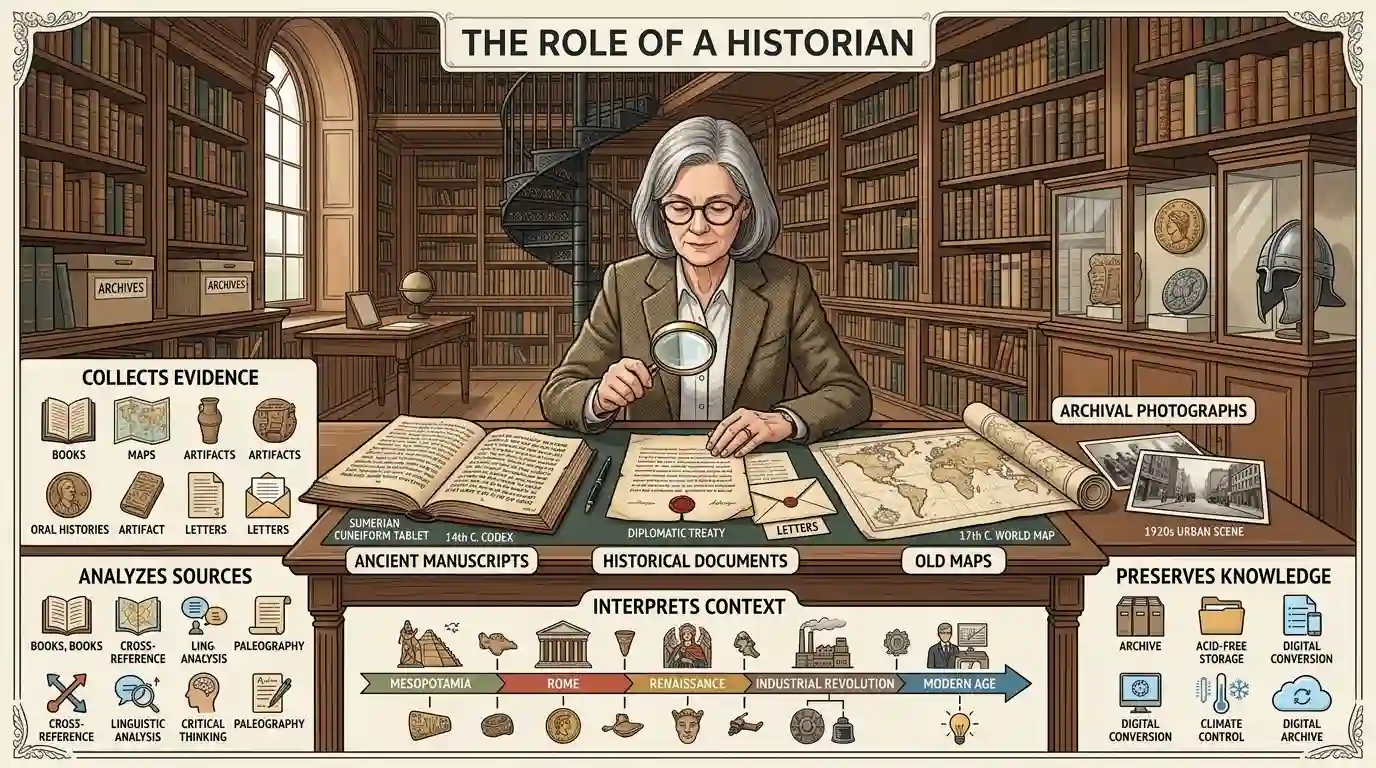
A historian is a person who studies, researches, analyzes, and writes about the past. They examine primary sources like documents, artifacts, and letters to reconstruct events.
Native speakers view this word as an umbrella term for any professional scholar or passionate expert who interprets historical records.
The term carries a neutral to highly respected emotional tone. It implies authority, careful research, and deep knowledge of former eras.
You will encounter this word in academic journals, news reports, documentary films, classroom lectures, and book reviews.
Part of Speech: Noun (Countable)
Definition: A specialist or expert who researches, records, and interprets past events, human societies, and historical eras.
Connotative Meaning
(Connotation refers to the emotional feeling or cultural association attached to a specific word beyond its dictionary definition.)
- Positive tone: Implies deep intellect, authority, truth-seeking, preservation of culture, and scholarly rigor.
- Negative tone: Can occasionally suggest someone who is overly rigid, stuck in the past, or disconnected from modern life.
- Neutral tone: Simply identifies a person’s profession, field of study, or academic discipline.
Etymology
The word entered the language through Old French historien, which evolved from the Latin historia, meaning inquiry, narrative, or record of past events.
- Old English (450–1100): Native Germanic terms like bōcere (scribe) or dægbōc-drīfere (diarist) were used instead of Latin roots.
- Middle English (1100–1500): The term evolved into historiere under Anglo-Norman influence after the Norman Conquest.
- Modern English (1500–Present): The modern spelling stabilized as scholars adopted classical terms during the Renaissance.
Syllables & Structure
Syllables: his-to-ri-an (4 syllables)
Affixation Pattern:
- Root: History (from Greek historia)
- Prefix: None
- Suffix: -an (denotes a person who specializes in a subject)
55 Synonyms of Historian List
1. Chronicler (Noun)
- Meaning: A person who writes a detailed, chronological record of events as they happen.
- Tone/Register: Formal / Literary
- Example 1: The ancient monk acted as the official chronicler of the king’s long reign.
- Example 2: Modern journalists often serve as the first chroniclers of major global events.
2. Annalist (Noun)
- Meaning: A writer who compiles historical records arranged strictly year by year.
- Tone/Register: Academic / Formal
- Example 1: The medieval annalist recorded seasonal harvests alongside political changes.
- Example 2: Scholars rely heavily on the work of the Roman annalist to verify dates.
3. Archivist (Noun)
- Meaning: A specialist who preserves, organizes, and manages historical documents and public records.
- Tone/Register: Professional / Academic
- Example 1: The university archivist helped the researcher locate a rare 18th-century manuscript.
- Example 2: She works as a digital archivist for the national library.
4. Historiographer (Noun)
- Meaning: An official historian or a scholar who studies the methodology and writing of history.
- Tone/Register: Very Formal / Academic
- Example 1: The royal historiographer was commissioned to write the official account of the war.
- Example 2: She works as a historiographer analyzing how past biases shaped historical texts.
5. Antiquarian (Noun)
- Meaning: A person who studies, collects, or deals in ancient objects, relics, and antiques.
- Tone/Register: Formal / Old-fashioned
- Example 1: The local antiquarian spent decades collecting Roman coins found in the valley.
- Example 2: He consulted an antiquarian to determine the age of the wooden chest.
6. Biographer (Noun)
- Meaning: A person who writes a detailed account of another individual’s life story.
- Tone/Register: General / Professional
- Example 1: The biographer interviewed dozens of relatives to write the leader’s life story.
- Example 2: She is a respected biographer specializing in 19th-century scientists.
7. Genealogist (Noun)
- Meaning: A specialist who traces family lineages, ancestors, and historical bloodlines.
- Tone/Register: General / Technical
- Example 1: The genealogist traced the family tree back to the early 1600s.
- Example 2: Many people hire a professional genealogist to uncover their family history.
8. Documentarian (Noun)
- Meaning: A filmmaker or writer who creates factual accounts based on real historical events.
- Tone/Register: Modern / Media
- Example 1: The documentarian spent three years filming in remote mountain villages.
- Example 2: Award-winning documentarians present history through audio and video footage.
9. Paleographer (Noun)
- Meaning: A scholar who specializes in reading, deciphering, and dating ancient handwriting and scripts.
- Tone/Register: Specialized / Academic
- Example 1: The museum hired a paleographer to translate the faint handwriting on the manuscript.
- Example 2: A skilled paleographer can identify the exact decade a medieval note was written.
10. Classicist (Noun)
- Meaning: A scholar who specializes in the language, literature, and history of ancient Greece and Rome.
- Tone/Register: Academic / Formal
- Example 1: As a leading classicist, she translates ancient Latin poetry for university publications.
- Example 2: The classicist gave a fascinating lecture on Athenian political structures.
11. Curator (Noun)
- Meaning: A keeper or custodian of a museum, gallery, or historical collection.
- Tone/Register: Professional / General
- Example 1: The museum curator arranged the ancient artifacts for the new exhibit.
- Example 2: She has served as the head curator of modern history for ten years.
12. Keeper of Records (Noun)
- Meaning: An official custodian responsible for preserving historical archives and public documents.
- Tone/Register: Official / Legal
- Example 1: The municipal keeper of records verified the authenticity of the land deed.
- Example 2: Historians asked the keeper of records for access to the city archives.
13. Heritage Specialist (Noun)
- Meaning: An expert focused on preserving cultural history, monuments, and historical sites.
- Tone/Register: Professional / Modern
- Example 1: The heritage specialist advised the city council against demolishing the historic landmark.
- Example 2: Conservation efforts are guided by a team of experienced heritage specialists.
14. Ethnohistorian (Noun)
- Meaning: A scholar who studies historical cultures using both historical and anthropological methods.
- Tone/Register: Specialized / Academic
- Example 1: The ethnohistorian examined native oral traditions alongside colonial records.
- Example 2: Modern research relies on ethnohistorians to reconstruct indigenous cultural patterns.
15. Researcher (Noun)
- Meaning: A person who systematically investigates materials and sources to establish facts.
- Tone/Register: General / Neutral
- Example 1: The lead researcher spent months reading old newspapers in the library basement.
- Example 2: Academic institutions employ researchers to discover primary source documents.
16. Scholar (Noun)
- Meaning: An educated person who conducts advanced study in a specific academic field.
- Tone/Register: Formal / Respectful
- Example 1: The visiting scholar published a new theory regarding the fall of the empire.
- Example 2: She spent her entire life working as a dedicated humanities scholar.
17. Hagiographer (Noun)
- Meaning: A writer who documents the lives of saints or writes overly praiseful biographies.
- Tone/Register: Academic / Critical
- Example 1: The medieval hagiographer detailed the miraculous events surrounding the bishop.
- Example 2: Critics accused the author of acting as a modern hagiographer for the politician.
18. Memorialist (Noun)
- Meaning: A person who writes memoirs, petitions, or historical records of past events.
- Tone/Register: Literary / Formal
- Example 1: The wartime memorialist captured the personal stories of soldiers on the front lines.
- Example 2: Her journal remains an invaluable work by a perceptive social memorialist.
19. Antiquary (Noun)
- Meaning: An older term for a person who studies or collects antiques and ancient history.
- Tone/Register: Archaic / Literary
- Example 1: The eccentric antiquary owned hundreds of forgotten medieval manuscripts.
- Example 2: Writers in the 19th century often featured an old antiquary in their novels.
20. Analyst of the Past (Phrase)
- Meaning: Descriptive phrase for someone who critically evaluates historical trends and data.
- Tone/Register: Descriptive / Educational
- Example 1: As a skilled analyst of the past, he explains modern political shifts with clarity.
- Example 2: She serves as an insightful analyst of the past on news programs.
21. Archaeologist (Noun)
- Meaning: A scientist who studies human history by excavating physical remains and artifacts.
- Tone/Register: Academic / Professional
- Example 1: The archaeologist unearthed a paved Roman road beneath the city street.
- Example 2: Teams of archaeologists analyzed pottery shards found at the excavation site.
22. Epigrapher (Noun)
- Meaning: A scholar who deciphers and interprets ancient inscriptions on stone, metal, or wood.
- Tone/Register: Specialized / Academic
- Example 1: The epigrapher translated the carved marble tablet found near the temple.
- Example 2: Epigraphers work to read faded letters stamped into old bronze armor.
23. Papyrologist (Noun)
- Meaning: A specialist who translates and restores ancient writings preserved on papyrus scrolls.
- Tone/Register: Specialized / Academic
- Example 1: The papyrologist spent months piecing together fragments of ancient Egyptian contracts.
- Example 2: Archives hire papyrologists to preserve fragile ancient Greek tax records.
24. Codicologist (Noun)
- Meaning: An expert who studies physical handwritten books and manuscripts as physical objects.
- Tone/Register: Specialized / Academic
- Example 1: The codicologist analyzed the parchment binding to date the medieval book.
- Example 2: A codicologist examines inks and pigskins to verify manuscript authenticity.
25. Numismatist (Noun)
- Meaning: A specialist who studies and collects coins, tokens, paper money, and medals.
- Tone/Register: Academic / Specialized
- Example 1: The numismatist identified the silver coin as belonging to the Byzantine era.
- Example 2: Museum collections rely on numismatists to catalog historic coin hoards.
26. Sigillographer (Noun)
- Meaning: A scholar who specializes in the study of historical seals attached to documents.
- Tone/Register: Specialized / Academic
- Example 1: The sigillographer verified the royal seal on the medieval peace treaty.
- Example 2: A sigillographer can determine noble lineage by analyzing wax stamps.
27. Herald (Noun)
- Meaning: An official who keeps coat-of-arms records, noble lineages, and public announcements.
- Tone/Register: Historical / Official
- Example 1: The court herald read the official royal decree to the gathered crowd.
- Example 2: Modern heralds preserve historical coats of arms for national institutions.
28. Historiant (Noun)
- Meaning: An archaic variant describing someone who tells or writes historical accounts.
- Tone/Register: Archaic / Literary
- Example 1: The early Renaissance historiant recorded local legends alongside true events.
- Example 2: Old texts describe the scholar as a dedicated historiant of the realm.
29. Diarist (Noun)
- Meaning: A person who keeps a daily written journal of personal and historical experiences.
- Tone/Register: General / Personal
- Example 1: Samuel Pepys is celebrated as a famous diarist of 17th-century London life.
- Example 2: The young diarist provided historians with a vivid account of the siege.
30. Memoirist (Noun)
- Meaning: A writer who composes a book of personal memories from a specific time period.
- Tone/Register: Literary / General
- Example 1: The former diplomat became a memoirist, documenting Cold War events.
- Example 2: As a memoirist, she captured daily life during the economic collapse.
31. Essayist (Noun)
- Meaning: A writer who produces short prose pieces analyzing specific historical or social topics.
- Tone/Register: Literary / Academic
- Example 1: The political essayist wrote extensively on the causes of the revolution.
- Example 2: Historical essayists help general readers understand complex political shifts.
32. Recorder (Noun)
- Meaning: A person appointed to keep official written accounts of proceedings or events.
- Tone/Register: Official / Legal
- Example 1: The court recorder kept precise track of every testimony delivered during the trial.
- Example 2: City councils hire a recorder to archive official meeting notes.
33. Scribe (Noun)
- Meaning: A person who copies out documents, manuscripts, or records by hand.
- Tone/Register: Historical / Formal
- Example 1: The medieval scribe spent months copying a single illustrated manuscript.
- Example 2: Ancient scribes played a crucial role in preserving legal and religious records.
34. Scriptor (Noun)
- Meaning: A writer or copyist responsible for creating written documents.
- Tone/Register: Literary / Academic
- Example 1: The monastery housed several scriptors who transcribed classic literature.
- Example 2: Researchers identified the manuscript as the work of an Italian scriptor.
35. Commentator (Noun)
- Meaning: An analyst who offers explanations or opinions on past or present occurrences.
- Tone/Register: General / Media
- Example 1: The political commentator drew clear parallels to historical crises of the 1930s.
- Example 2: Historical commentators provide context during live television coverage.
36. Expositor (Noun)
- Meaning: A person who explains, interprets, or sets forth complex historical ideas clearly.
- Tone/Register: Formal / Academic
- Example 1: He was a brilliant expositor of 18th-century constitutional history.
- Example 2: The professor acted as an expositor of ancient philosophical texts.
37. Exegete (Noun)
- Meaning: A scholar who performs critical explanation or interpretation of historical texts.
- Tone/Register: Academic / Technical
- Example 1: The Biblical exegete analyzed the original Greek manuscripts line by line.
- Example 2: Exegetes examine ancient laws to understand past legal systems.
38. Folklorist (Noun)
- Meaning: A scholar who collects and studies traditional myths, tales, and oral history.
- Tone/Register: Academic / Cultural
- Example 1: The folklorist recorded oral history stories from elders in rural villages.
- Example 2: Folklorists preserve cultural heritage by publishing collection books.
39. Preservationist (Noun)
- Meaning: An expert dedicated to maintaining and protecting historical buildings and documents.
- Tone/Register: Professional / General
- Example 1: The historic preservationist fought to save the 19th-century train station.
- Example 2: Preservationists work in archives to prevent manuscript decay.
40. Conservator (Noun)
- Meaning: A specialist responsible for the repair, restoration, and care of historical artifacts.
- Tone/Register: Technical / Professional
- Example 1: The art conservator restored the damaged 16th-century painting carefully.
- Example 2: Museum conservators use chemistry to clean ancient metal swords.
41. Documentalist (Noun)
- Meaning: A professional who gathers, classifies, and manages historical documents.
- Tone/Register: Professional / Technical
- Example 1: The documentalist categorized thousands of war records for public access.
- Example 2: Libraries employ documentalists to organize digital historical databases.
42. Fact-Finder (Noun)
- Meaning: An investigator responsible for gathering accurate historical or factual evidence.
- Tone/Register: Informal / General
- Example 1: The historical fact-finder verified dates before the book went to print.
- Example 2: Journalists act as fact-finders when analyzing past government statements.
43. Information Specialist (Noun)
- Meaning: An expert who organizes, retrieves, and analyzes historical and current data.
- Tone/Register: Modern / Business
- Example 1: The library’s information specialist retrieved historical birth records within minutes.
- Example 2: Modern historical firms hire information specialists to manage data.
44. Lineage Researcher (Noun)
- Meaning: An expert focused specifically on investigating family ancestry and heritage paths.
- Tone/Register: Technical / Professional
- Example 1: The lineage researcher proved the family was related to colonial settlers.
- Example 2: Hiring a lineage researcher helps clear up gaps in family property deeds.
45. Academic (Noun)
- Meaning: A teacher or scholar in a university or college involved in historical research.
- Tone/Register: Formal / Professional
- Example 1: The academic presented a paper on medieval trade routes at the conference.
- Example 2: Academics spend decades reviewing primary historical sources.
46. Intellect (Noun)
- Meaning: A person with high mental capacity who studies complex subjects like history.
- Tone/Register: Formal / Respectful
- Example 1: She was recognized as a leading historical intellect of her generation.
- Example 2: Gathering the city’s top intellects led to new historical insights.
47. Intellectual (Noun)
- Meaning: An educated person who engages in critical thinking, research, and historical reflection.
- Tone/Register: Formal / Academic
- Example 1: Public intellectuals often contextualize current events using history.
- Example 2: The young intellectual published three books on ancient philosophy.
48. Humanist (Noun)
- Meaning: A scholar who studies the humanities, including human culture, history, and literature.
- Tone/Register: Formal / Academic
- Example 1: Renaissance humanists revived the study of ancient Greek and Roman texts.
- Example 2: As a humanist, he focused on cultural history rather than military dates.
49. Culture Scholar (Noun)
- Meaning: An expert dedicated to studying past societal customs, art, and traditions.
- Tone/Register: Academic / Modern
- Example 1: The culture scholar explained how medieval festivals influenced modern holidays.
- Example 2: Museums invite culture scholars to lecture on ancient traditions.
50. Social Analyst (Noun)
- Meaning: An expert who examines past societal structures and human group behavior.
- Tone/Register: Academic / Professional
- Example 1: The social analyst reviewed historical census data to track population shifts.
- Example 2: Social analysts examine how past communities responded to epidemics.
51. Textualist (Noun)
- Meaning: A scholar who focuses strictly on interpreting the literal text of historical documents.
- Tone/Register: Legal / Academic
- Example 1: The legal textualist examined the original wording of the 1787 Constitution.
- Example 2: Textualists focus on primary documents rather than secondary interpretations.
52. Traditionalist (Noun)
- Meaning: A person who maintains and studies traditional customs, values, and history.
- Tone/Register: General / Cultural
- Example 1: As a traditionalist, he preserved oral history stories from his ancestors.
- Example 2: Traditionalists work hard to maintain historic building techniques.
53. Chronicler of Times (Phrase)
- Meaning: A poetic description of a writer who captures the spirit of an era.
- Tone/Register: Literary / Poetic
- Example 1: The novelist was praised as a true chronicler of times past.
- Example 2: Her photography made her a visual chronicler of times long gone.
54. Historical Writer (Noun)
- Meaning: A straightforward term for any author who writes books or articles about history.
- Tone/Register: General / Neutral
- Example 1: The popular historical writer published a new bestseller about World War II.
- Example 2: Many historical writers start their careers as academic researchers.
55. Record Keeper (Noun)
- Meaning: A general term for someone responsible for preserving data, dates, and historical files.
- Tone/Register: General / Workplace
- Example 1: Every ancient village relied on an official record keeper to track land ownership.
- Example 2: She served as the primary record keeper for the historical society.
Synonyms by Tone
Choosing the right variation depends entirely on the context of your sentence.
Positive Tone
Words that imply respect, scholarly authority, or artistic talent:
- Scholar
- Heritage Specialist
- Curator
- Biographer
- Academic
Neutral Tone
Standard terms used in everyday writing, news, and research:
- Chronicler
- Archivist
- Researcher
- Genealogist
- Record Keeper
Negative / Critical Tone
Words that can imply bias or excessive focus on dry details:
- Hagiographer (implies uncritical praise)
- Antiquarian (can imply obsessing over old junk)
Informal / Descriptive Tone
Descriptive terms used in casual or media contexts:
- Documentarian
- Analyst of the past
- Fact-Finder
Mini Comparison
| Term | Core Meaning | Best Context | Tone |
| Historian | General expert on past events and human history | Academic books, standard essays, news | Formal / Neutral |
| Chronicler | Someone recording events in exact time sequence | Narrative non-fiction, storytelling, journalism | Literary / Formal |
| Archivist | Specialist who organizes and protects original records | Libraries, museums, government centers | Technical / Professional |
How “Historian” Changes by Context
Daily Conversation
In casual talk, people use the main keyword broadly. You might hear someone say, “My uncle is the family historian,” meaning he remembers stories and holds old photos.
Writing or Blogging
Bloggers often swap in words like chronicler or documentarian to make their prose feel more dynamic and engaging to readers.
Professional or Academic Tone
In formal research, precision matters. Academics prefer exact terms such as archivist, paleographer, or historiographer depending on the exact work performed.
Common Mistakes & Native Usage
Learners often treat all these words as exact substitutes. That leads to strange phrasing.
For example, do not call a museum manager a chronicler if their job involves organizing physical artifacts. They are a curator.
Similarly, calling a modern researcher an antiquarian can sound outdated or slightly insulting, as it implies an eccentric collector rather than a serious scientist.
Tip: Always check whether the person writes history (chronicler), preserves items (archivist), or analyzes events (historian).
Real-Life Scenarios
- Workplace: “Our company archivist found the original 1920 incorporation papers in the basement.”
- Media: “The film’s documentarian interviewed survivors to build an accurate picture of the event.”
- Storytelling: “The fantasy novel follows a royal chronicler who secretly records the king’s mistakes.”
Conclusion
Expanding your command of synonyms of historian directly improves your descriptive power in English.
Using specific terms like archivist, biographer, or chronicler makes your writing clearer and far more interesting.
Varying your word choice builds reader interest, strengthens academic essays, and makes your blog content sound natural.
Try using two or three of these new words in your next essay, email, or daily journal entry!
Interactive Practice Quiz
Part One
- Which of the following is a synonym of historian?
A) Scientist
B) Chronicler
C) Engineer
D) Artist
Answer: B) Chronicler - A person who studies past events is known as a:
A) Historian
B) Mechanic
C) Designer
D) Merchant
Answer: A) Historian - Which word is closest in meaning to historian?
A) Archivist
B) Athlete
C) Physician
D) Architect
Answer: A) Archivist - Someone who records and describes historical events is called a:
A) Journalist
B) Chronicler
C) Inventor
D) Manager
Answer: B) Chronicler - Which term best describes a scholar who researches history?
A) Historian
B) Chemist
C) Economist
D) Geologist
Answer: A) Historian - Choose the word that has a similar meaning to historian:
A) Annalist
B) Novelist
C) Painter
D) Musician
Answer: A) Annalist - A person who preserves and studies historical documents is an:
A) Archivist
B) Artist
C) Engineer
D) Actor
Answer: A) Archivist - Which word refers to someone who documents events from the past?
A) Chronicler
B) Traveler
C) Teacher
D) Explorer
Answer: A) Chronicler - Which of the following is most closely associated with a historian?
A) History scholar
B) Businessman
C) Surgeon
D) Athlete
Answer: A) History scholar - A scholar who examines historical records can be called a:
A) Historian
B) Photographer
C) Designer
D) Farmer
Answer: A) Historian
Part Two
- Which word is a near-synonym of historian?
A) Chronicler
B) Carpenter
C) Pilot
D) Chef
Answer: A) Chronicler - A person who writes about important events of the past is a:
A) Historian
B) Scientist
C) Lawyer
D) Merchant
Answer: A) Historian - Which term best describes someone who studies historical sources?
A) Historian
B) Athlete
C) Mechanic
D) Singer
Answer: A) Historian - Who specializes in researching and interpreting the past?
A) Historian
B) Architect
C) Pharmacist
D) Photographer
Answer: A) Historian - Which word can be used for a person who keeps historical records?
A) Archivist
B) Inventor
C) Director
D) Performer
Answer: A) Archivist - Choose the closest synonym for historian:
A) Annalist
B) Economist
C) Biologist
D) Mathematician
Answer: A) Annalist - Someone who chronicles events and preserves their history is a:
A) Chronicler
B) Designer
C) Builder
D) Merchant
Answer: A) Chronicler - Which phrase has a meaning similar to historian?
A) History scholar
B) Medical expert
C) Financial adviser
D) Legal officer
Answer: A) History scholar - A person who investigates the events and people of earlier times is a:
A) Historian
B) Journalist
C) Engineer
D) Artist
Answer: A) Historian - Which of the following is the best synonym for historian?
A) Chronicler
B) Traveler
C) Teacher
D) Research assistant
Answer: A) Chronicler
Frequently Asked Questions
1. What is the difference between a historian and an archivist?
A historian analyzes, interprets, and writes about past events. An archivist focuses on finding, organizing, cataloging, and preserving original historical documents and physical records.
2. Can I use the word chronicler instead of historian in formal essays?
Yes, but with caution. A chronicler specifically records events sequentially as they occur, whereas a historian analyzes causes, effects, and broader patterns behind those events.
3. What is the most formal synonym for a historian?
Historiographer is one of the most formal options. It refers to an official history writer or a scholar who studies how history itself is researched and written over time.
4. Is an antiquarian the same thing as a historian?
No. An antiquarian historically focused on collecting and studying ancient physical objects and relics, whereas a historian analyzes broader social, political, and economic narratives.
5. Why should content writers use semantic variations of historian?
Using semantic variations improves article flow, prevents repetitive phrasing, and satisfies modern search engines by covering related sub-topics and precise job roles naturally.

Mehtab Yasir is a passionate writer and English language enthusiast dedicated to making vocabulary learning simple, practical, and enjoyable. As an author at SynonymDesk.com, she creates helpful content covering synonyms, antonyms, word meanings, vocabulary, phrases, and everyday English usage. Her goal is to provide clear and easy-to-understand information that helps students, writers, professionals, and English learners choose the right words and communicate with greater confidence. Mehtab believes that a strong vocabulary can improve both writing and communication skills. She enjoys researching new words, exploring their meanings and uses, and turning complex language concepts into useful, reader-friendly content. Through her work, she strives to make SynonymDesk.com a reliable resource for anyone looking to improve their English vocabulary and language skills.