synonyms of mockingly help you describe when someone speaks or acts with playful teasing or sharp sarcasm. Imagine walking into a room wearing a mismatched sweater. Your friend flashes a grin and makes a silly remark. They are not trying to be deeply mean. They are just poking fun at your bold fashion choice.
synonyms of mockingly improve your vocabulary by giving you exact words for every social situation. Native speakers use these words constantly in books, movies, and casual chats. They add life, humor, and precise emotional detail to your stories.
synonyms of mockingly are extremely useful for students, bloggers, content writers, and daily English users. They prevent your writing from feeling repetitive and boring. When you swap basic words for precise terms, your English sounds natural and engaging.
What Does “Mockingly” Really Mean?
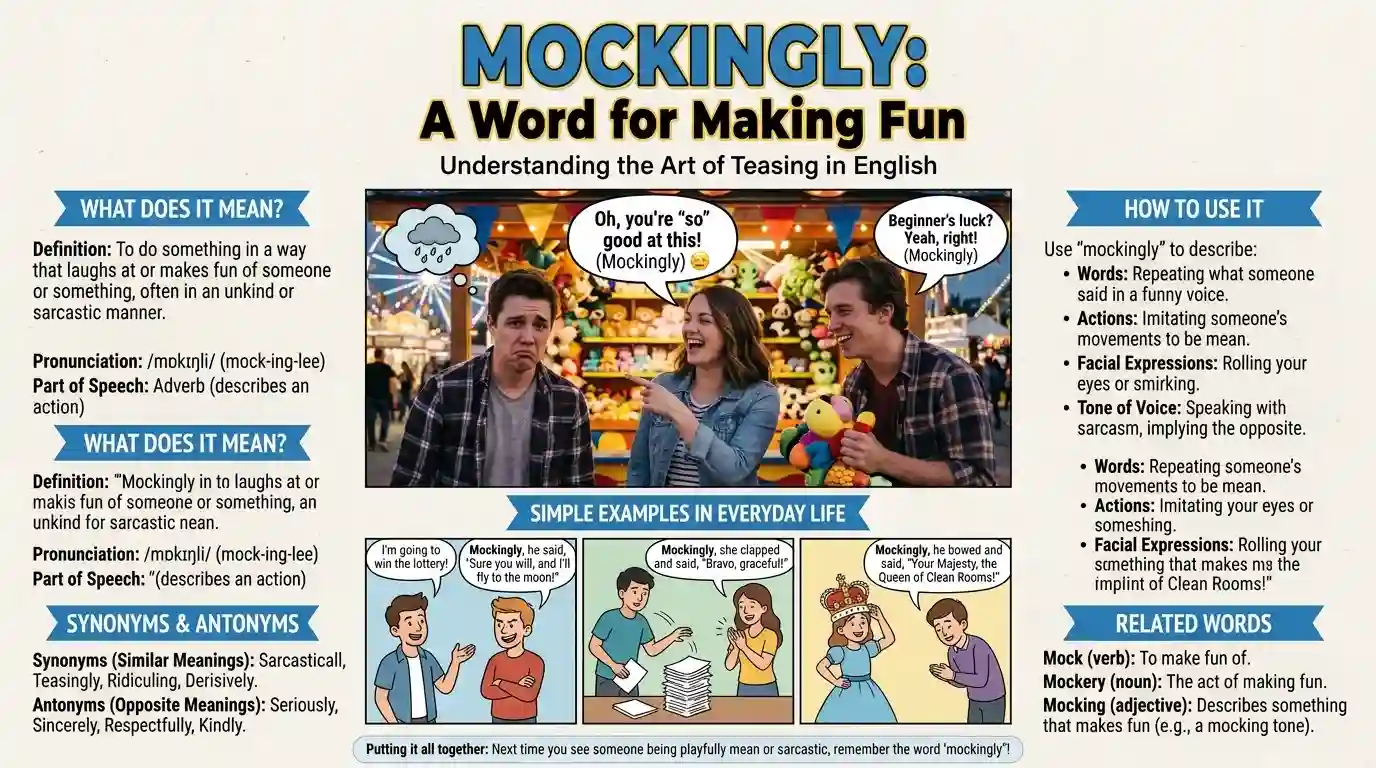
Mockingly means doing or saying something in a way that imitates or makes fun of someone. It carries a clear attitude of ridicule, teasing, or disrespect. Native speakers use it when someone mimics another person’s voice or laughs at their mistakes. It commonly appears in stories, dramatic dialogue, and sharp commentary. Part of speech: Adverb. Simple definition: In a way that laughs at or makes fun of someone.
Connotative Meaning
- Positive tone: Playful or affectionate teasing among close friends.
- Negative tone: Harsh ridicule, bullying, or bitter sarcasm.
- Neutral tone: Objective description of a dramatic imitation or theatrical act.
- What is connotation? (The emotional or cultural feeling associated with a word beyond its strict dictionary definition.)
Etymology and Pronunciation
- Origin: Derived from the Middle French word moquer, meaning to deride or mimic.
- Old English (450–1100): Used roots related to imitation and mimicry.
- Middle English (1100–1500): Evolved into mokken, meaning to ridicule.
- Modern English (1500–Present): Standardized as mockingly to describe scornful behavior.
- US: /’mɑkɪŋli/
- UK: /’mɒkɪŋli/
- Syllables: mock-ing-ly
- Affixation Pattern: Root (mock) + Suffix (-ing) + Suffix (-ly)
Comprehensive Synonyms of Mockingly
1. Sardonically (Adverb)
- Meaning: Expressing a grim, cynical, or sneering sort of amusement.
- Tone/Register: Formal / Literary
- Example 1: He smiled sardonically as the clumsy plan fell apart.
- Example 2: She looked at the broken machine and laughed sardonically.
2. Derisively (Adverb)
- Meaning: Showing contemptuous ridicule or insulting mockery.
- Tone/Register: Formal / Academic
- Example 1: The critic spoke derisively about the terrible new movie.
- Example 2: He laughed derisively at her ambitious business proposal.
3. Scoffingly (Adverb)
- Meaning: Speaking or behaving in an expression of derision and doubt.
- Tone/Register: Informal / Conversational
- Example 1: She replied scoffingly when he promised to arrive on time.
- Example 2: He looked at the healthy menu choice scoffingly.
4. Sarcasm-Infused (Adverb)
- Meaning: Speaking with sharp irony intended to wound or insult.
- Tone/Register: Casual / Spoken
- Example 1: She spoke sarcastically about the miserable weather.
- Example 2: He responded sarcastically to the pointless question.
5. Jeeringly (Adverb)
- Meaning: Making rude and mocking remarks in a loud voice.
- Tone/Register: Informal / Descriptive
- Example 1: The crowd shouted jeeringly at the referee’s bad call.
- Example 2: Kids chanted jeeringly on the school playground.
6. Tauntingly (Adverb)
- Meaning: Addressing someone in a scornful and provoking manner.
- Tone/Register: Descriptive / Narrative
- Example 1: He waved the winning ticket tauntingly in front of his brother.
- Example 2: She smiled tauntingly while holding the hidden key.
7. Cynically (Adverb)
- Meaning: Believing that people are motivated purely by self-interest.
- Tone/Register: Standard / Analytical
- Example 1: He commented cynically on the politician’s sudden charity work.
- Example 2: She shook her head cynically at the corporate promise.
8. Iro-nically (Adverb)
- Meaning: Using words to convey a meaning that is opposite of its literal sense.
- Tone/Register: Common / Everyday
- Example 1: He chuckled ironically when his own umbrella broke.
- Example 2: She smiled ironically at the unexpected delay.
9. Disdainfully (Adverb)
- Meaning: Showing contempt or a lack of respect for someone.
- Tone/Register: Formal / Literary
- Example 1: She looked down disdainfully at the muddy footprints.
- Example 2: He sniffed disdainfully at the cheap gift.
10. Contemptuously (Adverb)
- Meaning: Showing deep hatred or disapproval through behavior.
- Tone/Register: Formal / Professional
- Example 1: The judge spoke contemptuously to the dishonest witness.
- Example 2: He tossed the unfair contract away contemptuously.
11. Sneeringly (Adverb)
- Meaning: Smiling or speaking with a facial expression of contempt.
- Tone/Register: Descriptive / Narrative
- Example 1: He muttered a sneeringly rude comment under his breath.
- Example 2: She looked at his outdated outfit sneeringly.
12. Satirically (Adverb)
- Meaning: Using humor, irony, or exaggeration to expose stupidity.
- Tone/Register: Literary / Journalistic
- Example 1: The columnist wrote satirically about modern tech trends.
- Example 2: He commented satirically on the endless office meetings.
13. Wryly (Adverb)
- Meaning: Expressing dry, humorous, and often ironic amusement.
- Tone/Register: Casual / Warm
- Example 1: She smiled wryly as she cleaned up the spilled coffee.
- Example 2: He commented wryly on his lack of cooking skills.
14. Dryly (Adverb)
- Meaning: Delivering humor or comments without emotion or expression.
- Tone/Register: Conversational / Neutral
- Example 1: He noted dryly that the car had no brakes left.
- Example 2: She responded dryly to his dramatic explanation.
15. Teasingly (Adverb)
- Meaning: Intending to provoke or make fun of someone playfully.
- Tone/Register: Friendly / Informal
- Example 1: She nudged him teasingly about his new haircut.
- Example 2: He spoke teasingly while hiding her favorite book.
16. Banteringly (Adverb)
- Meaning: Exchanging playful and friendly remarks.
- Tone/Register: Social / Conversational
- Example 1: They argued banteringly over who ordered the best pizza.
- Example 2: He joked banteringly with his coworkers before work.
17. Playfully (Adverb)
- Meaning: Full of fun and high spirits without genuine malice.
- Tone/Register: Casual / Warm
- Example 1: She slapped his arm playfully after a funny joke.
- Example 2: He growled playfully at his bouncing puppy.
18. Facetiously (Adverb)
- Meaning: Treating serious issues with deliberate inappropriate humor.
- Tone/Register: Conversational / Humorous
- Example 1: He suggested facetiously that they walk fifty miles home.
- Example 2: She replied facetiously to the strict security guard.
19. Flippantly (Adverb)
- Meaning: Showing a lack of appropriate seriousness or respect.
- Tone/Register: Informal / Casual
- Example 1: He answered the important question flippantly.
- Example 2: She shrugged flippantly when asked about her exams.
20. Irreverently (Adverb)
- Meaning: Showing a lack of respect for things that are usually taken seriously.
- Tone/Register: Informal / Bold
- Example 1: He laughed irreverently during the serious historical film.
- Example 2: She commented irreverently on the royal tradition.
21. Tongue-in-cheek (Adverb)
- Meaning: Characterized by insincerity, irony, or playful humor.
- Tone/Register: Creative / Expressive
- Example 1: He wrote the review tongue-in-cheek to confuse readers.
- Example 2: She offered her advice tongue-in-cheek.
22. Gibly (Adverb)
- Meaning: Speaking with words that are fluent but insincere and shallow.
- Tone/Register: Critical / Formal
- Example 1: He answered the crisis question glibly.
- Example 2: She promised a quick fix glibly without details.
23. Smirkingly (Adverb)
- Meaning: Smiling in an irritatingly smug, conceited, or silly way.
- Tone/Register: Descriptive / Casual
- Example 1: He watched his team lose while standing smirkingly nearby.
- Example 2: She admitted her prank smirkingly.
24. Gigglingly (Adverb)
- Meaning: Laughing in a light, nervous, or silly giggling manner.
- Tone/Register: Informal / Spoken
- Example 1: She pointed gigglingly at the funny dancing dog.
- Example 2: They whispered gigglingly in the back row.
25. Chortlingly (Adverb)
- Meaning: Laughing in a breathy, gleeful, and satisfied way.
- Tone/Register: Casual / Descriptive
- Example 1: He read the comic strip chortlingly aloud.
- Example 2: She celebrated her victory chortlingly.
26. Snickeringly (Adverb)
- Meaning: Giving a small, suppressed, and disrespectful half-laugh.
- Tone/Register: Informal / Everyday
- Example 1: The students whispered snickeringly during the speech.
- Example 2: He reacted snickeringly to the strange mistake.
27. Ridiculing (Adverb)
- Meaning: Subjecting someone to contemptuous and dismissive language.
- Tone/Register: Negative / Harsh
- Example 1: He spoke ridiculing his friend’s new hobby.
- Example 2: She laughed ridiculing the outdated fashion trend.
28. Scornfully (Adverb)
- Meaning: Feeling or expressing contempt or intense derision.
- Tone/Register: Formal / Serious
- Example 1: She rejected the weak excuse scornfully.
- Example 2: He stared scornfully at the broken promise.
29. Bitterly (Adverb)
- Meaning: Done with a display of deep anger, hurt, and resentment.
- Tone/Register: Emotional / Serious
- Example 1: He complained bitterly about the unfair decision.
- Example 2: She smiled bitterly at her past mistakes.
30. Acidly (Adverb)
- Meaning: Speaking with sharp, biting, and sour wit.
- Tone/Register: Literary / Sharp
- Example 1: She remarked acidly on his late arrival.
- Example 2: He replied acidly to her unwanted advice.
31. Caustically (Adverb)
- Meaning: Sarcastic in a scathing and highly bitter way.
- Tone/Register: Formal / Critical
- Example 1: The reviewer wrote caustically about the bad play.
- Example 2: She retorted caustically to the rude comment.
32. Vitriolically (Adverb)
- Meaning: Filled with bitter, cruel, and malicious criticism.
- Tone/Register: Extreme / Formal
- Example 1: He attacked the policy vitriolically online.
- Example 2: She spoke vitriolically about her rival.
33. Venomously (Adverb)
- Meaning: Full of malice or spiteful anger in communication.
- Tone/Register: Intense / Negative
- Example 1: He hissed venomously at the betrayal.
- Example 2: She reacted venomously to the accusation.
34. Spitefully (Adverb)
- Meaning: Showing a petty desire to harm, annoy, or offend.
- Tone/Register: Casual / Negative
- Example 1: He hid her keys spitefully.
- Example 2: She whispered spitefully about his failure.
35. Maliciously (Adverb)
- Meaning: Intending or intended to do harm with cruel intent.
- Tone/Register: Serious / Legal
- Example 1: He spread the rumor maliciously.
- Example 2: She smiled maliciously as the trap closed.
36. Mirthlessly (Adverb)
- Meaning: Lacking real amusement or genuine joy.
- Tone/Register: Literary / Dark
- Example 1: He laughed mirthlessly at the terrible joke.
- Example 2: She smiled mirthlessly during the awkward meeting.
37. Hysterically (Adverb)
- Meaning: In a way that exhibits uncontrolled extreme emotion.
- Tone/Register: Informal / Expressive
- Example 1: She laughed hysterically at the funny video.
- Example 2: He panicked hysterically over lost keys.
38. Farcically (Adverb)
- Meaning: In a ridiculous, absurd, or exaggerated manner.
- Tone/Register: Descriptive / Literary
- Example 1: The meeting failed farcically within minutes.
- Example 2: He managed the project farcically.
39. Absurdly (Adverb)
- Meaning: Wildly unreasonable, illogical, or inappropriate.
- Tone/Register: Casual / Expressive
- Example 1: She priced her old car absurdly high.
- Example 2: He dressed absurdly for the formal dinner.
40. Ludicrously (Adverb)
- Meaning: So foolish or out of place as to cause amusement.
- Tone/Register: Informal / Spoken
- Example 1: He argued ludicrously about basic math.
- Example 2: She failed ludicrously at the simple task.
41. Mimickingly (Adverb)
- Meaning: Imitating someone’s actions or words to poke fun.
- Tone/Register: Casual / Descriptive
- Example 1: He repeated her voice mimickingly.
- Example 2: She walked across the room mimickingly.
42. Apeing (Adverb)
- Meaning: Imitating someone’s behavior or manner clumsily.
- Tone/Register: Informal / Rare
- Example 1: He strutted around apeing his boss.
- Example 2: She spoke apeing her teacher’s strict tone.
43. Parodying (Adverb)
- Meaning: Producing an exaggerated imitation for comic effect.
- Tone/Register: Artistic / Humorous
- Example 1: He sang the song parodying pop stars.
- Example 2: She acted out the scene parodying old movies.
44. Caricaturing (Adverb)
- Meaning: Making someone look ridiculous by exaggerating features.
- Tone/Register: Artistic / Descriptive
- Example 1: He described the mayor caricaturing his habits.
- Example 2: She drew the sketch caricaturing his nose.
45. Lampooning (Adverb)
- Meaning: Publicly criticizing someone by using ridicule or irony.
- Tone/Register: Journalistic / Literary
- Example 1: The paper wrote lampooning the local council.
- Example 2: He performed a skit lampooning celebrities.
46. Burlesquingly (Adverb)
- Meaning: Causing laughter through comical caricature or imitation.
- Tone/Register: Literary / Theatrical
- Example 1: He danced burlesquingly across the stage.
- Example 2: She spoke burlesquingly in a deep voice.
47. Satirising (Adverb)
- Meaning: Deriding through satirical commentary and humor.
- Tone/Register: Formal / Literary
- Example 1: He published a book satirising corporate culture.
- Example 2: She tweeted satirising modern art trends.
48. Foolishly (Adverb)
- Meaning: Lacking good sense or judgment with slight amusement.
- Tone/Register: Common / Everyday
- Example 1: He smiled foolishly after dropping his ice cream.
- Example 2: She nodded foolishly without listening.
49. Childishly (Adverb)
- Meaning: Having the bad qualities of an immature child.
- Tone/Register: Critical / Conversational
- Example 1: He acted childishly when he lost the game.
- Example 2: She pouted childishly over chores.
50. Impertinently (Adverb)
- Meaning: Not showing proper respect; rude and cheeky.
- Tone/Register: Formal / Old-fashioned
- Example 1: He answered the teacher impertinently.
- Example 2: She grinned impertinently at the warning.
51. Cheekily (Adverb)
- Meaning: Impudently or irreverently, often in an endearing way.
- Tone/Register: Informal / Friendly
- Example 1: He winked cheekily at the baker.
- Example 2: She smiled cheekily while stealing a cookie.
52. Saucily (Adverb)
- Meaning: Bold, lively, and slightly disrespectful in a fun way.
- Tone/Register: Casual / Lighthearted
- Example 1: She replied saucily to the waiter’s question.
- Example 2: He grinned saucily from across the table.
53. Impudently (Adverb)
- Meaning: Not showing due respect for another person.
- Tone/Register: Formal / Critical
- Example 1: He spoke impudently to the senior manager.
- Example 2: She laughed impudently at the rule.
54. Insolently (Adverb)
- Meaning: Showing a rude and arrogant lack of respect.
- Tone/Register: Formal / Negative
- Example 1: He stared insolently at the guard.
- Example 2: She shrugged insolently when caught lying.
55. Presumptuously (Adverb)
- Meaning: Failing to observe the limits of what is permitted.
- Tone/Register: Formal / Critical
- Example 1: He assumed command presumptuously.
- Example 2: She spoke presumptuously about matters she did not know.
56. Audaciously (Adverb)
- Meaning: Showing a willingness to take surprisingly bold risks.
- Tone/Register: Literary / Bold
- Example 1: He challenged the boss audaciously.
- Example 2: She smiled audaciously at the challenge.
57. Brazenly (Adverb)
- Meaning: Done without shame or hidden intent.
- Tone/Register: Direct / Bold
- Example 1: He lied brazenly to his friends.
- Example 2: She broke the rule brazenly in daylight.
58. Shamelessly (Adverb)
- Meaning: In a way that shows no shame for improper behavior.
- Tone/Register: Casual / Direct
- Example 1: He ate the whole cake shamelessly.
- Example 2: She bragged shamelessly about her score.
59. Unblushingly (Adverb)
- Meaning: Without feeling or showing embarrassment or shame.
- Tone/Register: Literary / Expressive
- Example 1: He admitted his mistake unblushingly.
- Example 2: She asked for a raise unblushingly.
60. Smuggly (Adverb)
- Meaning: Having or showing excessive pride in oneself.
- Tone/Register: Casual / Negative
- Example 1: He gloated smuggly after winning the quiz.
- Example 2: She smiled smuggly at her high grade.
61. Gloatingly (Adverb)
- Meaning: Dwelling on one’s own success with smug malicious pleasure.
- Tone/Register: Descriptive / Critical
- Example 1: He watched his rival fail gloatingly.
- Example 2: She pointed out her victory gloatingly.
62. Crowingly (Adverb)
- Meaning: Expressing triumphant joy in a boastful way.
- Tone/Register: Narrative / Descriptive
- Example 1: He announced his score crowingly.
- Example 2: She laughed crowingly over her win.
63. Boastfully (Adverb)
- Meaning: With excessive pride and self-satisfaction.
- Tone/Register: Common / Direct
- Example 1: He talked boastfully about his new car.
- Example 2: She claimed boastfully that she never fails.
64. Swaggeringly (Adverb)
- Meaning: Walking or behaving in a very confident and arrogant way.
- Tone/Register: Descriptive / Informal
- Example 1: He walked into the gym swaggeringly.
- Example 2: She spoke swaggeringly about her skills.
65. Cockily (Adverb)
- Meaning: Conceitedly, arrogantly, or too self-confidently.
- Tone/Register: Informal / Spoken
- Example 1: He answered the easy question cockily.
- Example 2: She smiled cockily before the race started.
66. Overconfidently (Adverb)
- Meaning: Having too much confidence in one’s abilities.
- Tone/Register: Neutral / Critical
- Example 1: He predicted victory overconfidently.
- Example 2: She signed up for the expert class overconfidently.
67. Arrogantly (Adverb)
- Meaning: Having an unearned sense of superiority.
- Tone/Register: Formal / Negative
- Example 1: He dismissed the advice arrogantly.
- Example 2: She spoke arrogantly to the waiters.
68. Superciliously (Adverb)
- Meaning: Behaving as though one thinks one is superior to others.
- Tone/Register: Formal / Literary
- Example 1: He raised an eyebrow superciliously.
- Example 2: She looked down superciliously at the proposal.
69. Haughtily (Adverb)
- Meaning: Arrogantly superior and disdainful in tone.
- Tone/Register: Formal / Literary
- Example 1: He rejected the gift haughtily.
- Example 2: She walked past her critics haughtily.
70. Lordily (Adverb)
- Meaning: In the manner of a lord; haughty and grand.
- Tone/Register: Literary / Old-fashioned
- Example 1: He commanded the room lordily.
- Example 2: She tipped the driver lordily.
71. Condescendingly (Adverb)
- Meaning: Having or showing a attitude of patronizing superiority.
- Tone/Register: Formal / Critical
- Example 1: He explained the simple rule condescendingly.
- Example 2: She smiled condescendingly at his mistake.
72. Patronisingly (Adverb)
- Meaning: Showing a superior manner towards another person.
- Tone/Register: Common / Negative
- Example 1: He patted my head patronisingly.
- Example 2: She spoke patronisingly to the new intern.
73. Pompously (Adverb)
- Meaning: Affected and irritatingly grand, solemn, or self-important.
- Tone/Register: Formal / Critical
- Example 1: He gave his speech pompously.
- Example 2: She walked around the office pompously.
74. Affectedly (Adverb)
- Meaning: Characterized by artificiality designed to impress.
- Tone/Register: Formal / Literary
- Example 1: He laughed affectedly at the dull joke.
- Example 2: She spoke affectedly with a fake accent.
75. Theatrically (Adverb)
- Meaning: Done in an exaggerated, dramatic manner to draw attention.
- Tone/Register: Descriptive / Expressive
- Example 1: He threw his hands up theatrically.
- Example 2: She sighed theatrically over the chores.
Synonyms for “Mockingly” by Tone
Understanding tone ensures you never offend someone when you only mean to joke. Word choice dictates how your audience perceives your message.
- Positive / Playful: Teasingly, cheekily, banteringly, playfully.
- Neutral / Descriptive: Ironicly, wryly, dryly, mimickingly.
- Negative / Harsh: Derisively, contemptuously, scornfully, venomously.
- Arrogant / Smug: Smuggly, condescendingly, haughtily, cockily.
Mini Comparison: Mockingly vs. Sardonically vs. Derisively
- Mockingly: Focuses on imitation or light-to-moderate teasing. Use it when someone mimics another person or pokes gentle fun.
- Sardonically: Focuses on bitter, cynical amusement. Use it when someone laughs at a bleak situation with dark humor.
- Derisively: Focuses on harsh disrespect and outright contempt. Use it when someone insults another person’s worth or ideas.
Context-Based Usage
In daily conversation, use light words like teasingly or cheekily with friends.
The blogging or creative writing, terms like sardonically or wryly add depth and literary flair.
In professional settings, avoid mockery entirely; if necessary, use neutral descriptive adverbs with extreme caution.
Common Mistakes & Native Usage
Learners often mistake negative words like venomously for playful teasing words like cheekily. Always match your word choice to your true intent. Avoid overusing intense adverbs in casual speech, as it can make you sound overly dramatic or hostile. Spoken English favors shorter, relaxed terms, while written essays benefit from precise literary choices.
Conclusion
Mastering synonyms of mockingly transforms your writing and speaking abilities. Exploring different shades of meaning helps you express exact emotions with confidence and clarity.
Try using words like sardonically or wryly in your next email, essay, or daily conversation. Small vocabulary upgrades make a massive difference in how people connect with your stories.
Ready to expand your vocabulary further? Explore more synonyms of mockingly to refine your writing style today.
Interactive Practice Quiz
- Your friend makes a funny joke about your cooking. Which word best describes their tone?
- A) Venomously
- B) Teasingly
- C) Derisively
- D) Sardonically
- A villain laughs at the hero’s failure with deep hatred. Which word fits?
- A) Playfully
- B) Cheekily
- C) Derisively
- D) Wryly
- You smile dryly when your own plan backfires. Which word fits best?
- A) Wryly
- B) Spitefully
- C) Maliciously
- D) Hysterically
- A coworker speaks with bitter, cynical amusement at a bad policy. What is the word?
- A) Sardonically
- B) Gigglingly
- C) Childishly
- D) Sweetly
- Kids laugh and shout rude remarks at a sports team. How are they acting?
- A) Jeeringly
- B) Wryly
- C) Tactfully
- D) Softly
- Someone winks and makes a cheeky comment about your snack. What is their tone?
- A) Cheekily
- B) Vitriolically
- C) Contemptuously
- D) Acidly
- A critic writes a harsh, bitter review tearing down a play. How did they write?
- A) Caustically
- B) Playfully
- C) Banteringly
- D) Gently
- You make a dry comment about a rainy day without much emotion. How do you speak?
- A) Dryly
- B) Hysterically
- C) Furiously
- D) Venomously
- A person walks around showing off an unearned sense of extreme superiority. How do they walk?
- A) Swaggeringly
- B) Meekly
- C) Softly
- D) Shyly
- You imitate your friend’s voice in a fun way to make them laugh. How are you speaking?
- A) Mimickingly
- B) Hostilely
- C) Bitterly
- D) Cruelly
Reflection Task: Write one original sentence using the word “wryly” to describe someone reacting to a small daily mishap.
Answer Key: 1:B | 2:C | 3:A | 4:A | 5:A | 6:A | 7:A | 8:A | 9:A | 10:A
Frequently Asked Questions
1. What is the difference between mockingly and sarcastically?
Mockingly focuses on imitation or making fun of someone’s actions, often involving mimicry. Sarcastically involves saying the opposite of what you mean with an intent to sting, criticize, or point out a flaw. While they overlap, sarcasm relies strictly on verbal irony, whereas mockery can be physical or behavioral.
2. Can mockingly be used in positive or friendly contexts?
Yes, when paired with lighthearted actions, it describes playful teasing among friends. However, its root meaning leans toward disrespect, so context is vital to ensure no one feels genuinely hurt or insulted by your remarks.
3. Which synonyms are best for formal academic writing?
Formal writing benefits from precise, literary adverbs like sardonically, derisively, or contemptuously. These terms maintain a professional and objective tone while accurately describing critical attitudes or literary characters.
4. How do native speakers avoid sounding too harsh when teasing?
Native speakers soften mockery by using body language like a warm smile, an exaggerated wink, or an obviously silly tone of voice. This signals clearly that the remarks come from a place of affection rather than malice.
5. Why is understanding word connotation important for ESL learners?
Connotation reveals the emotional weight behind a word that dictionary definitions often miss. Knowing whether a term sounds playful, neutral, or deeply hostile prevents awkward social misunderstandings in everyday English conversations.

Mehtab Yasir is a passionate writer and English language enthusiast dedicated to making vocabulary learning simple, practical, and enjoyable. As an author at SynonymDesk.com, she creates helpful content covering synonyms, antonyms, word meanings, vocabulary, phrases, and everyday English usage. Her goal is to provide clear and easy-to-understand information that helps students, writers, professionals, and English learners choose the right words and communicate with greater confidence. Mehtab believes that a strong vocabulary can improve both writing and communication skills. She enjoys researching new words, exploring their meanings and uses, and turning complex language concepts into useful, reader-friendly content. Through her work, she strives to make SynonymDesk.com a reliable resource for anyone looking to improve their English vocabulary and language skills.