Synonyms of cultivation can completely transform your writing style. Imagine describing a blossoming garden or a growing skill with total precision.
You might talk about a farmer tending crops or a teacher fostering young minds. Both scenarios describe the process of careful growth and active development.
Mastering these words helps students, bloggers, and daily English speakers communicate clearly. Using varied vocabulary keeps readers engaged and makes your voice pop.
Exploring the focus keyword synonyms of cultivation builds confidence in everyday writing. Choosing the right synonym adds instant depth to your essays and emails.
What Does “Cultivation” Really Mean?
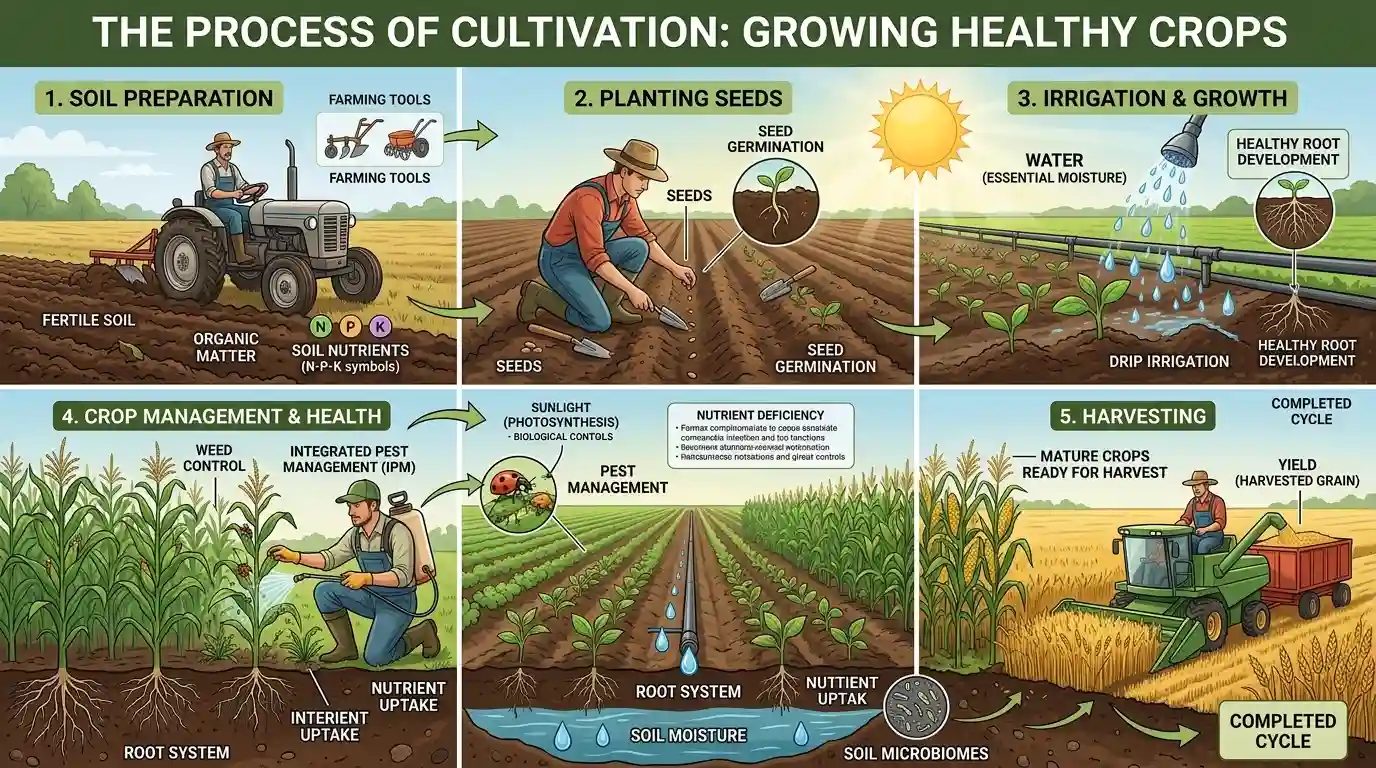
The core word refers to the deliberate process of growing, refining, or improving something. Native speakers use it for farming crops, building relationships, or developing new habits.
Part of Speech: Noun.
Simple Definition: The act of preparing land, growing plants, or fostering a skill through sustained effort.
Connotative Meaning
Connotation means the secondary emotional feeling or cultural association a word carries beyond its literal definition.
- Positive tone: Implies intentional care, self-improvement, wisdom, patience, and healthy growth.
- Negative tone: Can rarely imply calculated effort or artificial manipulation when used in negative contexts.
- Neutral tone: Simply describes agricultural actions, land preparation, or standard farming processes.
Etymology and History
The word originates from the Medieval Latin cultivatio, stemming from cultivare (to till or labor over land).
- Old English (450–1100): Not present in Old English; Anglo-Saxon terms like tilling were used instead.
- Middle English (1100–1500): Adapted from Latin root colere (to inhabit, care for, or till) through Old French influences.
- Modern English (1500–Present): Expanded from strictly agricultural tilling to include metaphorical growth of the mind, arts, and character.
Pronunciation and Syllables
- US: /ˌkʌl.təˈveɪ.ʃən/
- UK: /ˌkʌl.tɪˈveɪ.ʃən/
Syllables: cul-ti-va-tion
Affixation Pattern:
- Root: Cult (from Latin cultus, meaning tilled or cared for)
- Prefix: None
- Suffix: -ation (forms a noun indicating a state, process, or action)
Synonyms List
1. Farming (Noun) — US: /ˈfɑːr.mɪŋ/ | UK: /ˈfɑː.mɪŋ/
- Meaning: The business or practice of growing crops and raising livestock.
- Tone/Register: Neutral, Informal, General
- Farmers dedicate their lives to sustainable farming practices.
- Modern farming techniques help increase food production efficiency.
2. Agriculture (Noun) — US: /ˈæɡ.rɪ.kʌl.tʃɚ/ | UK: /ˈæɡ.rɪ.kʌl.tʃər/
- Meaning: The science and practice of large-scale soil preparation and crop production.
- Tone/Register: Formal, Technical, Academic
- The region relies heavily on agriculture for economic growth.
- Degree programs in agriculture cover soil science and economics.
3. Tillage (Noun) — US: /ˈtɪl.ɪdʒ/ | UK: /ˈtɪl.ɪdʒ/
- Meaning: The preparation of land for growing crops by plowing or turning soil.
- Tone/Register: Formal, Technical, Agricultural
- Proper tillage creates optimal conditions for seed germination.
- Excessive tillage can sometimes lead to topsoil erosion.
4. Gardening (Noun) — US: /ˈɡɑːr.dən.ɪŋ/ | UK: /ˈɡɑː.dən.ɪŋ/
- Meaning: The activity of tending and cultivating a small patch of plants or flowers.
- Tone/Register: Informal, Casual, Daily
- She finds peaceful relaxation in weekend gardening.
- Urban gardening continues to grow in popular cities.
5. Fostering (Noun) — US: /ˈfɑː.stɚ.ɪŋ/ | UK: /ˈfɒs.tər.ɪŋ/
- Meaning: The active encouragement and nurturing of a feeling, idea, or skill.
- Tone/Register: Formal, Educational, Business
- Good leadership involves the fostering of creative ideas.
- Teachers focus on fostering critical thinking skills.
6. Nurturing (Noun) — US: /ˈnɝː.tʃɚ.ɪŋ/ | UK: /ˈnɜː.tʃər.ɪŋ/
- Meaning: The care and encouragement given to someone or something to grow.
- Tone/Register: Positive, Warm, Personal
- Healthy emotional development requires loving nurturing.
- The constant nurturing of young talent benefits every company.
7. Development (Noun) — US: /dɪˈvel.əp.mənt/ | UK: /dɪˈvel.əp.mənt/
- Meaning: The process of growing, expanding, or becoming more advanced.
- Tone/Register: Neutral, Professional, Academic
- Professional development helps employees gain vital skills.
- The rapid development of new software takes months.
8. Refinement (Noun) — US: /rɪˈfaɪn.mənt/ | UK: /rɪˈfaɪn.mənt/
- Meaning: The process of improving something by making small, subtle changes.
- Tone/Register: Formal, Polished, Academic
- Years of continuous practice brought great refinement to her art.
- Code refinement makes software run noticeably faster.
9. Growth (Noun) — US: /ɡroʊθ/ | UK: /ɡrəʊθ/
- Meaning: The process of increasing in physical size, value, or maturity.
- Tone/Register: Neutral, Common, General
- Personal growth happens when you step out of your comfort zone.
- Economic growth relies on steady consumer investment.
10. Improvement (Noun) — US: /ɪmˈpruːv.mənt/ | UK: /ɪmˈpruːv.mənt/
- Meaning: The act of making something better or becoming better oneself.
- Tone/Register: Neutral, Daily, Direct
- Regular study habits bring steady improvement in test scores.
- Home improvement projects can boost property values significantly.
11. Husbandry (Noun) — US: /ˈhʌz.bən.dri/ | UK: /ˈhʌz.bən.dri/
- Meaning: The care, cultivation, and breeding of crops and animals.
- Tone/Register: Formal, Archaic, Technical
- Good animal husbandry keeps livestock healthy and safe.
- Historical texts often discuss traditional land husbandry methods.
12. Agronomy (Noun) — US: /əˈɡrɑː.nə.mi/ | UK: /əˈɡrɒn.ə.mi/
- Meaning: The scientific study of soil management and crop production.
- Tone/Register: Academic, Scientific, Specialized
- Advances in agronomy help farmers fight severe droughts.
- She pursued a specialized degree in agronomy last year.
13. Agribusiness (Noun) — US: /ˈæɡ.rəˌbɪz.nəs/ | UK: /ˈæɡ.rɪˌbɪz.nɪs/
- Meaning: Commercial agriculture considered as a large industrial business sector.
- Tone/Register: Business, Professional, Formal
- Modern agribusiness operates on a massive global scale.
- Investing in corporate agribusiness carries specific financial risks.
14. Horticulture (Noun) — US: /ˈhɔːr.t̬ə.kʌl.tʃɚ/ | UK: /ˈhɔː.tɪ.kʌl.tʃər/
- Meaning: The art or science of cultivating garden plants, fruits, and flowers.
- Tone/Register: Scientific, Formal, Academic
- The botanical garden features impressive exhibits on horticulture.
- Studying environmental horticulture teaches sustainable plant management.
15. Propagation (Noun) — US: /ˌprɑː.pəˈɡeɪ.ʃən/ | UK: /ˌprɒp.əˈɡeɪ.ʃən/
- Meaning: The breeding or reproduction of specimens of a plant or animal.
- Tone/Register: Scientific, Technical, Formal
- Plant propagation from cuttings is a popular hobby.
- Successful propagation requires correct humidity levels.
16. Tending (Noun) — US: /ˈten.dɪŋ/ | UK: /ˈten.dɪŋ/
- Meaning: The act of caring for or looking after something with attention.
- Tone/Register: Warm, Informal, Descriptive
- The careful tending of young sprouts ensures a good harvest.
- Tending to customer needs builds lasting brand trust.
17. Advancement (Noun) — US: /ədˈvæns.mənt/ | UK: /ədˈvɑːns.mənt/
- Meaning: The process of helping something progress, succeed, or improve position.
- Tone/Register: Formal, Professional, Ambitious
- Hard work leads to career advancement inside big companies.
- Technological advancement changes how people work daily.
18. Enrichment (Noun) — US: /ɪnˈrɪtʃ.mənt/ | UK: /ɪnˈrɪtʃ.mənt/
- Meaning: The act of enhancing or improving the quality or value of something.
- Tone/Register: Positive, Academic, Educational
- Cultural enrichment helps students understand world histories.
- Adding organic compost brings enrichment to tired soil.
19. Flourishing (Noun) — US: /ˈflɝː.ɪ.ʃɪŋ/ | UK: /ˈflʌr.ɪ.ʃɪŋ/
- Meaning: The state of growing, developing, or succeeding rapidly and healthily.
- Tone/Register: Expressive, Literary, Positive
- The town saw a flourishing of local small businesses.
- Art and music enjoyed a grand flourishing during that era.
20. Cultivating (Noun) — US: /ˈkʌl.tə.veɪ.t̬ɪŋ/ | UK: /ˈkʌl.tɪ.veɪ.tɪŋ/
- Meaning: The continuous action of preparing soil or encouraging personal growth.
- Tone/Register: Neutral, Active, Descriptive
- Cultivating healthy daily habits requires time and discipline.
- Farmers spend long springs cultivating fields for planting.
21. Maturation (Noun) — US: /ˌmætʃ.əˈreɪ.ʃən/ | UK: /ˌmæt.jʊəˈreɪ.ʃən/
- Meaning: The process of becoming fully developed, mature, or ripe.
- Tone/Register: Formal, Scientific, Psychological
- Wine improves as it undergoes a long period of maturation.
- Emotional maturation happens through living through difficult experiences.
22. Incubation (Noun) — US: /ˌɪn.kjəˈbeɪ.ʃən/ | UK: /ˌɪn.kjəˈbeɪ.ʃən/
- Meaning: The process of developing an idea, plan, or organism over time.
- Tone/Register: Technical, Business, Medical
- The business startup incubator offers mentorship to founders.
- The incubation phase of a new creative project takes patience.
23. Upbringing (Noun) — US: /ˈʌpˌbrɪŋ.ɪŋ/ | UK: /ˈʌpˌbrɪŋ.ɪŋ/
- Meaning: The care and instruction given to children while they grow up.
- Tone/Register: Personal, Informal, Conversational
- A quiet rural upbringing shaped his calm personality.
- She credits her success to a supportive upbringing.
24. Education (Noun) — US: /ˌedʒ.əˈkeɪ.ʃən/ | UK: /ˌedʒ.ʊˈkeɪ.ʃən/
- Meaning: The process of receiving or giving systematic instruction and knowledge.
- Tone/Register: Standard, Educational, Formal
- Higher education opens up interesting career paths worldwide.
- Early childhood education builds essential foundational learning skills.
25. Grooming (Noun) — US: /ˈɡruː.mɪŋ/ | UK: /ˈɡruː.mɪŋ/
- Meaning: The process of training or preparing someone for a specific purpose.
- Tone/Register: Professional, Direct, Specialized
- Corporate leadership grooming programs train future executives.
- Regular grooming keeps pets comfortable and healthy.
26. Preparation (Noun) — US: /ˌprep.əˈreɪ.ʃən/ | UK: /ˌprep.ərˈeɪ.ʃən/
- Meaning: The act or process of making something ready for use or action.
- Tone/Register: Neutral, Daily, Direct
- Proper soil preparation prevents common weed problems later.
- Careful exam preparation leads to high performance scores.
27. Plowing (Noun) — US: /ˈplaʊ.ɪŋ/ | UK: /ˈplaʊ.ɪŋ/
- Meaning: The agricultural act of turning over soil with a heavy blade.
- Tone/Register: Agricultural, Direct, Practical
- Plowing fields before winter helps break up hard ground.
- Tractor plowing replaced manual farm labor years ago.
28. Seeding (Noun) — US: /ˈsiː.dɪŋ/ | UK: /ˈsiː.dɪŋ/
- Meaning: The act of planting seeds in the ground for growing crops.
- Tone/Register: Agricultural, Practical, Neutral
- Spring seeding must happen right after the last freeze.
- Precise lawn seeding yields a thick green yard.
29. Planting (Noun) — US: /ˈplæn.tɪŋ/ | UK: /ˈplɑːn.tɪŋ/
- Meaning: The activity of setting seeds, bulbs, or young plants in soil.
- Tone/Register: Daily, Informal, Practical
- Tree planting initiatives help restore damaged forests.
- Spring planting is a popular family activity.
30. Raising (Noun) — US: /ˈreɪ.zɪŋ/ | UK: /ˈreɪ.zɪŋ/
- Meaning: The activity of caring for and breeding livestock or growing plants.
- Tone/Register: Direct, Everyday, Practical
- Raising cattle requires extensive pasture land and water.
- Barn construction helps with raising healthy livestock.
31. Training (Noun) — US: /ˈtreɪ.nɪŋ/ | UK: /ˈtreɪ.nɪŋ/
- Meaning: The process of learning skills or behaviors through practice.
- Tone/Register: Professional, Daily, Standard
- Professional skill training improves workplace performance.
- Athletic training demands focus and consistent rest.
32. Schooling (Noun) — US: /ˈskuː.lɪŋ/ | UK: /ˈskuː.lɪŋ/
- Meaning: Education or training received at a school or educational institution.
- Tone/Register: Standard, Historical, Conversational
- Formal schooling gives students basic foundational tools.
- Homeschooling offers flexible learning environments for families.
33. Edification (Noun) — US: /ˌed.ə.fəˈkeɪ.ʃən/ | UK: /ˌed.ɪ.fɪˈkeɪ.ʃən/
- Meaning: The instruction or improvement of a person morally or intellectually.
- Tone/Register: Formal, Academic, Literary
- Reading historical literature provides moral edification.
- The speech was intended for the edification of students.
34. Culture (Noun) — US: /ˈkʌl.tʃɚ/ | UK: /ˈkʌl.tʃər/
- Meaning: The cultivation of bacteria, tissue, or intellectual refinement.
- Tone/Register: Academic, Scientific, Cultural
- Lab technicians monitor the cell culture carefully.
- High culture includes classical art and theater performances.
35. Civilization (Noun) — US: /ˌsɪv.əl.əˈzeɪ.ʃən/ | UK: /ˌsɪv.əl.aɪˈzeɪ.ʃən/
- Meaning: The social, cultural, and intellectual development of human society.
- Tone/Register: Formal, Historical, Academic
- Early human civilization developed near major water sources.
- The civilization of wild lands transformed ancient trade routes.
36. Fertilization (Noun) — US: /ˌfɝː.t̬əl.əˈzeɪ.ʃən/ | UK: /ˌfɜː.tɪ.laɪˈzeɪ.ʃən/
- Meaning: The act of enriching soil or making land productive.
- Tone/Register: Technical, Scientific, Agricultural
- Proper soil fertilization restores essential ground nutrients.
- Spring fertilization encourages rapid plant growth.
37. Germination (Noun) — US: /ˌdʒɝː.məˈneɪ.ʃən/ | UK: /ˌdʒɜː.mɪˈneɪ.ʃən/
- Meaning: The initial process of a seed beginning to grow and sprout.
- Tone/Register: Scientific, Technical, Educational
- Warm soil speeds up seed germination times.
- Watching plant germination is an exciting science project.
38. Fallow (Noun) — US: /ˈfæl.oʊ/ | UK: /ˈfæl.əʊ/
- Meaning: Land left unseeded during a growing season to restore fertility.
- Tone/Register: Agricultural, Technical, Historical
- Leaving fields in fallow restores vital soil health.
- Managed fallow cycles prevent long-term soil exhaustion.
39. Aration (Noun) — US: /əˈreɪ.ʃən/ | UK: /əˈreɪ.ʃən/
- Meaning: The historical term for plowing or tilling farmland.
- Tone/Register: Archaic, Historical, Literary
- Historical texts mention aration as fundamental to early farming.
- Ancient aration tools were crafted from basic iron.
40. Workmanship (Noun) — US: /ˈwɝːk.mən.ʃɪp/ | UK: /ˈwɜːk.mən.ʃɪp/
- Meaning: The degree of skill with which a product or project is made.
- Tone/Register: Formal, Artistic, Professional
- Fine furniture displays exceptional craftsmanship and workmanship.
- Reliable workmanship ensures durable building structures.
41. Evolution (Noun) — US: /ˌev.əˈluː.ʃən/ | UK: /ˌiː.vəˈluː.ʃən/
- Meaning: The gradual development of something from a simple to complex form.
- Tone/Register: Scientific, Academic, General
- The technological evolution of computers happened rapidly.
- Language evolution creates colorful new daily phrases.
42. Elevation (Noun) — US: /ˌel.əˈveɪ.ʃən/ | UK: /ˌel.ɪˈveɪ.ʃən/
- Meaning: The heightening or raising of intellectual, moral, or physical status.
- Tone/Register: Formal, Inspiring, Literary
- Education leads to the elevation of community living standards.
- Art provides an elevation of human thought and emotion.
43. Conditioning (Noun) — US: /kənˈdɪʃ.ən.ɪŋ/ | UK: /kənˈdɪʃ.ən.ɪŋ/
- Meaning: The process of training or adapting something to a desired state.
- Tone/Register: Technical, Athletic, Psychological
- Physical conditioning prepares athletes for intense competitions.
- Soil conditioning improves water retention for gardens.
44. Perfection (Noun) — US: /pɚˈfek.ʃən/ | UK: /pəˈfek.ʃən/
- Meaning: The process of perfecting or refining something to the highest degree.
- Tone/Register: Expressive, Ambitious, Idealistic
- The perfection of crafting fine violins requires decades.
- Constant practice leads toward technical artistic perfection.
45. Acclimatization (Noun) — US: /əˌklaɪ.mə.t̬əˈzeɪ.ʃən/ | UK: /əˌklaɪ.mə.taɪˈzeɪ.ʃən/
- Meaning: The process of adapting plants or humans to a new environment.
- Tone/Register: Scientific, Environmental, Academic
- Plant acclimatization takes time when moving green crops indoors.
- Altitude acclimatization protects mountain climbers from illness.
46. Boosting (Noun) — US: /ˈbuː.stɪŋ/ | UK: /ˈbuː.stɪŋ/
- Meaning: The act of encouraging, improving, or pushing something higher.
- Tone/Register: Informal, Modern, Direct
- Consistent effort leads to boosting your overall productivity.
- Soil amending aids in boosting annual crop yields.
47. Habituation (Noun) — US: /həˌbɪtʃ.uˈeɪ/.ʃən/ | UK: /həˌbɪtʃ.uˈeɪ.ʃən/
- Meaning: The process of developing a habit or becoming accustomed to something.
- Tone/Register: Psychological, Scientific, Academic
- Habituation to regular exercise requires consistent motivation.
- Mindful habituation changes your daily routine for good.
48. Nurture (Noun) — US: /ˈnɝː.tʃɚ/ | UK: /ˈnɜː.tʃər/
- Meaning: Caring for and encouraging the growth or development of someone.
- Tone/Register: Gentle, Warm, Educational
- Environmental nurture plays a huge role in child development.
- Good leaders offer nurture and direction to young teams.
49. Care (Noun) — US: /ker/ | UK: /keər/
- Meaning: The provision of necessary welfare, protection, and maintenance.
- Tone/Register: Direct, General, Informal
- Daily care ensures houseplants stay healthy and vibrant.
- Patient care remains the top priority for hospital staff.
50. Progress (Noun) — US: /ˈprɑː.ɡres/ | UK: /ˈprəʊ.ɡres/
- Meaning: Forward movement toward a refined or better state.
- Tone/Register: Positive, General, Business
- Tracking your project progress keeps goals on schedule.
- Clear communication fosters steady team progress.
51. Promotion (Noun) — US: /prəˈmoʊ.ʃən/ | UK: /prəˈməʊ.ʃən/
- Meaning: The public support or encouragement of the cause or growth of something.
- Tone/Register: Professional, Strategic, Business
- Health promotion campaigns encourage daily wellness habits.
- The promotion of local arts transforms cities into hubs.
52. Betterment (Noun) — US: /ˈbet̬.ɚ.mənt/ | UK: /ˈbet.ə.mənt/
- Meaning: The improvement of character, social position, or general quality.
- Tone/Register: Formal, Inspirational, Social
- Studying daily works toward the betterment of your mind.
- Community service projects aim for the betterment of society.
53. Humanizing (Noun) — US: /ˈhjuː.mə.naɪ.zɪŋ/ | UK: /ˈhjuː.mə.naɪ.zɪŋ/
- Meaning: The process of making something more refined, polite, or compassionate.
- Tone/Register: Academic, Philosophical, Formal
- Education plays a role in humanizing world societies.
- Art provides a humanizing influence in digital spaces.
54. Maturing (Noun) — US: /məˈtʃʊr.ɪŋ/ | UK: /məˈtʃʊə.rɪŋ/
- Meaning: The ongoing process of becoming fully grown, ripe, or developed.
- Tone/Register: General, Descriptive, Neutral
- The slow maturing of compost takes several warm months.
- Maturing as a writer requires reading diverse book genres.
55. Civilization-building (Noun) — US: /ˌsɪv.əl.əˈzeɪ.ʃən ˈbɪl.dɪŋ/ | UK: /ˌsɪv.əl.aɪˈzeɪ.ʃən ˈbɪl.dɪŋ/
- Meaning: The grand effort of establishing organized human society and culture.
- Tone/Register: Literary, Academic, Historical
- Ancient agriculture was essential to early civilization-building.
- History books record the story of global civilization-building.
56. Polish (Noun) — US: /ˈpɑː.lɪʃ/ | UK: /ˈpɒl.ɪʃ/
- Meaning: Elegance, refinement, or sophistication of manners or style.
- Tone/Register: Informal, Descriptive, Aesthetic
- Revision brings clear polish to an introductory essay.
- Her musical presentation showed incredible technical polish.
57. Preparation-of-land (Noun) — US: /ˌprep.əˈreɪ.ʃən əv lænd/ | UK: /ˌprep.ərˈeɪ.ʃən əv lænd/
- Meaning: The physical work of tilling soil before planting crops.
- Tone/Register: Technical, Descriptive, Agricultural
- Autumn preparation-of-land protects soil nutrients from washing away.
- Proper preparation-of-land yields stronger crops.
58. Upbringing-and-care (Noun) — US: /ˈʌpˌbrɪŋ.ɪŋ ænd ker/ | UK: /ˈʌpˌbrɪŋ.ɪŋ ænd keər/
- Meaning: The holistic support provided to children or young organisms.
- Tone/Register: Expressive, Descriptive, Conversational
- Thoughtful upbringing-and-care shapes confident young minds.
- Animal shelters provide attentive upbringing and care for stray pets.
59. Intellectual-growth (Noun) — US: /ˌɪn.t̬əlˈek.tʃu.əl ɡroʊθ/ | UK: /ˌɪn.təˈlek.tʃu.əl ɡrəʊθ/
- Meaning: The development of mental skills, knowledge, and understanding.
- Tone/Register: Academic, Formal, Educational
- College campuses encourage intellectual growth through lively debate.
- Daily reading habits stimulate ongoing intellectual growth.
60. Soil-working (Noun) — US: /sɔɪl ˈwɝː.kɪŋ/ | UK: sɔɪl ˈwɜː.kɪŋ/
- Meaning: The physical manipulation and tilling of dirt for agricultural use.
- Tone/Register: Practical, Technical, Farm-specific
- Traditional soil-working required heavy animal labor.
- Minimal soil-working keeps beneficial garden worms safe.
Synonyms for Cultivation by Tone
Understanding tone helps you choose the right word for your specific writing context.
- Positive Tone: Nurturing, Fostering, Enrichment, Betterment, Flourishing, Advancement.
- Neutral Tone: Agriculture, Farming, Development, Growth, Tillage, Preparation.
- Negative Tone: Over-farming, Forced-growth, Exploitative-tilling (when used in environmental warnings).
- Informal / Conversational: Gardening, Tending, Raising, Upbringing, Polish.
Using the correct tone ensures your audience understands your precise intentions without confusion.
“Cultivation” vs. Close Alternatives
Agriculture vs. Cultivation
- Meaning Difference: Agriculture refers specifically to large-scale, commercial farming and crop science. Cultivation can mean small-scale tilling or metaphorical personal growth.
- Tone Difference: Agriculture is formal and commercial. Cultivation feels more personal, careful, or artistic.
- When to Use: Use agriculture for economic reports. Use cultivation when discussing soil tilling or developing personal habits.
Cultivation vs. Fostering
- Meaning Difference: Fostering focuses purely on encouraging the growth of an idea, feeling, or relationship. Cultivation includes physical farming as well as skill development.
- Tone Difference: Fostering sounds gentle and supportive. Cultivation sounds structured and disciplined.
- When to Use: Use fostering for workplace teamwork. Use cultivation for long-term personal or agricultural projects.
How “Cultivation” Changes by Context
- Daily Conversation: Native speakers use the word to describe building new habits, such as cultivating mindfulness or daily reading routines.
- Writing or Blogging: Content creators use it metaphorically to describe audience growth, brand development, or skill refinement.
- Professional or Academic: Business reports use it to describe strategic partnerships, land management, or employee talent development.
- Creative or Informal: Novelists use it to describe how characters develop self-control, elegant manners, or specialized artistic talents.
Common Mistakes Learners Make
- Confusing Physical and Metaphorical Use: Do not use pure farming terms like tillage when discussing human emotions or business relationships.
- Overusing the Word: Repeating cultivation multiple times in one paragraph makes writing feel robotic. Swap it for fostering or nurturing.
- Ignoring Contextual Register: Calling daily gardening “agronomy” sounds unnaturally formal in casual conversations.
For more vocabulary tips, check out our guide on language structure and vocabulary building.
Real-Life Mini Scenarios
- Workplace: “The manager spent three months on the cultivation of better team communication.”
- Social Situations: “Building deep friendships requires the deliberate cultivation of mutual trust.”
- Media / Pop Culture: “Documentaries often show the traditional cultivation of rare tea leaves in East Asia.”
- Writing & Storytelling: “The protagonist’s cultivation of inner strength helped her overcome long hardship.”
Interactive Practice Quiz
1. Which synonym best fits large-scale industrial crop production?
A) Gardening
B) Agriculture
C) Upbringing
D) Tending
2. Select the synonym that best describes encouraging a new workplace idea:
A) Fostering
B) Aration
C) Plowing
D) Seeding
3. What is the main difference between “gardening” and “agronomy”?
A) Agronomy is casual
B) Gardening is a scientific degree
C) Agronomy is a formal science, while gardening is a hobby
D) They mean the exact same thing
4. Which word carries the most warm, emotional connotation?
A) Tillage
B) Nurturing
C) Aration
D) Agribusiness
5. Which word specifically refers to preparing land by turning soil?
A) Tillage
B) Edification
C) Advancement
D) Maturity
6. Complete the sentence: “The teacher focused on the _______ of critical thinking.”
A) plowing
B) fostering
C) fallow
D) aration
7. Which term fits best in a formal scientific paper about soil health?
A) Raising
B) Soil-working
C) Agronomy
D) Polish
8. Choose the synonym best suited for describing character self-improvement:
A) Refinement
B) Plowing
C) Seeding
D) Agribusiness
9. Which term refers to land left unplanted to recover its soil health?
A) Fallow
B) Tillage
C) Germination
D) Promotion
10. “Husbandry” is most closely associated with which context?
A) Software development
B) Traditional farming and animal care
C) City planning
D) Modern digital marketing
Reflection Task:
Write one original sentence about a personal goal using the word fostering or refinement.
Answer Key:
1: B | 2: A | 3: C | 4: B | 5: A | 6: B | 7: C | 8: A | 9: A | 10: B
Conclusion
Expanding your vocabulary with synonyms of cultivation makes your writing shine brightly. Clear word choices allow you to share precise thoughts with confidence.
Words like fostering, agriculture, and refinement keep readers engaged across essays and posts. Practice replacing overused terms to build an expressive writing voice.
Try using two new synonyms in your next email, blog post, or assignment. Practicing word variations daily helps build an advanced vocabulary naturally over time.
FAQs
What is the most common synonym of cultivation in everyday English?
The most common everyday synonym is farming when referring to land, or growth when referring to personal development. Words like tending or gardening are also frequently used in casual, daily conversations.
How does the word cultivation differ from simple growth?
Growth refers to any natural increase in size or status. Cultivation implies intentional effort, active care, labor, and planning to help something grow successfully.
Can cultivation be used to describe non-agricultural subjects?
Yes, native English speakers frequently use cultivation metaphorically. It commonly describes building mental habits, fostering professional relationships, refining artistic skills, or nurturing emotional maturity over extended periods.
What is a good formal synonym for cultivation in business writing?
In corporate or academic settings, words like fostering, development, advancement, or nurturing work best. They convey professional care and structured progress without sounding agricultural.
What is the origin of the word cultivation?
The word comes from the Medieval Latin cultivare, meaning to till or work the ground. Over centuries, it expanded in Modern English to cover mental and social growth.

Mehtab Yasir is a passionate writer and English language enthusiast dedicated to making vocabulary learning simple, practical, and enjoyable. As an author at SynonymDesk.com, she creates helpful content covering synonyms, antonyms, word meanings, vocabulary, phrases, and everyday English usage. Her goal is to provide clear and easy-to-understand information that helps students, writers, professionals, and English learners choose the right words and communicate with greater confidence. Mehtab believes that a strong vocabulary can improve both writing and communication skills. She enjoys researching new words, exploring their meanings and uses, and turning complex language concepts into useful, reader-friendly content. Through her work, she strives to make SynonymDesk.com a reliable resource for anyone looking to improve their English vocabulary and language skills.