Synonyms of constellation include cluster, grouping, collection, arrangement, assemblage, array, formation, and combination. These words describe groups of connected things, people, or stars. The best alternative depends on whether you mean an astronomical pattern or a collection of related elements.
Imagine looking at the night sky and noticing several stars forming a recognizable pattern. You might call this a constellation. However, English offers other words to describe similar arrangements.
For example, a constellation of ideas can describe several connected thoughts. A cluster of stars describes objects gathered closely together. Learning these differences makes your vocabulary more precise.
The phrase synonyms of constellation is useful in academic writing, storytelling, astronomy, and everyday communication. Different alternatives help writers express relationships without repeating the same word.
Whether you are a student, blogger, content writer, or everyday English learner, understanding these alternatives can improve your communication. Let’s explore 40 useful words and their meanings.
What Does “Constellation” Really Mean?
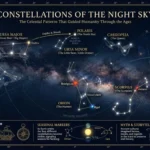
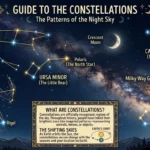
A constellation is a recognizable arrangement or group of stars in the night sky. It can also describe a collection of related people, objects, ideas, or circumstances.
The word has two common meanings:
- Astronomical meaning: A recognized region of the sky associated with a particular star pattern.
- Figurative meaning: A group of related things, qualities, people, or circumstances that come together.
For example:
- Orion is a well-known constellation in the night sky.
- The project brought together a constellation of talented researchers.
In the second example, constellation does not refer to actual stars. It describes an impressive group of people.
Part of Speech: Noun
Simple Definition: A constellation is a group of stars forming a recognizable pattern or a collection of connected things.
How Native Speakers Understand Constellation
Native English speakers use constellation when they want to describe a distinctive arrangement or an interesting collection.
The word often sounds more expressive than ordinary alternatives such as group or collection.
It can also suggest that different elements work together or form a meaningful pattern.
Connotative Meaning
(Connotation refers to the feelings, associations, or additional meanings that a word creates beyond its literal definition.)
Positive Tone
Constellation can suggest beauty, harmony, talent, and meaningful connections.
Example: A constellation of brilliant minds contributed to the discovery.
Negative Tone
The word can describe a complicated collection of problems or difficult circumstances.
Example: A constellation of challenges prevented the company from expanding.
Neutral Tone
In astronomy and factual descriptions, constellation carries a neutral meaning.
Example: Scientists identified the constellation using its recognized boundaries.
Etymology of Constellation
The word constellation comes from the Latin word constellatio, which relates to a group or arrangement of stars.
It combines two Latin elements:
- Con- means together.
- Stella means star.
The word entered English through Old French and Latin influences.
Historical Development
Old English Period (450–1100)
The modern word constellation was not established in Old English. People used different expressions to describe stars and celestial patterns.
Middle English Period (1100–1500)
The word entered English through French and Latin influences. It appeared in discussions about astronomy, astrology, and the arrangement of stars.
Modern English Period (1500–Present)
Constellation became a familiar astronomical term. Writers also began using it figuratively to describe collections of people, ideas, circumstances, and qualities.
Pronunciation
US: /ˌkɑːn.stəˈleɪ.ʃən/
UK: /ˌkɒn.stəˈleɪ.ʃən/
Syllables
con-stel-la-tion
Total: Four syllables.
Affixation Pattern of Constellation
Root: Stell (star)
Prefix: Con- (together)
Suffix: -ation (a process, state, or resulting condition)
The word developed from Latin rather than through a simple modern English word-building process.
Synonyms and Alternatives for Constellation
The following alternatives cover the astronomical and figurative meanings of constellation. Some are close synonyms, while others work only in particular contexts. Always consider the intended meaning before replacing the original word.
1. Cluster (Noun) — US: /ˈklʌs.tɚ/ | UK: /ˈklʌs.tə/
Meaning: A cluster is a group of things positioned close together.
Tone/Register: Neutral, conversational, scientific.
Example:
The telescope captured a beautiful cluster of distant stars.
A cluster of businesses opened near the new shopping center.
2. Group (Noun) — US: /ɡruːp/ | UK: /ɡruːp/
Meaning: A group is a collection of people or things considered together.
Tone/Register: Neutral, everyday.
Example:
A group of talented musicians performed at the festival.
The researcher studied a group of unusual stars.
3. Collection (Noun) — US: /kəˈlek.ʃən/ | UK: /kəˈlek.ʃən/
Meaning: A collection is an assortment of objects or elements gathered together.
Tone/Register: Neutral, formal.
Example:
The museum displayed a collection of astronomical photographs.
She created a collection of stories about distant galaxies.
4. Arrangement (Noun) — US: /əˈreɪndʒ.mənt/ | UK: /əˈreɪndʒ.mənt/
Meaning: An arrangement describes how different elements are positioned or organized.
Tone/Register: Neutral, academic.
Example:
The arrangement of stars created an interesting visual pattern.
The designer changed the arrangement of photographs.
5. Assemblage (Noun) — US: /əˈsem.blɪdʒ/ | UK: /əˈsem.blɪdʒ/
Meaning: An assemblage is a collection of different elements brought together.
Tone/Register: Formal, academic.
Example:
The exhibition featured an assemblage of unusual sculptures.
An assemblage of researchers examined the celestial objects.
6. Array (Noun) — US: /əˈreɪ/ | UK: /əˈreɪ/
Meaning: An array is an impressive or organized collection of different things.
Tone/Register: Formal, professional.
Example:
The university attracted an array of talented scientists.
The observatory recorded an array of distant celestial objects.
7. Formation (Noun) — US: /fɔːrˈmeɪ.ʃən/ | UK: /fɔːˈmeɪ.ʃən/
Meaning: A formation is an arrangement of objects or people in a particular pattern.
Tone/Register: Neutral, scientific.
Example:
The stars appeared in a distinctive formation.
The aircraft maintained its formation during the demonstration.
8. Configuration (Noun) — US: /kənˌfɪɡ.jəˈreɪ.ʃən/ | UK: /kənˌfɪɡ.jəˈreɪ.ʃən/
Meaning: Configuration describes the specific arrangement of connected elements.
Tone/Register: Formal, technical.
Example:
The astronomer examined the configuration of the stars.
The new system uses a different configuration of components.
9. Pattern (Noun) — US: /ˈpæt.ɚn/ | UK: /ˈpæt.ən/
Meaning: A pattern is a recognizable design or arrangement formed by different elements.
Tone/Register: Neutral, educational.
Example:
Children learned to identify a pattern among the stars.
The artist created a beautiful pattern using small lights.
10. Set (Noun) — US: /set/ | UK: /set/
Meaning: A set is a group of related objects or elements considered together.
Tone/Register: Neutral, everyday.
Example:
The scientist examined a set of stars in the same region.
She collected a set of photographs showing different constellations.
11. System (Noun) — US: /ˈsɪs.təm/ | UK: /ˈsɪs.təm/
Meaning: A system is a group of connected parts that function or exist together.
Tone/Register: Formal, academic.
Example:
The solar system contains several planets and other celestial objects.
The organization developed a system for studying astronomical patterns.
12. Ensemble (Noun) — US: /ɑːnˈsɑːm.bəl/ | UK: /ɒnˈsɒm.bəl/
Meaning: An ensemble is a coordinated collection of people or elements.
Tone/Register: Formal, artistic.
Example:
An ensemble of musicians performed under the open sky.
The artwork presented an ensemble of colors and shapes.
13. Assortment (Noun) — US: /əˈsɔːrt.mənt/ | UK: /əˈsɔːt.mənt/
Meaning: An assortment is a varied collection of different things.
Tone/Register: Neutral, conversational.
Example:
The exhibition included an assortment of celestial photographs.
He collected an assortment of books about astronomy.
14. Combination (Noun) — US: /ˌkɑːm.bəˈneɪ.ʃən/ | UK: /ˌkɒm.bɪˈneɪ.ʃən/
Meaning: A combination is a group of elements brought together to create a whole.
Tone/Register: Neutral, professional.
Example:
The display featured a combination of stars and colorful lights.
Success required a combination of patience and creativity.
15. Grouping (Noun) — US: /ˈɡruː.pɪŋ/ | UK: /ˈɡruː.pɪŋ/
Meaning: A grouping is a collection of things organized or considered together.
Tone/Register: Neutral, academic.
Example:
The grouping of stars attracted the astronomer’s attention.
The teacher created a grouping of related vocabulary words.
16. Network (Noun) — US: /ˈnet.wɝːk/ | UK: /ˈnet.wɜːk/
Meaning: A network is a connected arrangement of people, objects, or systems.
Tone/Register: Professional, technical.
Example:
The researchers studied a network of connected astronomical observations.
A network of experts contributed to the investigation.
17. Spectrum (Noun) — US: /ˈspek.trəm/ | UK: /ˈspek.trəm/
Meaning: A spectrum is a broad range of different elements or qualities.
Tone/Register: Academic, formal.
Example:
The exhibition presented a spectrum of celestial colors.
The conference attracted experts from a spectrum of scientific fields.
18. Range (Noun) — US: /reɪndʒ/ | UK: /reɪndʒ/
Meaning: A range is a variety or collection extending across different types or levels.
Tone/Register: Neutral, professional.
Example:
The study examined a range of unusual astronomical objects.
The library offers a range of books about space.
19. Lineup (Noun) — US: /ˈlaɪn.ʌp/ | UK: /ˈlaɪn.ʌp/
Meaning: A lineup is an organized group of people or things.
Tone/Register: Informal, professional.
Example:
The festival announced a lineup of talented performers.
The documentary featured a lineup of respected astronomers.
20. Cohort (Noun) — US: /ˈkoʊ.hɔːrt/ | UK: /ˈkəʊ.hɔːt/
Meaning: A cohort is a group of people sharing a particular characteristic or experience.
Tone/Register: Academic, professional.
Example:
A cohort of astronomy students attended the observatory.
The research team followed a cohort of young scientists.
21. Body (Noun) — US: /ˈbɑː.di/ | UK: /ˈbɒd.i/
Meaning: A body is an organized group of people or a collection of related elements.
Tone/Register: Formal, professional.
Example:
A body of researchers examined the unusual celestial pattern.
The organization formed a body of experts to review the findings.
22. Company (Noun) — US: /ˈkʌm.pə.ni/ | UK: /ˈkʌm.pə.ni/
Meaning: A company can describe a group of people gathered together.
Tone/Register: Neutral, literary.
Example:
She enjoyed the company of fellow astronomy enthusiasts.
A company of explorers traveled through the remote region.
23. Circle (Noun) — US: /ˈsɝː.kəl/ | UK: /ˈsɜː.kəl/
Meaning: A circle is a group of people connected through shared interests or relationships.
Tone/Register: Neutral, conversational.
Example:
He belonged to a circle of amateur astronomers.
Her circle of friends enjoyed discussing scientific discoveries.
24. Community (Noun) — US: /kəˈmjuː.nə.t̬i/ | UK: /kəˈmjuː.nə.ti/
Meaning: A community is a group of people connected through shared interests or activities.
Tone/Register: Neutral, social.
Example:
The astronomy community celebrated the discovery.
A community of researchers shared their observations.
25. Coalition (Noun) — US: /ˌkoʊ.əˈlɪʃ.ən/ | UK: /ˌkəʊ.əˈlɪʃ.ən/
Meaning: A coalition is an alliance of people or organizations working toward a shared objective.
Tone/Register: Formal, political.
Example:
A coalition of scientists organized an international research project.
Several organizations formed a coalition to support education.
26. Alliance (Noun) — US: /əˈlaɪ.əns/ | UK: /əˈlaɪ.əns/
Meaning: An alliance is a partnership between people or organizations with shared goals.
Tone/Register: Formal, professional.
Example:
An alliance of universities supported the astronomical project.
The organizations established an alliance for scientific research.
27. Consortium (Noun) — US: /kənˈsɔːr.ʃi.əm/ | UK: /kənˈsɔː.ti.əm/
Meaning: A consortium is a formal association of organizations working together.
Tone/Register: Formal, academic, business.
Example:
A consortium of observatories shared its research findings.
The scientific consortium funded a major space study.
28. Syndicate (Noun) — US: /ˈsɪn.dɪ.kət/ | UK: /ˈsɪn.dɪ.kət/
Meaning: A syndicate is an organized group that works together for a particular purpose.
Tone/Register: Formal, business.
Example:
A syndicate of investors supported the research center.
The documentary explored an unusual network of professional associations.
29. Galaxy (Noun) — US: /ˈɡæl.ək.si/ | UK: /ˈɡæl.ək.si/
Meaning: Galaxy describes a vast collection of stars and can figuratively describe an impressive group of people.
Tone/Register: Scientific, literary.
Example:
A galaxy of talented performers attended the ceremony.
The telescope captured an image of a distant galaxy.
30. Host (Noun) — US: /hoʊst/ | UK: /həʊst/
Meaning: A host is a large number or collection of people or things.
Tone/Register: Formal, literary.
Example:
A host of researchers attended the international conference.
The night sky displayed a host of shining stars.
31. Multitude (Noun) — US: /ˈmʌl.tə.tuːd/ | UK: /ˈmʌl.tɪ.tjuːd/
Meaning: A multitude is a very large number or collection of things or people.
Tone/Register: Formal, descriptive.
Example:
A multitude of stars illuminated the dark sky.
The project involved a multitude of creative ideas.
32. Medley (Noun) — US: /ˈmed.li/ | UK: /ˈmed.li/
Meaning: A medley is a mixture of different elements brought together.
Tone/Register: Informal, artistic.
Example:
The performance included a medley of beautiful songs.
The artwork presented a medley of colors and patterns.
33. Mosaic (Noun) — US: /moʊˈzeɪ.ɪk/ | UK: /məʊˈzeɪ.ɪk/
Meaning: A mosaic is a combination of different elements that create a larger picture or whole.
Tone/Register: Literary, descriptive.
Example:
The painting created a mosaic of colors resembling the night sky.
Her experiences formed a mosaic of unforgettable memories.
34. Tapestry (Noun) — US: /ˈtæp.ə.stri/ | UK: /ˈtæp.ɪ.stri/
Meaning: A tapestry is a complex combination of different elements that form a meaningful whole.
Tone/Register: Literary, expressive.
Example:
The story revealed a tapestry of relationships and emotions.
The night sky appeared like a tapestry of shining stars.
35. Sequence (Noun) — US: /ˈsiː.kwəns/ | UK: /ˈsiː.kwəns/
Meaning: A sequence is an ordered series of connected elements or events.
Tone/Register: Neutral, academic.
Example:
The scientist examined a sequence of astronomical observations.
The photographs showed a sequence of changing star positions.
36. Series (Noun) — US: /ˈsɪr.iːz/ | UK: /ˈsɪə.riːz/
Meaning: A series is several related things arranged or presented together.
Tone/Register: Neutral, academic.
Example:
The astronomer published a series of observations.
The documentary explored a series of fascinating celestial discoveries.
37. Chain (Noun) — US: /tʃeɪn/ | UK: /tʃeɪn/
Meaning: A chain is a connected series of elements or events.
Tone/Register: Neutral, descriptive.
Example:
The researcher identified a chain of related astronomical events.
A chain of discoveries changed the direction of the project.
38. Asterism (Noun) — US: /ˈæs.tə.rɪ.zəm/ | UK: /ˈæs.tə.rɪ.zəm/
Meaning: An asterism is a recognizable star pattern that may form part of a larger constellation.
Tone/Register: Technical, astronomical.
Example:
The Big Dipper is a familiar asterism within Ursa Major.
The students learned to recognize several asterisms.
39. Star Pattern (Noun Phrase) — US: /stɑːr ˈpæt̬.ɚn/ | UK: /stɑː ˈpæt.ən/
Meaning: A star pattern is a recognizable arrangement of stars in the night sky.
Tone/Register: Neutral, educational.
Example:
The guide explained the star pattern visible above the mountains.
Children identified a familiar star pattern during the lesson.
40. Stellar Grouping (Noun Phrase) — US: /ˈstel.ɚ ˈɡruː.pɪŋ/ | UK: /ˈstel.ə ˈɡruː.pɪŋ/
Meaning: A stellar grouping describes stars considered together because of their position or relationship.
Tone/Register: Scientific, academic.
Example:
The astronomer examined a stellar grouping through a telescope.
The researchers compared several stellar groupings in the study.
Synonyms of Constellation by Tone
Not every alternative creates the same impression. Choosing the right word helps communicate your intended meaning.
Positive Synonyms
- Array
- Ensemble
- Tapestry
- Mosaic
- Alliance
- Galaxy
These words can suggest beauty, talent, cooperation, or impressive variety.
Neutral Synonyms
- Group
- Cluster
- Collection
- Arrangement
- Formation
- Pattern
- Set
- Grouping
- Series
- Sequence
These alternatives work well in everyday communication and factual writing.
Negative Synonyms
Constellation itself is not inherently negative. However, some alternatives can describe an undesirable collection when the surrounding sentence creates that meaning.
- Cluster
- Combination
- Multitude
- Assortment
- Array
Example: A cluster of unexpected problems delayed the project.
Playful and Informal Alternatives
- Bunch
- Bunch of stars
- Medley
- Mix
- Lineup
These expressions work better in casual conversations than in formal astronomical writing.
Why Does Tone Matter?
Tone determines how readers interpret your message.
For example, array sounds more polished than group. Tapestry creates a literary feeling, while cluster sounds straightforward and descriptive.
Choose alternatives according to your audience and writing purpose.
Constellation vs. Close Alternatives
Some words resemble constellation but have important differences. Understanding these distinctions helps prevent incorrect word choices.
Constellation vs. Cluster
Constellation: Usually describes a recognized star pattern or a distinctive collection of related elements.
Cluster: Describes things gathered closely together.
Tone: Constellation sounds more expressive, while cluster is more direct.
When to use: Use constellation for a recognizable or meaningful collection. Use cluster when physical closeness matters.
Constellation vs. Arrangement
Constellation: Suggests a recognizable group or combination of related elements.
Arrangement: Focuses on the way objects or elements are positioned.
Tone: Constellation is more descriptive, while arrangement is neutral.
When to use: Choose arrangement when explaining the position of objects. Choose constellation when emphasizing the overall collection.
Constellation vs. Asterism
Constellation: An officially recognized region of the sky.
Asterism: A recognizable star pattern that may form part of a constellation.
Tone: Both belong to astronomical vocabulary.
When to use: Use constellation for an officially recognized sky region and asterism for a familiar pattern of stars.
How Constellation Changes by Context
The meaning and best alternative depend on the situation. Here is how to use the word naturally in different settings.
Daily Conversation
In everyday speech, people generally prefer simple words such as group, collection, or cluster.
Example: We saw a beautiful cluster of stars last night.
You can use constellation when you want your description to sound more interesting.
Writing and Blogging
Writers often use constellation to describe related ideas, experiences, or qualities.
Example: Her article explores a constellation of challenges facing modern students.
Alternatives such as array, combination, and collection can prevent repetition.
Professional and Academic Writing
In academic writing, precision matters more than stylistic variety.
Use configuration, grouping, stellar grouping, or cluster when the context supports those meanings.
Example: Researchers examined the configuration of stars within the observed region.
Creative and Informal Writing
In storytelling, constellation can create imagery and emotional depth.
Example: Their friendship became a constellation of shared memories.
Writers can also use tapestry, mosaic, or medley to create a more expressive effect.
Common Mistakes Learners Make
1. Treating Every Alternative as an Exact Synonym
Cluster, asterism, and constellation have different meanings.
A cluster refers to a close grouping, while an asterism refers to a recognizable star pattern.
2. Confusing a Constellation With a Galaxy
A galaxy is a massive astronomical system containing stars, gas, dust, and other matter.
A constellation is a recognized region of the sky. These terms are not interchangeable.
3. Using Formal Words in Casual Conversations
Words such as assemblage and consortium may sound unnecessarily complicated in everyday speech.
Prefer group, collection, or bunch when speaking casually.
4. Ignoring the Intended Meaning
A constellation of talented writers describes a group of people.
A constellation in astronomy describes a recognized region of the night sky.
Always consider the context before selecting an alternative.
5. Repeating Constellation Too Often
Repeated words can make writing feel monotonous.
Use suitable alternatives such as array, grouping, collection, or pattern when they preserve the intended meaning.
Register Notes
Formal: Assemblage, consortium, configuration, coalition, constellation.
Informal: Group, bunch, mix, lineup.
Academic: Stellar grouping, asterism, configuration, cluster.
Literary: Tapestry, mosaic, galaxy, constellation.
For spoken English, simple alternatives are usually more natural. Written English allows greater flexibility, especially in descriptive and creative passages.
Internal linking suggestion: Link this article to your related vocabulary articles about synonyms of galaxy, cluster, arrangement, and formation.
Real-Life Examples Using Constellation
Workplace
A company might describe its experienced employees as a constellation of talented professionals.
Social Situations
A family gathering can bring together a constellation of personalities and experiences.
Media and Pop Culture
A movie festival may feature a constellation of celebrated actors and directors.
Writing and Storytelling
A novelist can describe a character’s memories as a constellation of meaningful moments.
Conclusion
Learning synonyms of constellation helps you describe groups, star patterns, and connected ideas with greater accuracy and creativity.
Words such as cluster, array, grouping, and arrangement make your vocabulary more flexible and improve your everyday communication.
For bloggers, students, and writers, these alternatives make articles, essays, and stories more engaging without unnecessary repetition.
Keep practicing these words in emails, essays, and daily conversations. Explore their meanings and create your own sentences to build lasting vocabulary skills.
Suggested external reference:
NASA – Constellations for reliable astronomical background and further reading.
Interactive Practice Quiz
Test your understanding of constellations and their alternatives with these practical questions.
Part One: Meaning and Vocabulary
1. Which word describes a group of stars positioned close together?
A. Cluster
B. Company
C. Sequence
D. Alliance
2. What does constellation primarily mean in astronomy?
A. A planet
B. A recognized region of the sky
C. A type of telescope
D. A solar system
3. Which alternative describes an impressive collection of different things?
A. Array
B. Chain
C. Circle
D. Company
4. Which word describes the specific arrangement of connected elements?
A. Multitude
B. Configuration
C. Cohort
D. Host
5. What is an asterism?
A. A type of planet
B. A star pattern
C. A distant galaxy
D. A space telescope
6. Which word describes a collection of different elements forming a meaningful whole?
A. Tapestry
B. Sequence
C. Lineup
D. Syndicate
7. Which word describes a group of people sharing a common characteristic or experience?
A. Pattern
B. Cohort
C. Formation
D. Spectrum
Part Two: Context and Practical Usage
8. A teacher organizes related vocabulary words together. Which alternative fits best?
A. Grouping
B. Galaxy
C. Coalition
D. Host
9. A writer describes an impressive group of famous performers. Which expression sounds natural?
A. A constellation of performers
B. A constellation of furniture
C. A constellation of buildings
D. A constellation of roads
10. Which word best describes a partnership between organizations?
A. Medley
B. Alliance
C. Pattern
D. Sequence
11. A scientist studies the position of stars. Which word is most suitable?
A. Configuration
B. Company
C. Bunch
D. Multitude
12. Which alternative describes a large number of people or things?
A. Asterism
B. Multitude
C. Arrangement
D. Formation
13. Which word is most suitable for a casual conversation about stars gathered together?
A. Cluster
B. Consortium
C. Assemblage
D. Configuration
14. Which word describes a varied mixture of different elements?
A. Medley
B. Cohort
C. System
D. Chain
15. Which statement uses constellation correctly?
A. The constellation of Orion is visible in the night sky.
B. I bought a constellation of bread.
C. She constellation the window.
D. The constellation was eating dinner.
Reflection and Application Task
Write two original sentences using different alternatives for constellation.
- Use one word in an astronomical context.
- Use another word in a figurative or everyday context.
Answer Key: 1-A | 2-B | 3-A | 4-B | 5-B | 6-A | 7-B | 8-A | 9-A | 10-B | 11-A | 12-B | 13-A | 14-A | 15-A
FAQs
1. What is another word for constellation when describing a group of people?
Array, ensemble, collection, and group are useful alternatives when describing people. For an impressive gathering of talented individuals, constellation or galaxy can also work figuratively. For example, “The event attracted an array of international researchers” describes a diverse and accomplished group.
2. What is the closest synonym for constellation in astronomy?
There is no perfect synonym for constellation in technical astronomy. Asterism and star pattern are close alternatives, but their meanings differ. An asterism describes a recognizable arrangement of stars, whereas a constellation refers to one of the officially recognized regions of the sky.
3. Can constellation mean a group of ideas?
Yes. Constellation can describe several related ideas, qualities, or circumstances that create a meaningful whole. For example, “The proposal combines a constellation of innovative ideas.” In this context, collection, combination, and grouping can also work, depending on the intended meaning.
4. What is the difference between a constellation and a star cluster?
A constellation is an officially recognized region of the sky associated with a recognizable star pattern. A star cluster is a physical collection of stars held together by gravity or their common origin. The two terms describe different astronomical concepts.
5. Is constellation a positive or negative word?
Constellation is generally neutral, but its context can create a positive or negative impression. A constellation of talented individuals sounds positive, while a constellation of problems suggests difficulties. Its emotional meaning depends on the elements being described.
6. How do you use constellation in a sentence figuratively?
You can use constellation to describe an interesting collection of related people, qualities, or circumstances. For example, “Her success resulted from a constellation of opportunities and personal achievements.” This figurative use makes writing more descriptive and expressive.
7. What is the plural form of constellation?
The plural form is constellations. Add the letter “s” to the singular noun. For example, “The astronomer studied several constellations during the observation.” The word can describe multiple recognized sky regions or different collections of related elements.
8. Which words can replace constellation in creative writing?
Tapestry, mosaic, array, galaxy, and ensemble can work well in creative writing. Each creates a slightly different impression. Tapestry emphasizes interconnected elements, mosaic suggests different pieces forming a whole, and galaxy can describe an impressive collection of people or things.

Mehtab Yasir is a passionate writer and English language enthusiast dedicated to making vocabulary learning simple, practical, and enjoyable. As an author at SynonymDesk.com, she creates helpful content covering synonyms, antonyms, word meanings, vocabulary, phrases, and everyday English usage. Her goal is to provide clear and easy-to-understand information that helps students, writers, professionals, and English learners choose the right words and communicate with greater confidence. Mehtab believes that a strong vocabulary can improve both writing and communication skills. She enjoys researching new words, exploring their meanings and uses, and turning complex language concepts into useful, reader-friendly content. Through her work, she strives to make SynonymDesk.com a reliable resource for anyone looking to improve their English vocabulary and language skills.